Woven Bag Materials: Fibres, Cords & Trims
Material selection defines every bag’s silhouette memory, tear resistance, and climatic durability. This guide covers the main bag material types we weave and how to select the best material for your handbag. Here we detail the mechanical behavior, elongation, dye uptake, and best-use archetypes for our core woven fibres — the reference we send buyers who are comparing bag materials for a first order.
The dossier covers our natural fibre line first, followed by the engineered textile cords and synthetic materials used in current production.
Comparing three fibres for a first order? Read raffia vs paper straw vs natural straw →
Material Dossier
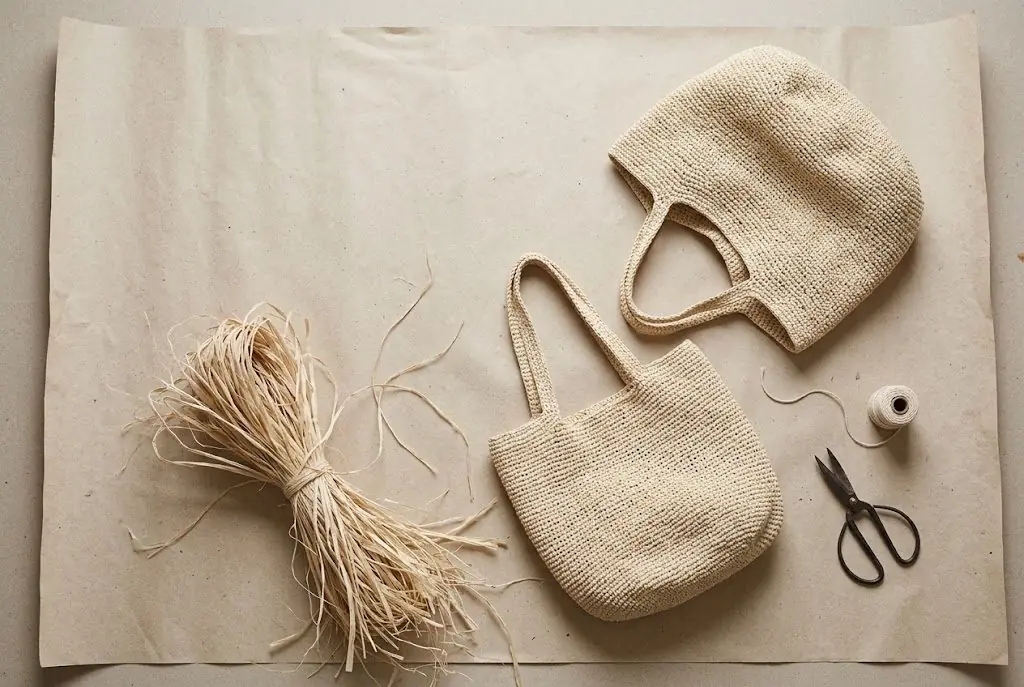
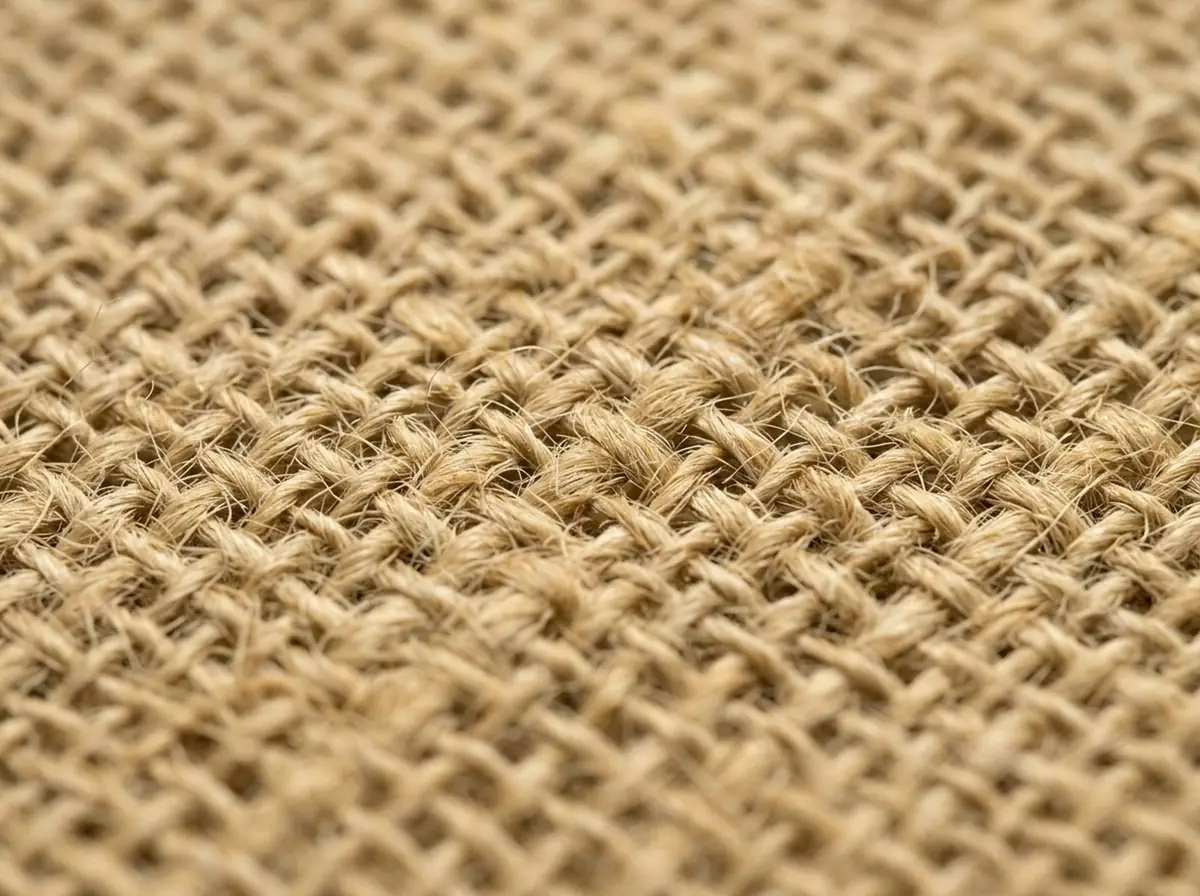
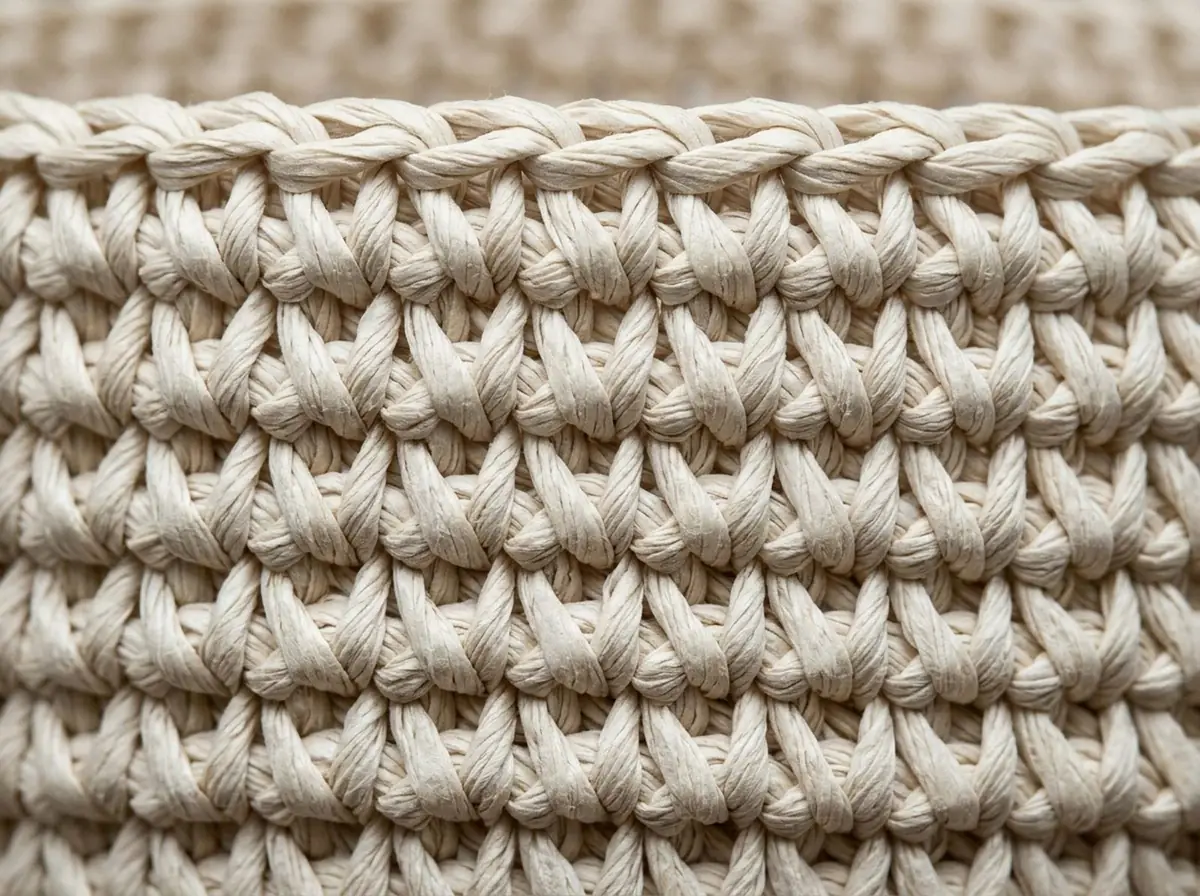
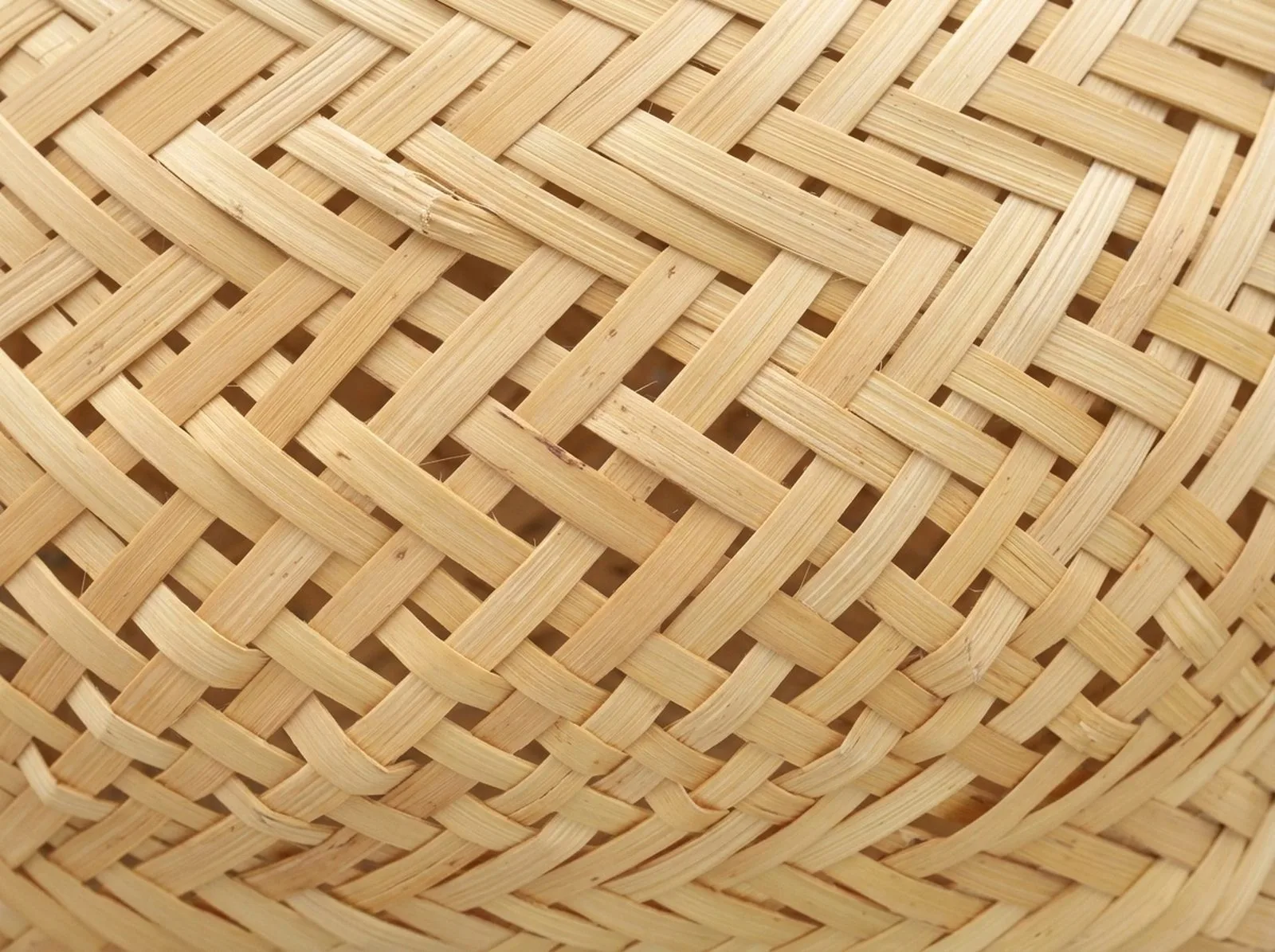
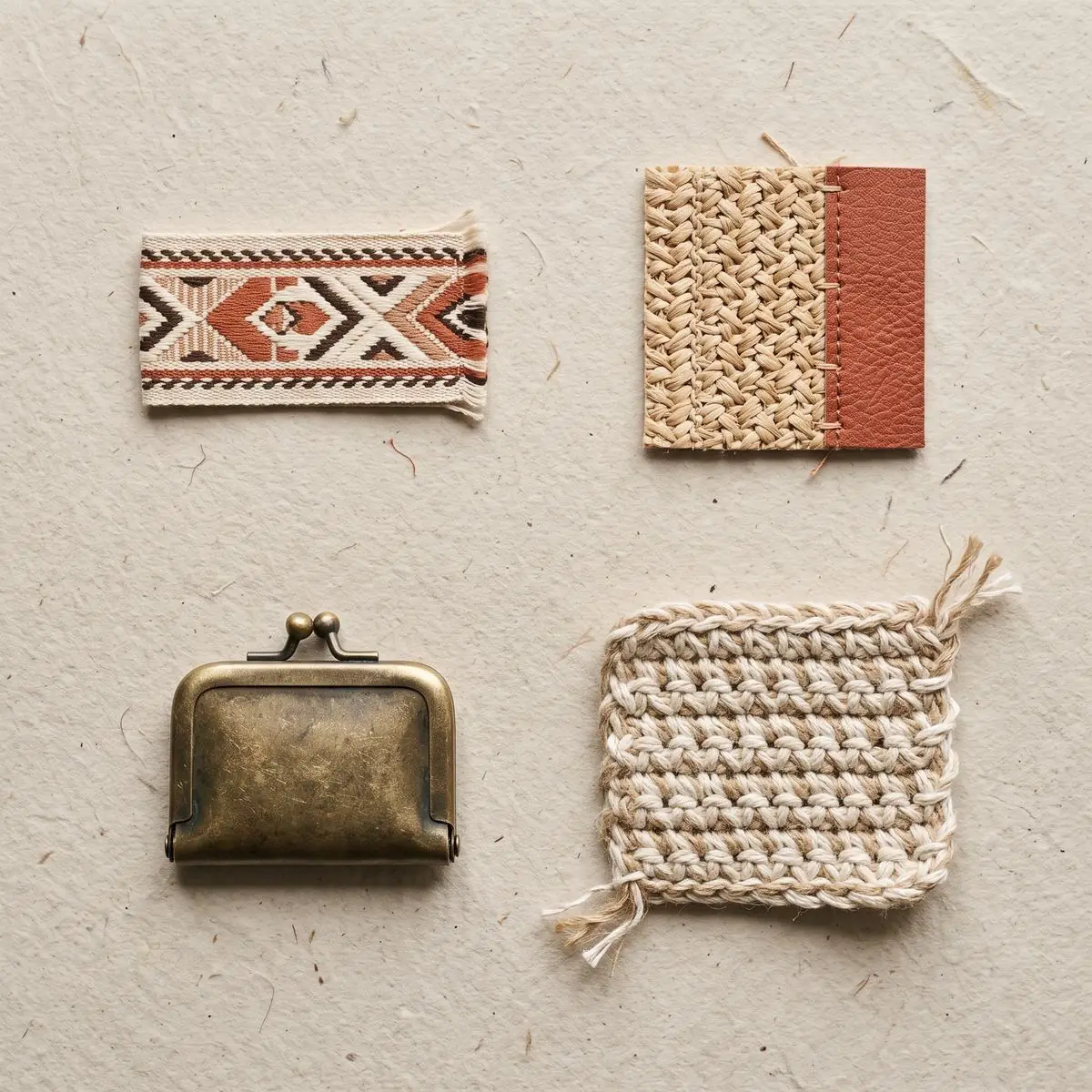
Physical Performance & Production Matrix
This matrix synthesizes workshop observations across 100+ sampling cycles to assist brand directors in choosing optimal fibres for specific price-points and load profiles.
| Material | Tensile Strength | Flexibility / Drape | Handling sensitivity | Colour-Card Matching | Finished Weight | Typical MOQ |
|---|---|---|---|---|---|---|
| Natural Raffia | High | High (Organic drape) | Moderate (Air dry) | Good (Saturated tone) | Low | 100 pcs / style |
| Natural Rattan | Very High (Load-bearing) | Low (Rigid body) | Moderate (Ventilated) | Moderate (Earth tones) | High (450–650g) | 100 pcs / style |
| Spun Paper Straw | High (Tightly twisted) | Moderate (Crisp) | Low (Treated surface) | Matched to card | Very low | 100 pcs / style |
| Natural Straw Plait | Moderate under compression | Very low flex; holds a hard shell | High; keep the plait dry between seasons | Limited (Natural/Bleach) | Medium (300–420g) | 100 pcs / style |
B2B Transit & Warehouse Storage Guidelines
01. Transit Protection
All bulk shipments are double-bagged inside breathable non-woven dust covers before packing into 5-ply export corrugate boxes. Cartons are rated to withstand vertical stacking in containerized freight.
02. Storage & Handling
Natural fibres are stored in dry, ventilated areas. We keep each batch is calibrated prior to sealing and advise retailer warehouses to avoid damp basements or sealed airtight polybags.
03. Shape Recovery
Should soft raffia bags experience compression during seasonal shipping, they naturally recover original geometry once unpacked and gently stuffed with clean kraft tissue for 24 hours.
Caring for straw, raffia and woven bags
How to clean a straw bag
Brush loose dust with a soft brush, then wipe with a barely damp cloth, working in the direction of the weave. Do not soak the bag or scrub the surface. The same method cleans a straw purse or a small straw basket: spot-clean only, then air-dry flat.
How to clean a raffia bag
Raffia is a supple ribbon fibre, so treat it gently: brush, wipe with a damp cloth, and use mild soap only where needed. Rinse the cloth, not the bag. To remove stains from a raffia bag, blot immediately instead of rubbing, and keep raffia bags out of prolonged direct sun, which fades the dye.
Can straw bags get wet?
A light shower is survivable, but a soaked straw bag can lose shape and develop mildew. If a straw bag gets wet, blot it with a dry cloth, reshape by hand and dry it flat in moving air — never on a radiator, in direct sun or in a tumble dryer.
How to store a straw bag
Stuff the body with acid-free tissue, close any zip or clasp, and store the bag upright in a dust bag in a dry, ventilated cupboard. Do not stack heavy items on top: compression is what flattens a straw bag over winter.
How to reshape and iron a straw bag
Light steam relaxes a dented weave. Hold the iron above the surface — never on it — and reshape by hand while the fibre is warm. For a raffia bag, finger-shaping plus 24 hours of clean tissue stuffing usually restores the line.
Should you oil a raffia bag?
No. Raffia is a dry fibre; oil darkens it unevenly and attracts dust. If the handles look dry, a very light neutral conditioner on the handles only is enough — not on the woven body.
How long does a straw bag last?
With dry storage and spot-cleaning, a well-woven straw or raffia bag keeps its shape for years. Trim loose straw ends instead of pulling them, and fix a frayed edge before it travels further.
Straw bag care and raffia bag care for buyers
For retail programmes, include a short care card in each bag: brush, spot-clean, dry flat, store stuffed. We can print care cards with your brand and language set as part of the order.
Common questions
Which materials do you work in?
Three families: natural botanical fibres (raffia, natural straw, paper straw, rattan, cotton cord), engineered textile cords (PU, polyester, PVC, neoprene, EVA, acrylic and cotton blends), and mixed structures that combine a woven body with PU handles, metal hardware, linings and patches.
Can you produce in synthetic or textile materials?
Yes. PU, polyester, PVC, neoprene, EVA, acrylic and cotton blends are in current production. Other engineered cords can be developed on brief. MOQ for synthetic and textile cord constructions is 100–300 pcs per style, depending on the cord type.
How do we choose between them?
By what the bag has to do — surface, hand feel, colour repeat, silhouette and cost. We advise per project rather than applying one rule.
Can you match our brand colour?
Yes. Fibre lots are dyed to your colour card in matched lots.