Among natural weaving materials, raffia occupies a singular echelon. Neither grass nor straw, true raffia is an organic membrane stripped from the fronds of the Raffia Farinifera palm tree.
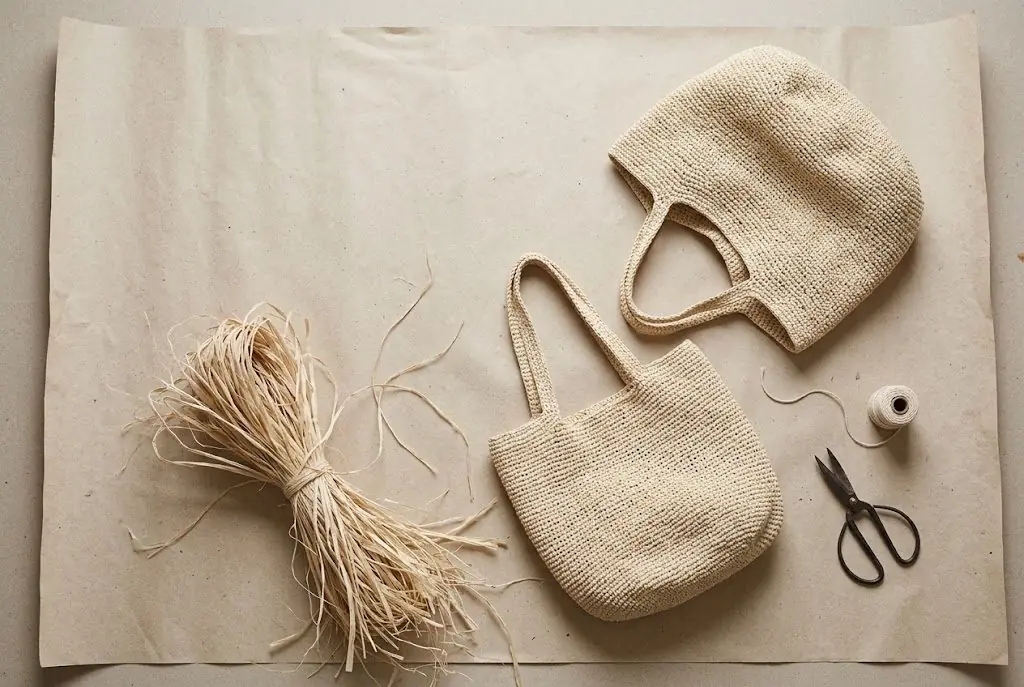
1. Anatomical Origins & Pliability
The underside of each giant palm frond contains a continuous fibrous skin. When peeled while green and sun-aerated, this membrane dries into soft, creamy ribbons varying between 1 to 1.5 meters in length.
Unlike brittle grain straws (such as wheat or barley stems), raffia possesses a high natural resin content. This internal wax bestows astonishing flex-fatigue resistance: a raffia strand can be knotted, twisted, and folded thousands of times without splitting or snapping.
2. Natural Raffia vs. Spun Paper Straw
With the rise of eco-conscious fashion, many brands seek clarity between authentic raffia and modern twisted paper straw:
- Surface Texture: True raffia exhibits delicate organic width variations and a soft, silken luster. Paper straw is engineered into uniform cylindrical micro-cords.
- Weight & Touch: Raffia warms gently to body heat and develops an organic patina over seasons. Paper straw maintains a crisp, modern, paper-like handfeel.
- Water Resistance: Raffia naturally repels light oceanic mist due to its cuticle oils, while untreated paper cords absorb water rapidly unless coated.
Rattan and willow are a different question again: they are worked as wicker, not as fibre. If you are comparing those, start with what wicker is and how it differs from rattan.
3. Dyeing Behavior & Care Guidelines
Because raffia is an unbleached organic plant cuticle, it absorbs vegetable and acid dye baths with subtle tonal depths. A single dye lot produces gentle variations that give finished totes their signature dimensional richness.
Storage Advice: Raffia bags should be stored in well-ventilated dust covers. If a bag loses its shape during overseas transit, simply stuff it with paper and let it sit in ambient air—the fibers will naturally relax and regain their sculpted form.