Wicker is not a material. It is a way of weaving — and the word is used loosely enough that buyers end up comparing two things that are not the same. This page sets out what wicker actually means, how it differs from rattan, and what that means when you are specifying or buying a woven bag.
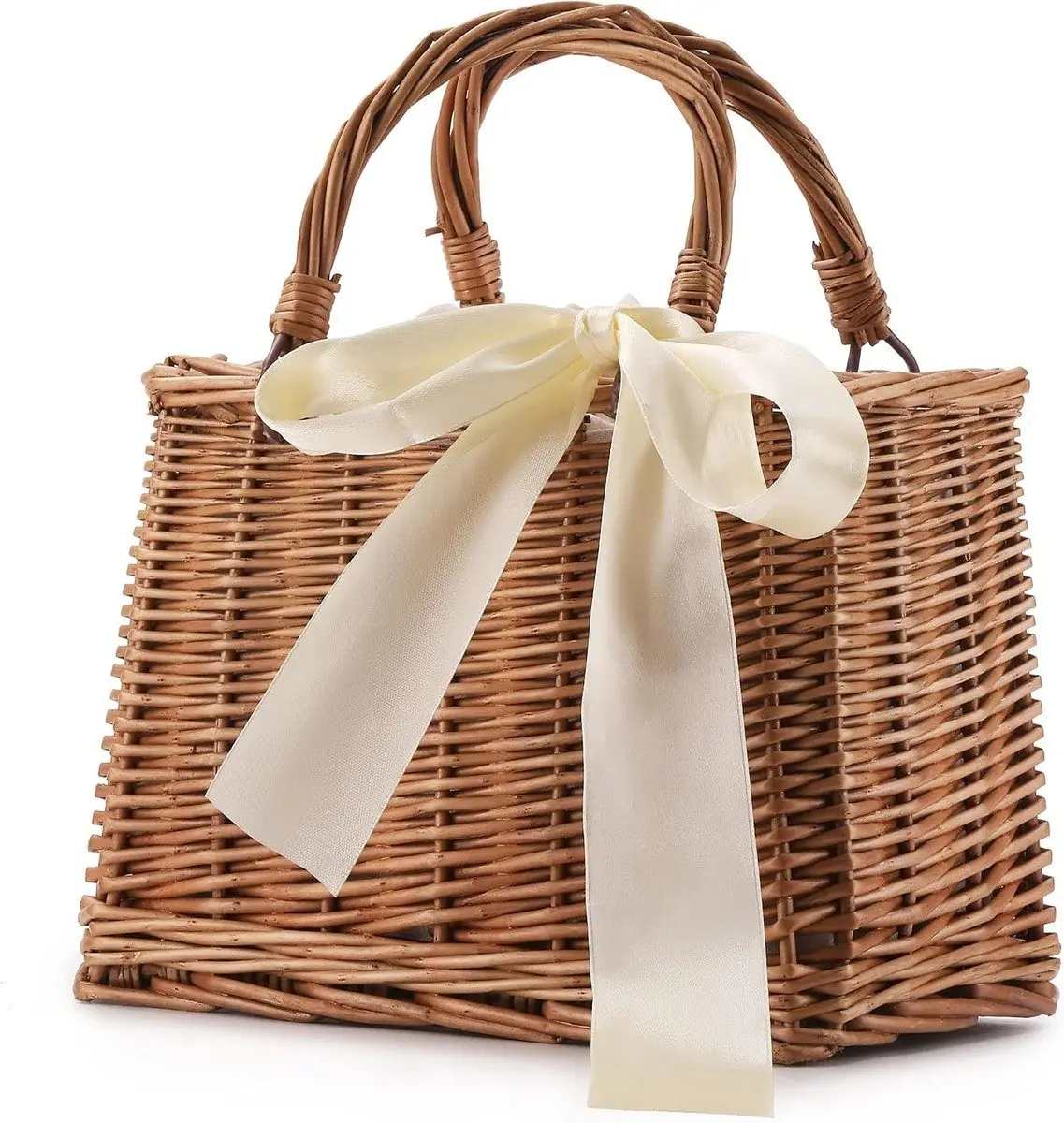
1. Wicker is a technique; rattan is a material
Wicker describes interlacing pliable stems, canes or rods into a rigid structure. The frame carries the load and the woven sections sit between it. Almost any long, flexible plant section can be worked this way — which is why the same word covers a garden chair, a laundry basket and a handbag.
Rattan is a specific material: the peeled inner core of a climbing palm, usually split into round rods of a few millimetres. It is the most common wicker material in furniture and in bags because it bends without splitting and takes a stain evenly.
The relationship runs one way. A rattan bag is almost always wicker-woven. A wicker bag is not necessarily rattan — it may be willow, cane, seagrass, bamboo or a paper cord.
2. Wicker vs rattan vs cane vs willow
| Term | What it actually is | How it behaves in a bag |
|---|---|---|
| Wicker | A weaving technique | Rigid body, holds shape without a lining |
| Rattan | Peeled palm core, round rods | Bends without splitting; stains evenly |
| Cane | Rattan with the outer skin left on, split thinner | Finer surface, good for tight weaves and trims |
| Willow | A deciduous shrub, cut and soaked before working | Traditional basketry look; heavier and softer than rattan |
| Seagrass | A marine plant fibre, twisted rather than split | Softer lines, more give, less structural |
3. How wicker behaves in a bag
Because wicker is built from thicker sections than straw or raffia, the body is self-supporting. That changes what you have to specify. A wicker bag rarely needs an internal frame or a stiffening panel, but the weight for the same dimensions is higher, and the handles carry more load than a straw bag's handles do.
Weave tightness is the single biggest variable. An open weave looks lighter and reads as summer; it also lets small items through and lets water in faster. Tight weaves take longer to build and hold a firmer silhouette.
Finish matters as much as the weave. Natural, stained and lacquered rattan photograph very differently, and a lacquered finish is easier to wipe down but shows scuffs more.
4. What to check before you specify wicker
- Material disclosed by species — "wicker" alone tells you nothing about what is actually woven.
- Weave tightness — open or closed, and whether the gaps are intentional or a tolerance issue.
- Frame or no frame — which parts carry load, and how the base is closed.
- Handle attachment — wrapped, riveted or woven-in; this is where bags fail first.
- Lining and closure — an unlined wicker body needs a separate pouch if it is to be practical.
5. Caring for a wicker bag
Keep it dry and keep it out of direct heat. Dust with a soft brush; wipe with a cloth that is barely damp and dry it straight away. Do not soak it and do not put it in a washing machine — water softens the fibres and encourages mould in the gaps.
If the shape has gone slack, dampen it lightly by hand, reshape it and let it dry in air. Store it stuffed so the body keeps its form between seasons.
6. Where wicker sits in what we make
We work in rattan and other plant fibres alongside raffia, straw and paper cord. The construction, weave and finish are developed to your brief rather than held as a fixed catalogue — which is useful when a buyer needs a wicker body but a specific handle, lining or size.
Browse the collection by shape on the handwoven bags page, or see the material-led programmes at raffia bags wholesale and wholesale straw bags. For a specification conversation, start with custom bag development.
Common questions
Is wicker waterproof?
No. Wicker is woven from plant material, and prolonged water contact softens the fibres and makes them prone to mould. Wipe with a barely damp cloth and dry it immediately.
Is rattan the same thing as wicker?
No. Rattan is a material — the peeled core of a climbing palm. Wicker is a technique: interlacing pliable stems, canes or rods into a rigid structure. A rattan bag is a wicker bag; a wicker bag is not necessarily rattan.
Is a wicker bag heavier than a straw bag?
Usually yes. Wicker is built from thicker, more rigid sections, so it holds its own shape without a lining but carries more weight for the same dimensions.
Can a wicker bag be repaired?
Often, yes. Handle wraps and broken sections can be re-woven, and a loose frame can be re-bound. Whether it is economic depends on how much of the structure has failed.
Does WEFTAVA make wicker bags?
We work in rattan and other plant fibres alongside raffia, straw and paper cord. Construction and finish are developed to your brief rather than held as a fixed catalogue.