Raffia vs Paper Straw vs Natural Straw
Three woven materials, three different jobs. This page compares how each one looks, holds shape and takes colour, so you can choose a starting direction before sampling.
Ask for a material recommendation → Open the full material dossier →
Which one is which
Raffia — the textured, draped one
A palm-frond fibre with a natural waxy cuticle. Soft drape, earthy saturation, best for slouchy shoppers and soft totes.
Natural straw — the structural one
Hand-plaited stalks coiled into a hard shell. Stands on its own without internal wire, best for rigid baskets and round totes.
Paper straw — the light, crisp one
Wood-pulp fibre spun into an even cord. Uniform gauge, clean surface, the lightest of the three, best for geometric shapes.
Look, structure, weight and colour
| Material | Look & hand | Structure | Finished weight | Colour | Best for | MOQ | Sampling |
|---|---|---|---|---|---|---|---|
| Raffia | Dry, textured, organic drape | Soft; high flex fatigue resistance | Low | Saturated earthy tones; keeps its hand in humid climates (avoid prolonged soaking) | Slouchy shoppers, soft totes, evening pouches | 100 pcs/style | 10–15 days |
| Natural straw | Matte, plaited, visibly handmade | Rigid shell; very low flex; high puncture resistance | Medium (about 300–420 g for the plaited constructions) | Limited to natural blonde or two-tone bleach | Rigid baskets, round totes, picnic formats | 100 pcs/style | 10–15 days |
| Paper straw | Crisp, smooth, uniform stitch definition | Moderate flex; holds clean geometric lines | Very low | Dyed to your colour card; wipeable treated surface | Structured clutches, geometric bucket bags, city totes | 100 pcs/style | 10–15 days |
Indicative handling notes from workshop sampling; final behaviour is confirmed on your cord type and sample. Pricing is quoted per style; sample fee credited at MOQ. Packaging, freight and payment confirmed at quotation.
Start from the use case
| If the program is… | Start with | Why |
|---|---|---|
| Premium resort or boutique retail | Raffia | Texture and drape read as premium; earthy colour range |
| Structured summer baskets and picnic ranges | Natural straw | Holds a hard shell without internal framing |
| Modern geometric collections | Paper straw | Even gauge and a clean, smooth surface |
| Lightweight giveaways and event bags | Paper straw or cotton cord | Low finished weight and packable construction |
| Colour-critical brand programmes | Paper straw | Matched to your colour card; raffia reads best in earthy tones |
From material question to sample
Silhouette, use case, quantity, colour direction and target date.
We shortlist one or two materials and confirm what the construction can hold.
Made in 10–15 days after material approval.
30–45 days after sample sign-off; 45–60 days with custom dyeing or new tooling.
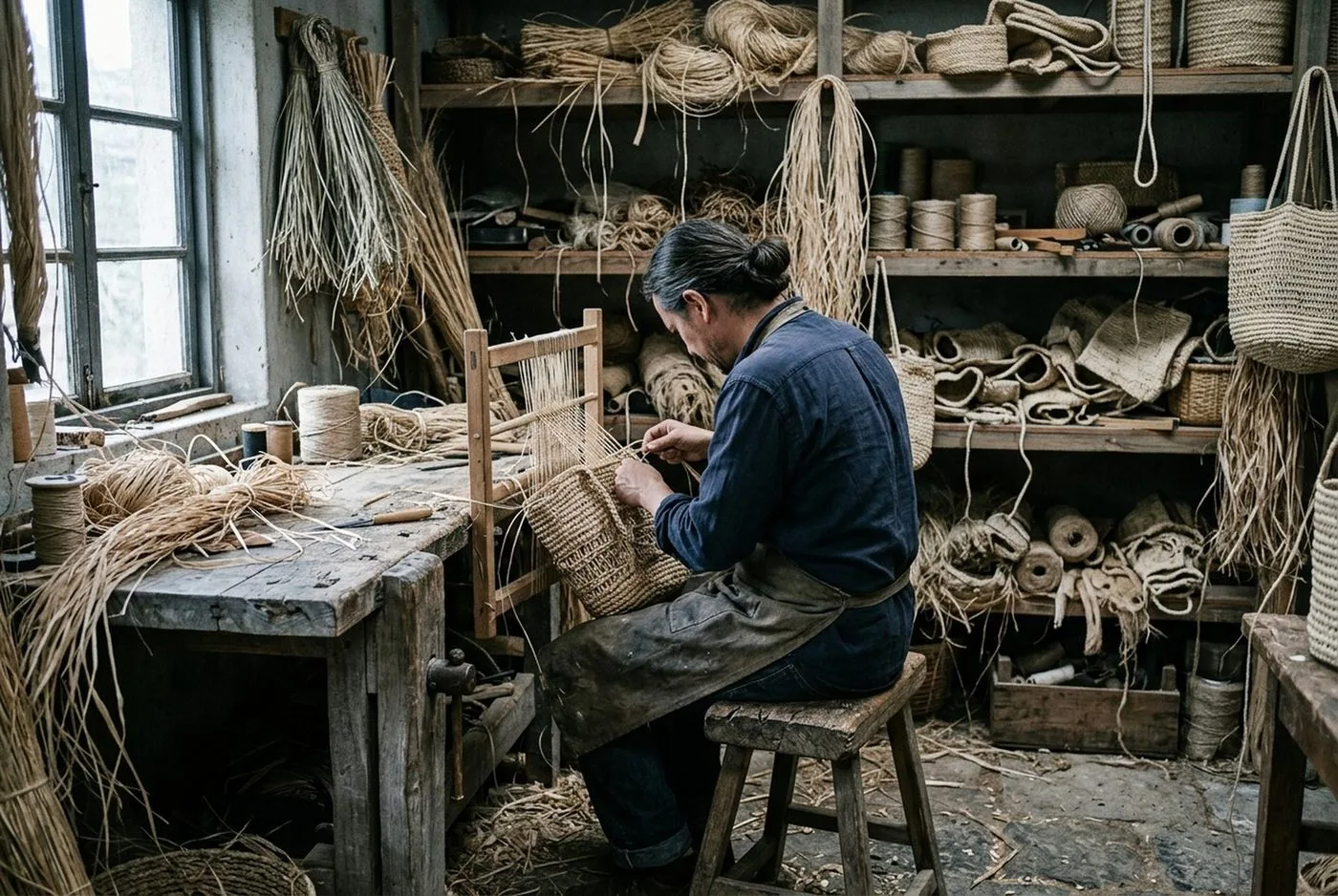
Sampled and inspected in our Dongguan workshop
Material questions are settled on a counter-sample, not on a spec sheet. Each programme runs through the same six stages: material inspection, dyeing, weaving, shaping, QC and packing.
- Six-stage, piece-by-piece inspection.
- Handle pull strength checked.
- In-house sampling and production.
100 pcs/style; 100–300 for synthetic / textile cords.
10–15 days.
30–45 days; 45–60 with custom dyeing or new tooling.
Quoted per style; credited at MOQ.
Confirmed at quotation.
Common questions
Which material is the lightest?
Paper straw has the lowest finished weight of the three, which is why it suits lightweight giveaways and large but packable shapes. Raffia is also low in weight but has a softer drape; plaited natural straw sits in the middle at roughly 300–420 g for our plaited constructions.
Which one holds its shape best?
Natural straw holds a rigid shell with very little flex, so it needs no internal wire framing. Paper straw is crisp and holds clean geometric lines. Raffia has the most drape and is the softest of the three.
Can you match a brand colour?
Paper straw is the most predictable for colour-card matching. Raffia dyes into saturated earthy tones, and natural straw is usually kept in natural blonde or two-tone bleach. Send your colour reference and we will tell you what the material can realistically hold.
Can I mix materials in one program?
Yes. Mixed constructions are common, for example a raffia body with leather handles or a paper straw body with a textile trim. They are quoted per style once the construction is confirmed.
What are the MOQ and lead times?
Our baseline production minimum is 100 pcs per style, and 100–300 pcs for synthetic and textile cord constructions. Counter-sampling takes 10–15 days after material approval; bulk production is 30–45 days after sample sign-off, or 45–60 days with custom dyeing or new tooling.
How is the sample fee handled?
Sample fees are quoted per style and credited toward the bulk invoice once the order meets the MOQ. Packaging, freight and payment terms are confirmed at quotation.
Not sure which material fits?
Send your silhouette, use case, target quantity and colour direction; we will recommend a material and send you into sampling.
Ask for a recommendation → Read the material dossier →