Both are made by hand. Both use the same fibres, often the same people. Crochet and weaving build a surface in opposite directions, and that difference decides how the bag behaves after a year: how it holds shape, how it stretches, and what it looks like when it fails.
Weaving builds a grid
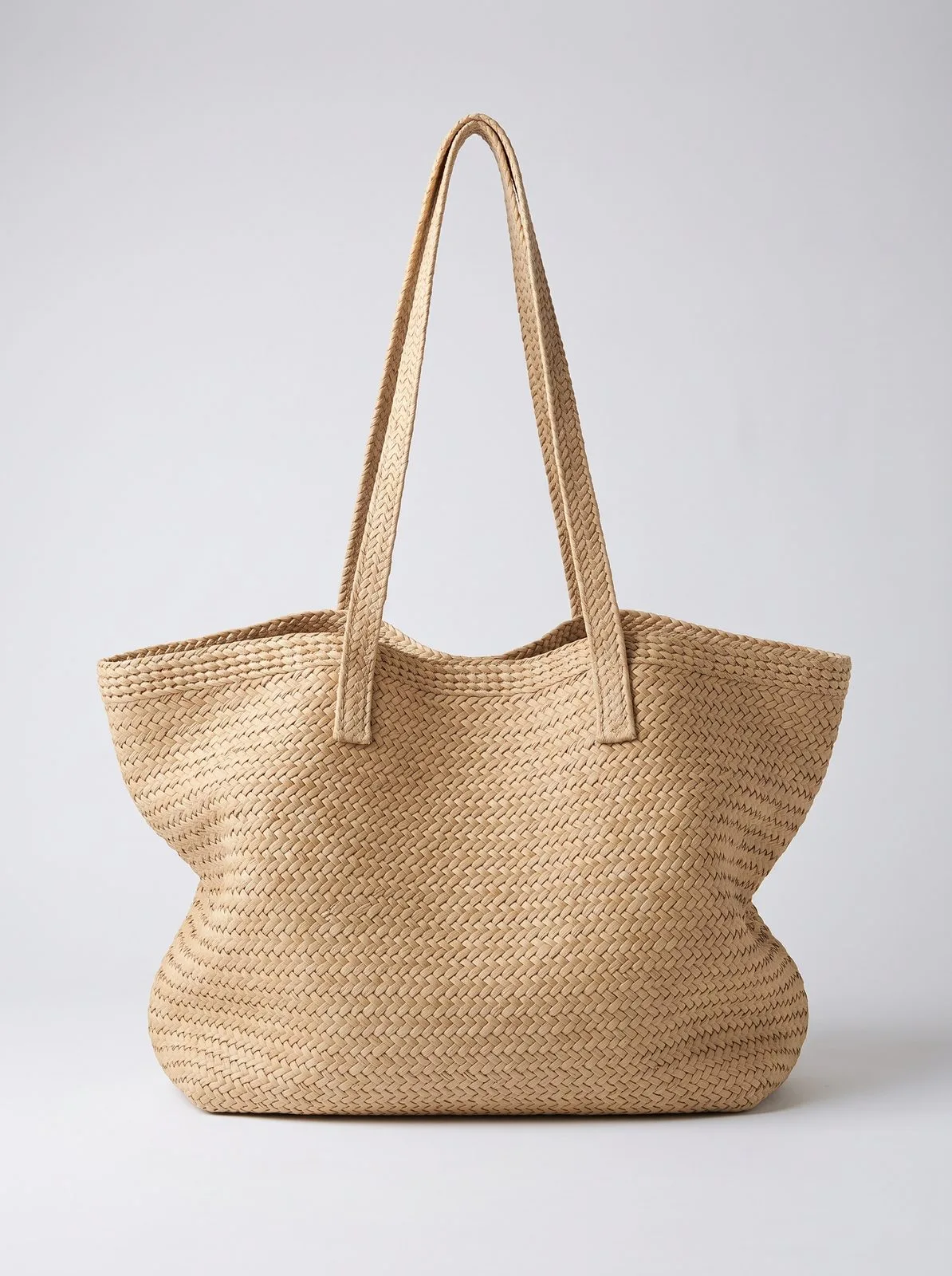
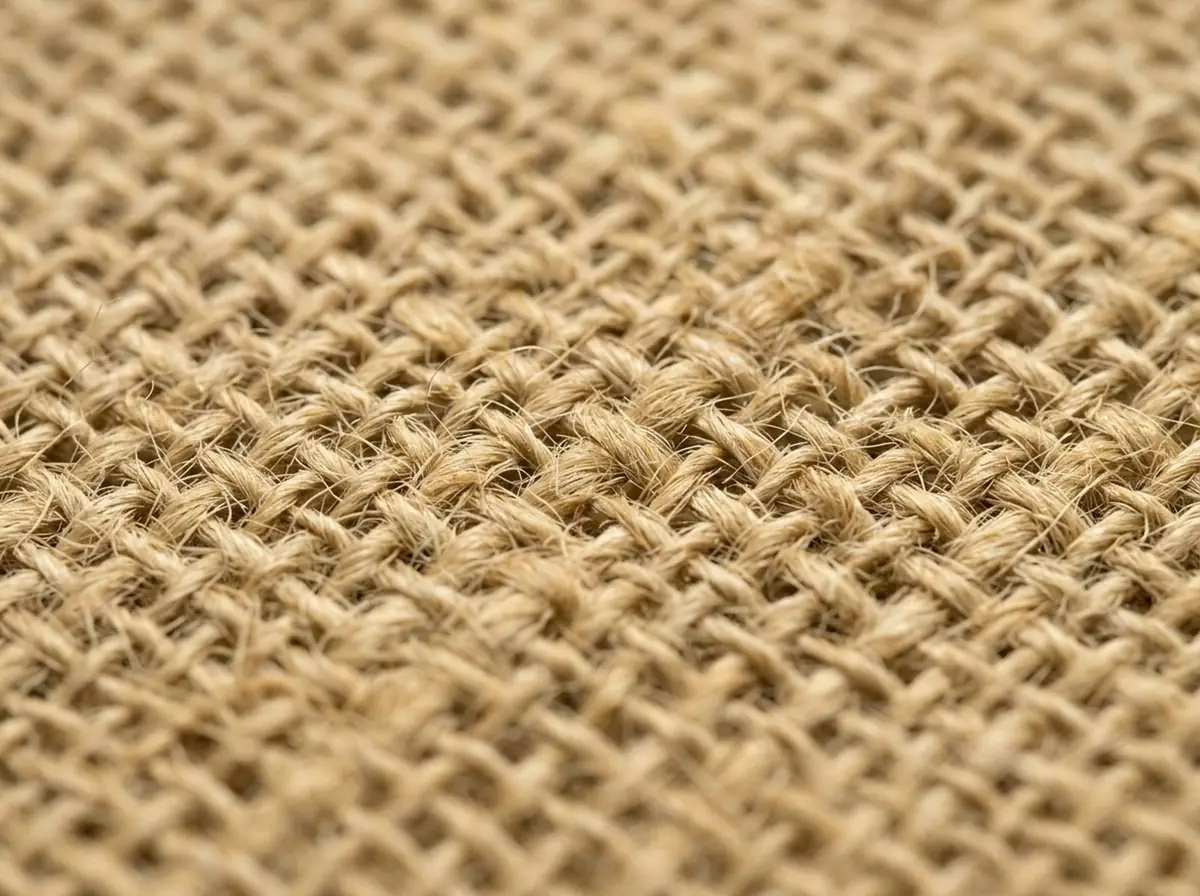
Weaving crosses two sets of strands: one held under tension on the frame, one passed over and under it. The grid locks in both directions, which is why a woven panel holds a flat shape without help.
That stability is why density can be specified. We count rows per 10cm and read the gaps: up to about 1mm at the mouth is acceptable, anything over 2mm on the body is a reject. A woven bag can be tightened or opened on the frame, and the change is visible and repeatable.
The common failure is tension across the width. If the weaver pulls one side harder, the panel narrows and the selvedge curves, and the bag looks tired before it is used. It is caught at panel stage or not at all.
Labour is real: a structured handwoven bag runs to roughly twenty hours of weaving and assembly per piece in our workshop.
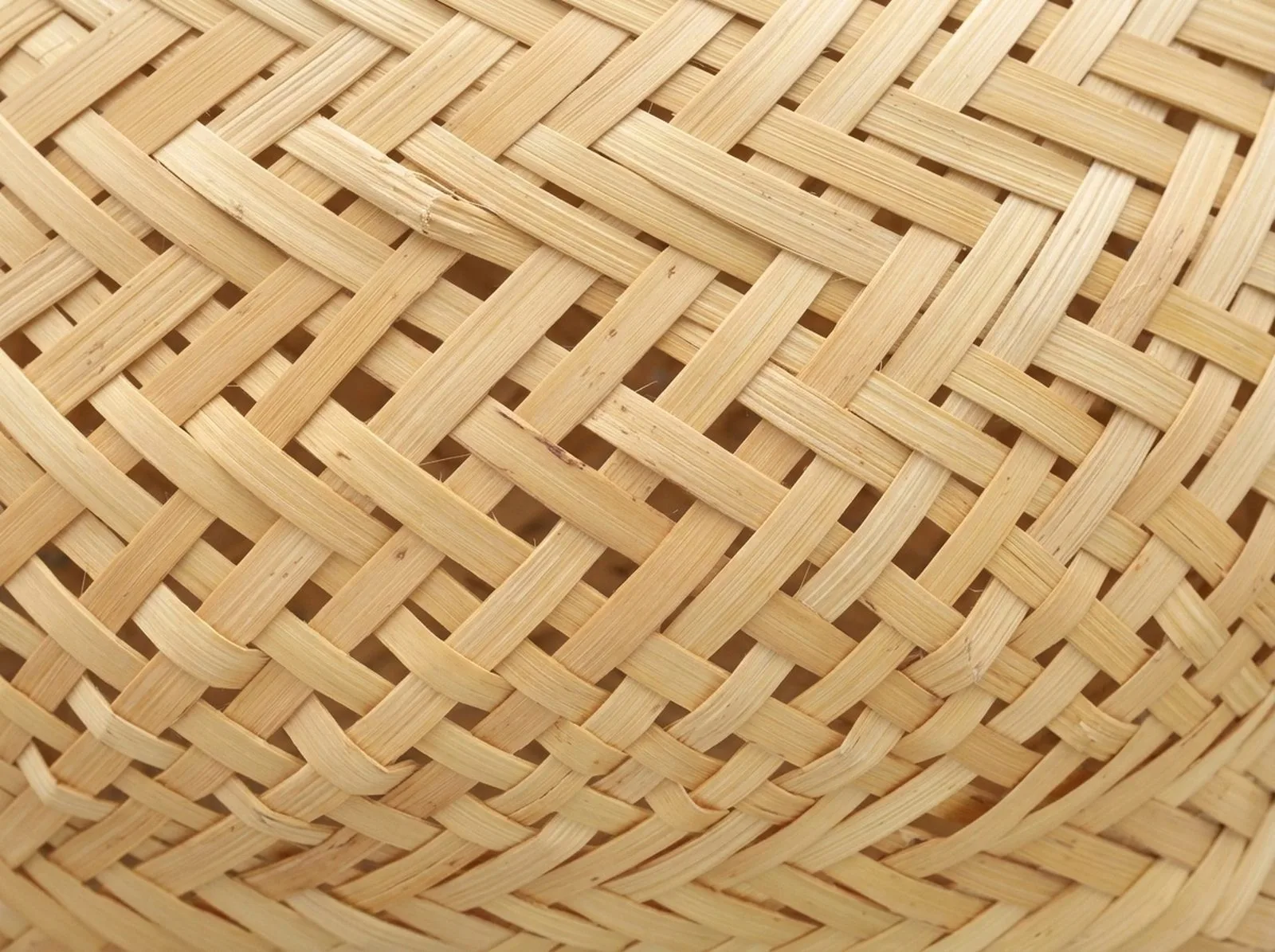 Braided straw: strands interlaced under tension, the same under-and-over logic a woven panel is built on.
Crochet builds a spiral
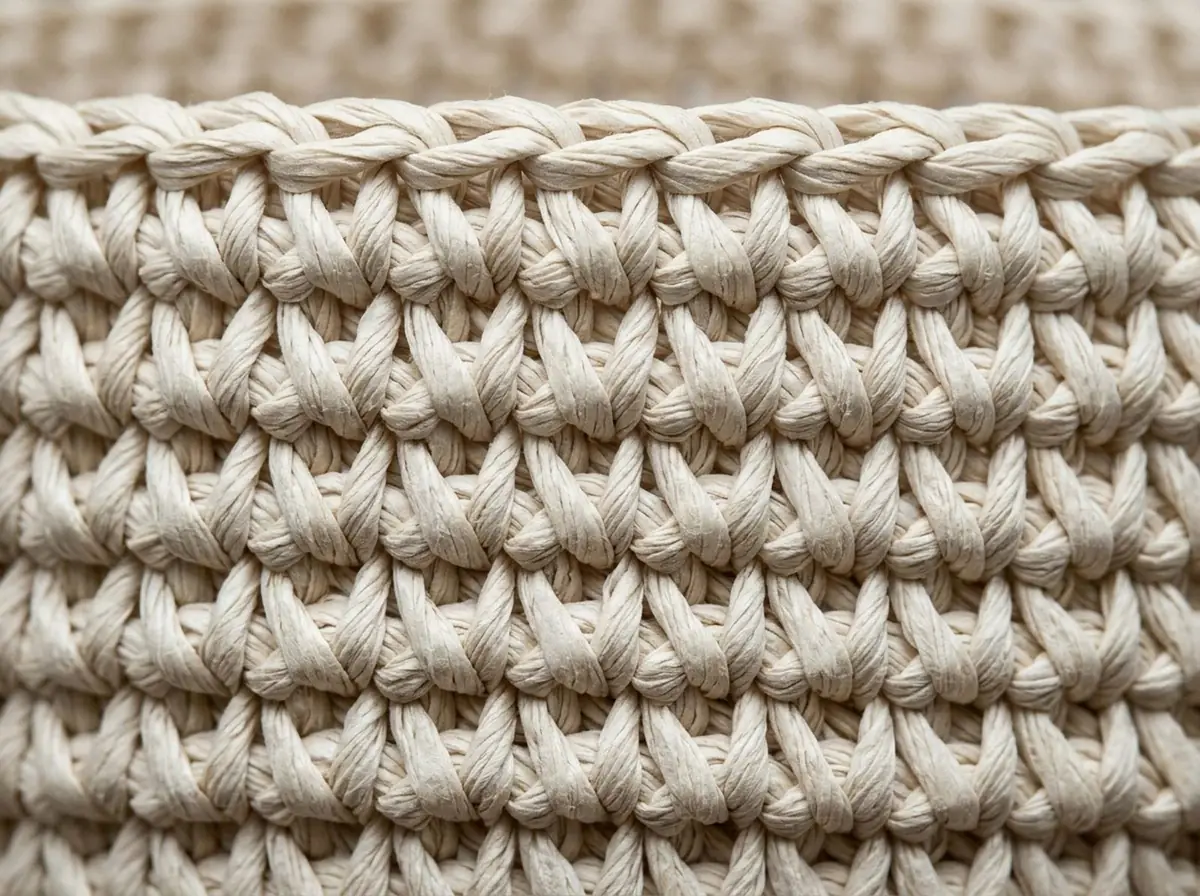
Crochet uses one continuous thread, looped through itself, stitch by stitch. It starts at a point and grows outward, so it can turn corners and make rounded forms that weaving handles awkwardly.
The property that makes crochet sculptural also makes it elastic. A crocheted body has give. Under a full load it changes shape and does not go back completely. That is a property, not a fault, but it has to be designed for.
Crochet is also maker-dependent in a way weaving is not. Hook size and hand tension set the gauge, and two makers following the same pattern produce panels that differ in density. On a repeat order, that shows up as a bag a centimetre wider and noticeably softer.
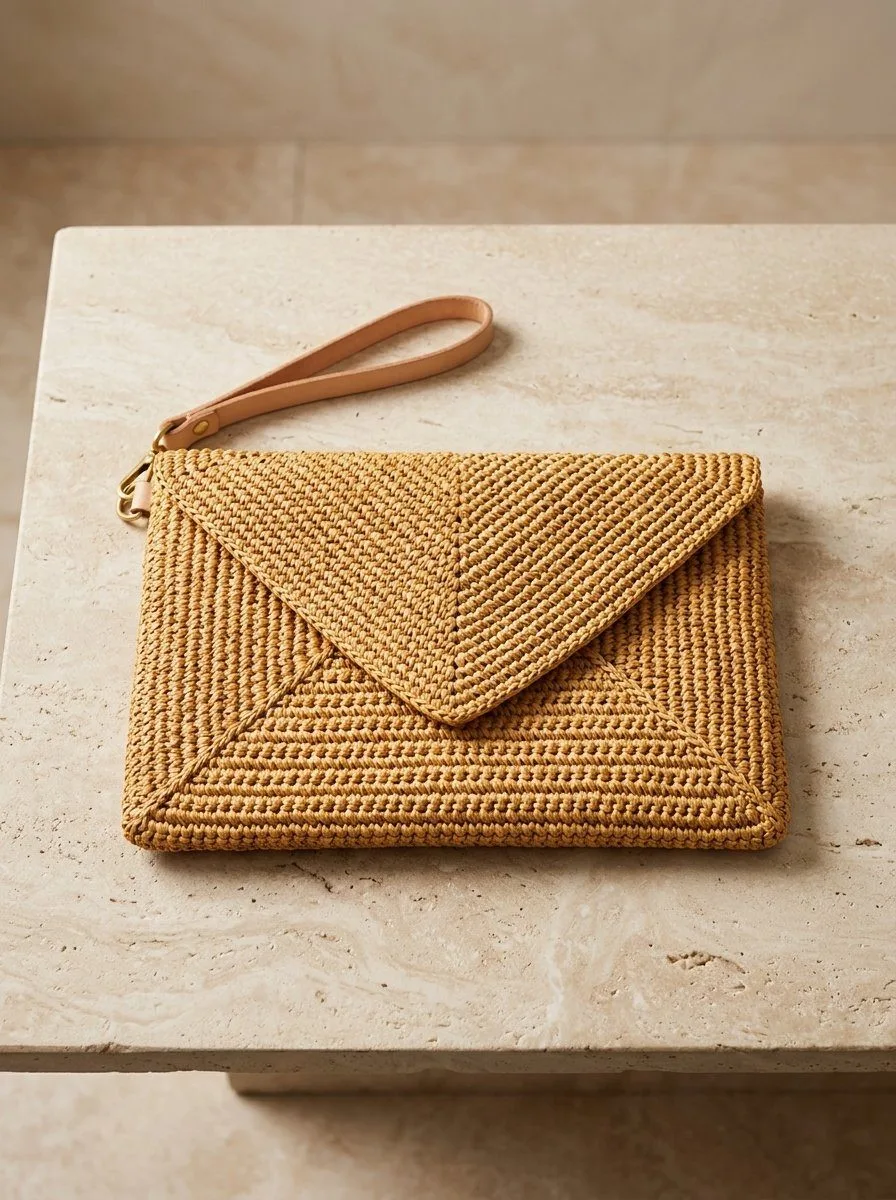
On time, the range is wide. A simple crocheted pouch is about two hours of work. Fine crochet in raffia — small stitches, tight gauge, shaped panels — can pass 100 hours.
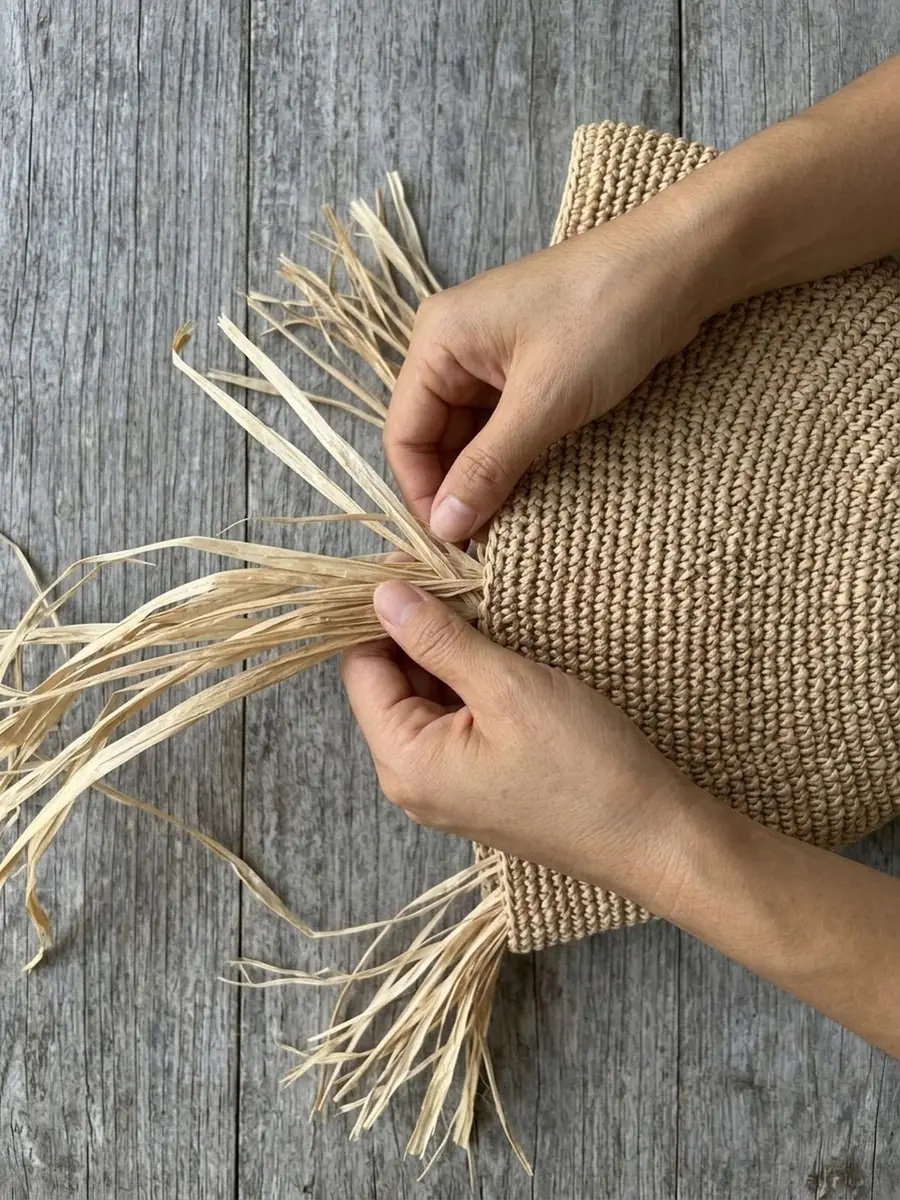 Crochet, one stitch at a time: the gauge is set by the hand, which is why two makers can produce two densities.
Side by side
| Property | Woven | Crocheted |
|---|---|---|
| How the surface is built | Two strand sets crossing on a grid | One thread looping through itself |
| Shape vocabulary | Flat panels, crisp geometry, boxy forms | Rounded, sculptural, unbroken |
| Stretch | Low | Moderate to high |
| Repeatability across makers | High — the frame sets tension | Moderate — tension is personal |
| Density control | Rows per 10cm; gaps measurable | Stitch gauge; hard to tighten locally |
| Repair | Local, at strand level | Can unravel from a break if the end is loose |
| Labour per piece | About 20 hours for a structured bag | About 2 hours for a simple pouch; 100+ for fine work |
| Most common failure | Uneven tension, curved selvedge | Growth under load, gauge drift |
| Best for | Totes, baskets, clutches, structured shapes | Buckets, rounded bodies, textured panels |
What each costs you in production
The labour gap is obvious. The less obvious cost is in sampling. A woven change is a change on the frame and can be re-run quickly. A crochet change usually means a new gauge, which means a new sample, because the gauge is the structure. Revisions run 5–7 days a round and one or two rounds are typical, so that difference can add two weeks to a development calendar.
The other hidden cost is the sample-to-production gap. The best crocheter in the sample room is often not the person who makes the bulk order. A sample approved at a tight gauge comes back looser, and the buyer reads it as a quality drop when it is a staffing reality. It is the most common surprise in crochet orders. The fix is to approve the gauge on a production-made panel, not a sample-room one.
Hybrids
Some of our most useful pieces mix the two. A crocheted body on a woven base gives a soft form that still sits flat. A woven tote with a crocheted handle adds give where the hand takes the weight. A woven body with crocheted trim gains a texture change at the edge.
Hybrids fail when the constructions fight. A crocheted panel sewn to a woven panel pulls at the seam, because one stretches and the other does not. If the seam runs across the front, the pull is visible within a season. Put the join where it belongs structurally — a base, a gusset, a handle — not where it looks best on the sketch.
Where each one fails in the field
Woven bags fail at the edges and the base. A cut strand at the top edge can work loose, and over a season the selvedge starts to look untidy. A base that was not reinforced sags in the middle and the bag loses its line. Both are visible long before the weave itself gives way.
Crocheted bags fail at the handle and at any snag. A loop caught on a key or a zip will pull, and if the end is not secured the row can run. The handle is the second problem: a crocheted strap under a loaded bag lengthens, so a bag that hung at hip height in the sample room sits lower by the end of the season.
The fixes are different. Woven repairs tuck the loose strand back into the weave and are close to invisible. Crochet repairs need the pulled loop worked back and secured, and the repair is usually visible if you look for it.
Writing it into a brief
The construction is a line in the tech pack, and it should be specific enough that two sample rooms would produce the same bag.
Construction: crocheted body, single crochet
Gauge: 18 stitches / 10cm, 20 rows / 10cm (measured after blocking)
Base: woven oval, reinforced
Handles: woven, anchored through the body
Lining: required
The gauge numbers are an example. The point is that the number is written and measured on a finished, blocked panel. A brief that says "crochet, medium" leaves the density to whoever is holding the hook.
Neither construction changes the MOQ, which is 100 pieces a style on both. It changes the sampling timeline, and it changes what the sample can promise you.
When the choice does not matter
For a fully lined bag where the lining carries the load, construction decides surface and look, not strength. For a small accessory — a pouch, a card holder — either works and the stitch is the design. For a piece where embroidery covers most of the surface, the base is mostly a substrate.
It matters most at the handle and the base, where load concentrates, and at the body if the bag has to hold shape when empty. A crocheted beach bag is a different proposition again: wet towels will pull it out of shape by lunchtime.
Care advice differs too. A crocheted bag should be stored flat and stuffed, because a hanging crochet strap stretches over months. A woven bag can hang. Neither likes a washing machine.
One question worth asking
Ask a supplier which construction they would use for your design, and why. A useful answer describes behaviour — "crochet gives you the round base you want, but the body will stretch when filled" — rather than preference. A supplier who answers "either" without a condition has not thought about load.
Common questions
- What is the difference between crochet and woven bags?
- Weaving builds a grid row by row; crochet builds a spiral from one continuous thread. The grid holds a flat panel well, while the spiral stretches and returns, which changes how each bag wears.
- Which is stronger, crochet or woven?
- Neither is stronger in general. A dense weave resists abrasion on flat panels; a tight crochet resists distortion on rounded shapes. The structure of the bag decides which one you want.
- Is crochet more expensive than weaving?
- Often, yes, because crochet cannot be split across a bench as easily and a complex stitch can take far longer per bag. Simple crochet can still sit close to a basic weave.
Both constructions are part of our standard range. If you are deciding between them for a specific bag, send the sketch and we will sample the one that behaves right, not the one that is easier to make. The material guide covers the fibres, and wholesale tote bags shows the woven side in production.
See the basket bags we currently produce in this range.