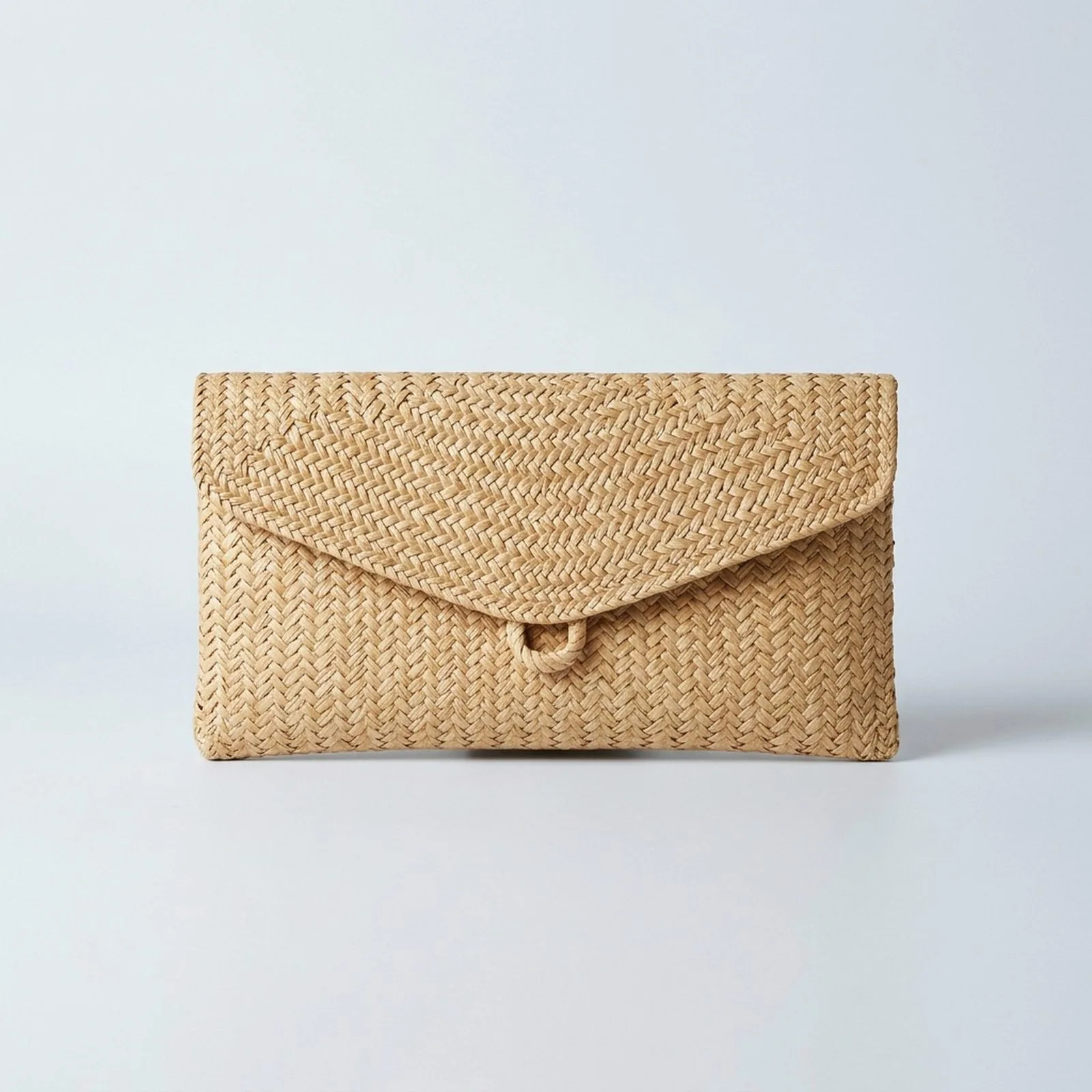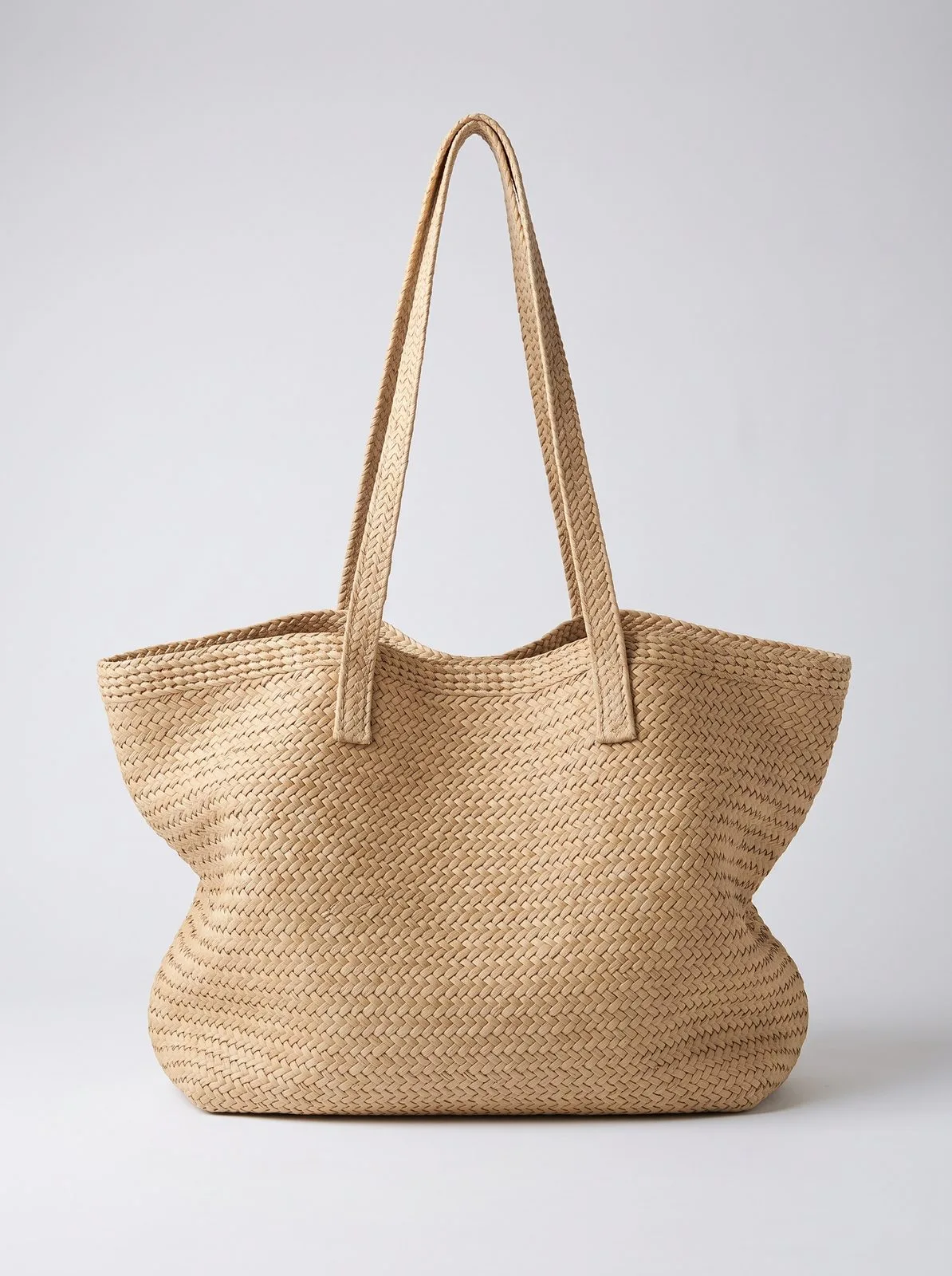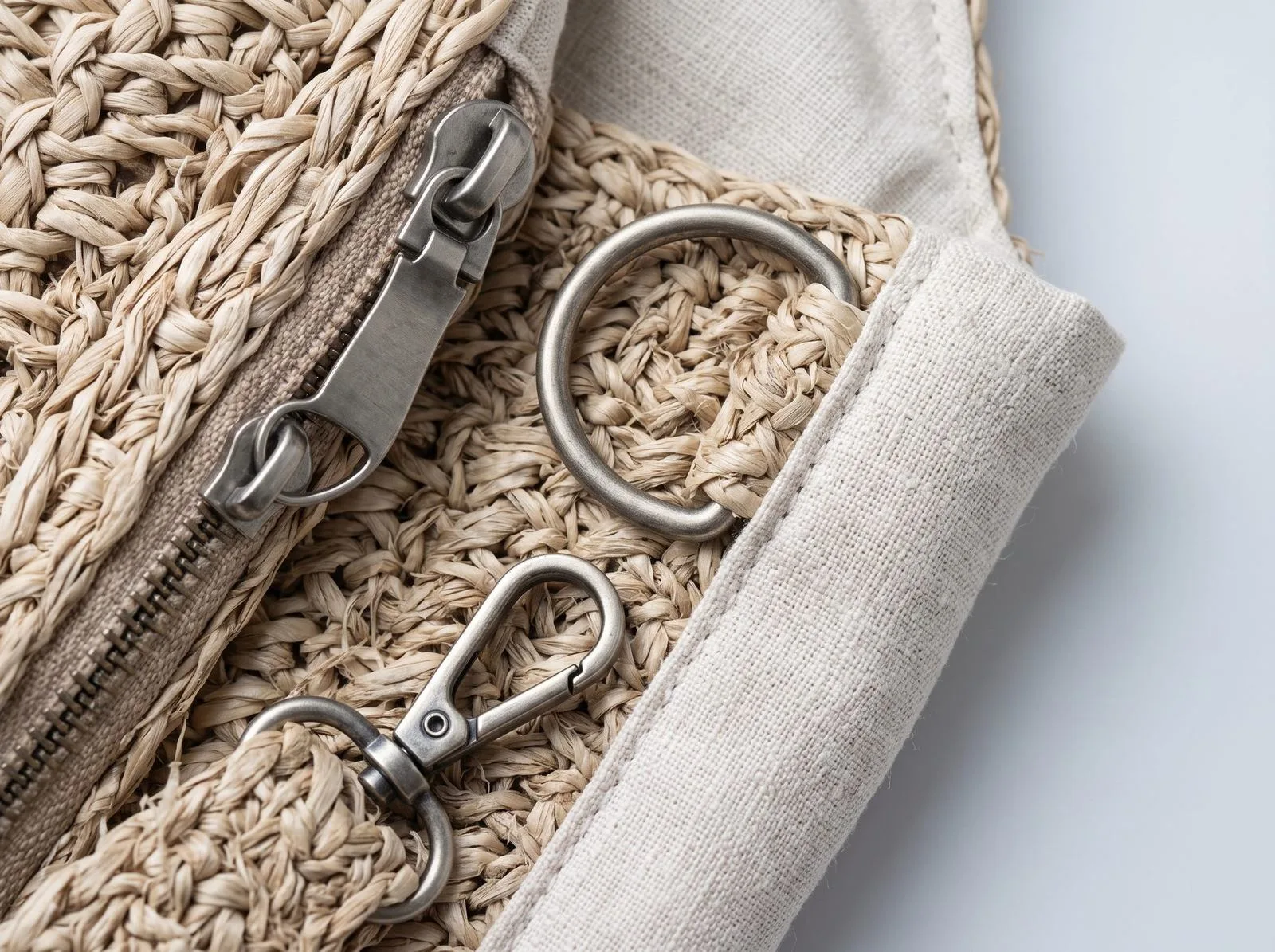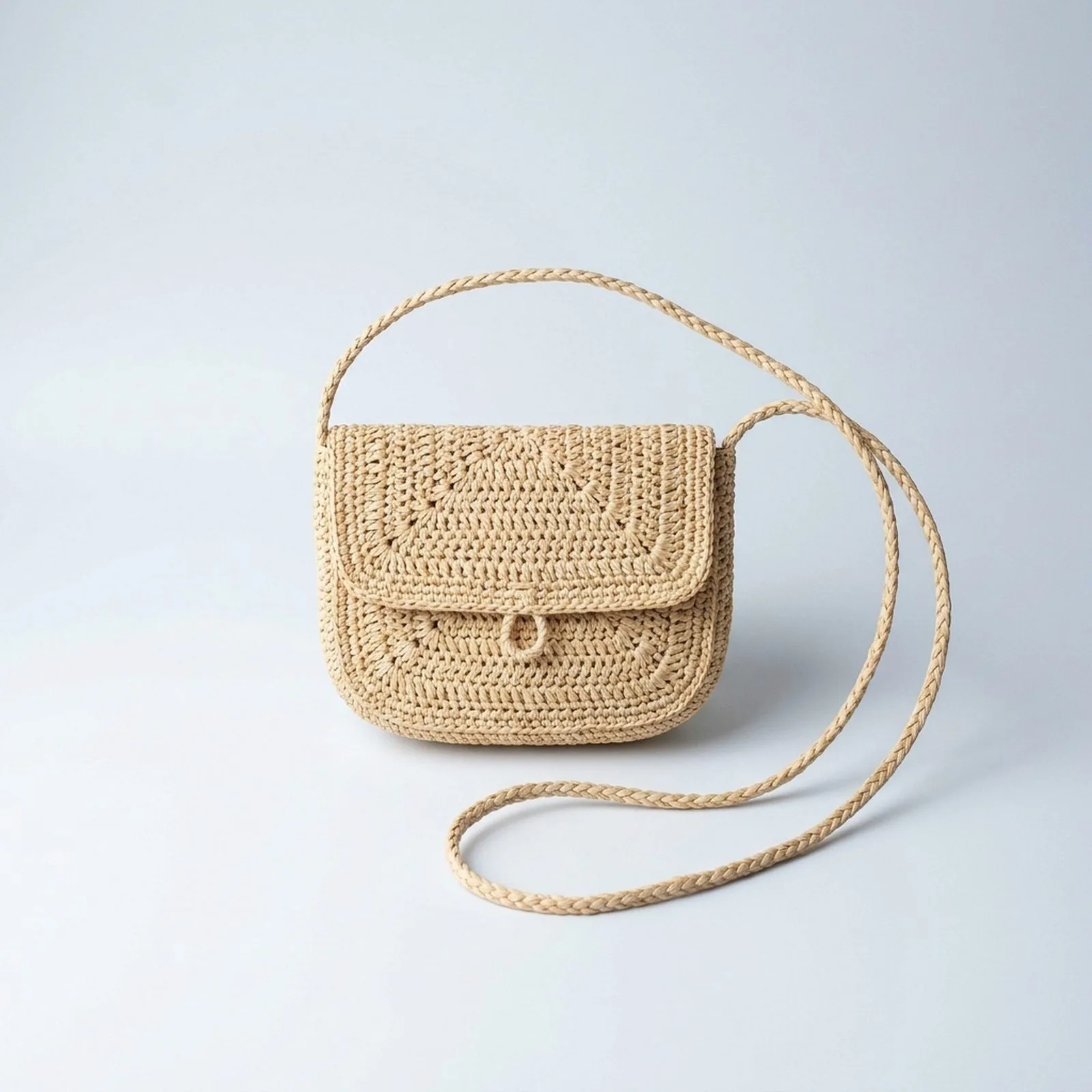
A first email from a new brand often reads: "I want to start a bag brand. What are your prices?"
There is no useful answer, and it is not evasion. Price belongs to a specification, and there is not one yet. A handwoven tote in two fibres, at two densities, with two handle constructions, amounts to several products with several costs. Any number sent back would be a guess in the shape of a quote.
The founders we speak to usually have a name, a logo and an Instagram handle. Fewer have decided what it is for. That order is backwards, and it costs a sample round to find out.
This is not a piece about design. It is about five decisions that make a brief answerable, in the order they bind. Settle them and the first reply you get is a real one.
The five decisions, in the order they bind
| # | Decision | Answer it in one sentence | What it fixes | If you defer it |
|---|---|---|---|---|
| 1 | What the bag carries | "A beach tote for a towel, a book and a bottle" | structure, fibre, base, handle | you sample the wrong bag |
| 2 | Which price band | "Opening price, not premium" | fibre grade, lining, hardware, packing | every later choice reopens |
| 3 | How many styles in order one | "Four styles, each at MOQ" | cash, calendar, arithmetic | the order is larger than you planned |
| 4 | What carries the brand | "A woven label and one hangtag" | what goes into the sample | branding becomes a rework |
| 5 | Where it sells | "Boutique, resort shop, online" | packing, labelling, freight | cartons are printed before the answer |
| The order matters because each decision removes options from the next. A price band chosen after the sample removes things from a bag you have already approved. A destination chosen after the cartons are printed removes nothing; it just costs money. |
One: what the bag is for
The question is not which bag you like. It is what the bag has to do when it is full.
A beach tote that must hold a towel, a book and a bottle of water is a load problem. The base has to carry weight, the handles have to be anchored through the weave, and the fibre has to survive sand and car keys. A dinner bag is a shape problem. It needs to stand, hold a phone and a card case, and look right when it is nearly empty. Those two briefs point to different fibres, different densities and different handle constructions, and the difference has nothing to do with taste.
Capacity is part of the job, and photographs overstate it. A tote that looks generous on a screen and will not take a towel and a book produces returns, and a return in the first season is a reorder that does not happen. If the bag has a job, test the job: put the actual objects in the sample before you approve it.
Our fibres split by behaviour rather than by name: one drapes, one stands, one takes abuse, one repeats exactly. Raffia drapes and takes dye in a way that shows the hand. Paper straw and synthetic cord repeat more consistently. A structured bag in a soft fibre needs an internal structure to hold its shape, and that structure is a cost you pay on every piece, not once.
If you do not know which fibre, say so. "I want a structured tote and I do not know which fibre gets me there" is a brief a workshop can answer. "What is your price for a tote" is not.
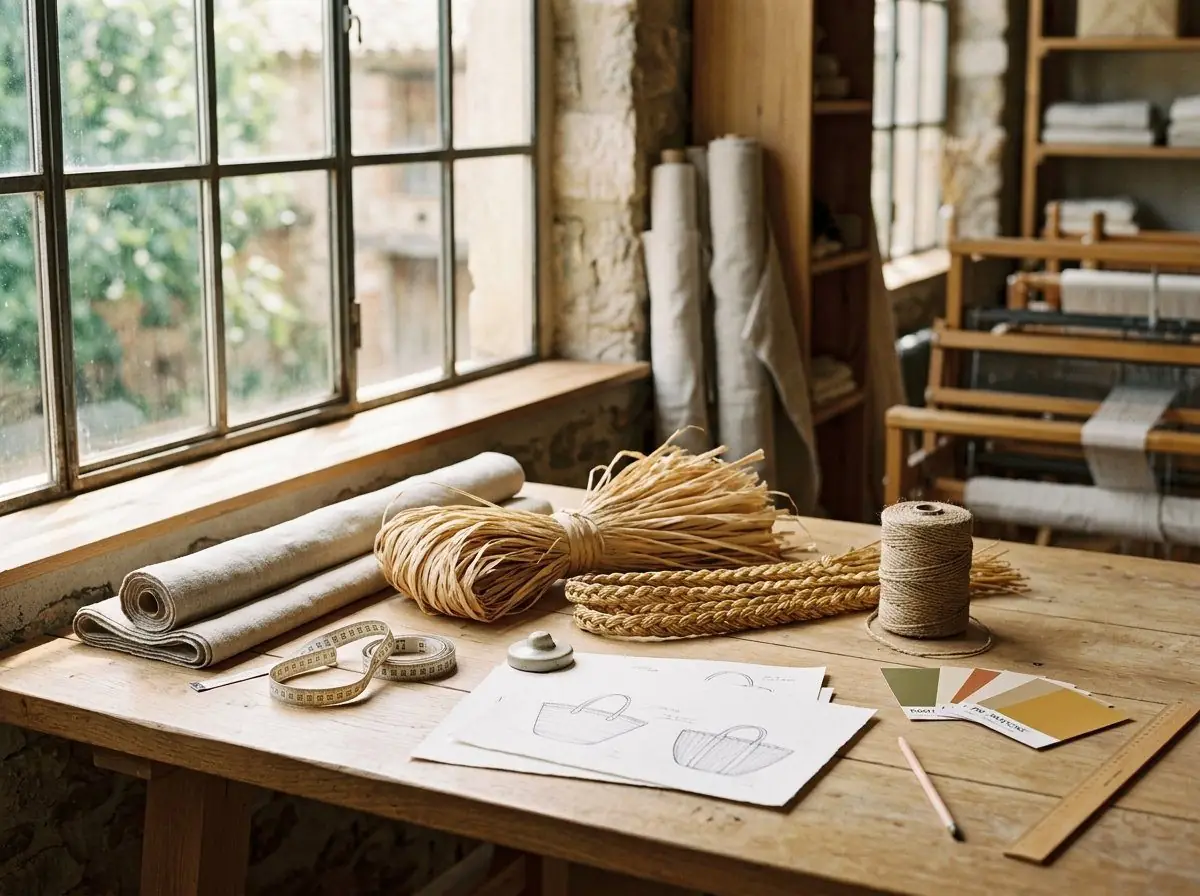 Decision one happens at the desk, before a sample exists: the job of the bag picks the fibre, and the fibre picks the cost.
Two: which price band
The price band is not a negotiating position. It is the first constraint that decides which of the other choices are available.
At one end, the fibre is the cheapest that will do the job, the lining is a simple cotton, the hardware is stock, and the packing is a polybag with a hangtag. At the other, the fibre is graded for evenness, the handles are leather or custom metal, the lining is cut and sewn in, and the packing includes a dust bag and a printed box. Both are legitimate products. They are not the same product at different margins, and a workshop cannot move one to the other by adjusting a number.
The useful exercise is to decide the band before you fall in love with a sample. If you sample at the premium end and then need an opening price, the second round is spent removing things. Removal is slower than addition, because every removal reopens the construction. Taking out a leather handle changes the anchor, which changes the lining, which changes the sample.
Two bands are usually the limit for a first order, not the starting point. It gives you a hero piece and an entry piece without doubling the development work. Three bands in a first range means three sets of materials, three sets of approvals and three ways to be wrong.
Three: how many styles, and what that does to cash
The arithmetic that surprises first-time founders is the MOQ. Our minimum is 100 pieces per style in natural fibre; synthetic and textile cord run 100–300 depending on the cord. That sounds small until it meets a four-style range: four styles is 400 pieces, not four. Add a second colourway on one style and the smallest sensible opening order is already a real inventory commitment.
Four styles at MOQ, split across two price bands, is the structure we see hold up: a hero, a core carry-all, an opening-price piece and one shape you are testing. That is 400 pieces. Compare it with the other common plan, 200 pieces of one shape in one colour. The second looks like a smaller commitment and often is, in cash. In information it is much smaller. If the shape is wrong, you have learned one thing and you still have most of the order.
The calendar follows the same logic. Our first sample takes 10–15 days. Revisions are usually 1–2 rounds at 5–7 days each. A pre-production sample takes another 7–10 days and must use material from the bulk lot. Bulk runs 30–45 days, or 45–60 with custom dye or a new mould.
| Step | Typical time | What you approve | If it is skipped |
|---|---|---|---|
| Settled brief | before sampling | fibre, structure, colour direction | the samples test the wrong bag |
| First sample | 10–15 days | construction and colour direction | nothing concrete to compare |
| Revisions | 1–2 rounds, 5–7 days each | a written correction list | the next sample drifts |
| Pre-production sample | 7–10 days, bulk-matched material | the standard the run will be held to | bulk surprises at the dock |
| Bulk production | 30–45 days; 45–60 with custom dyeing or a new mould | the run | you miss the season, not just the order |
| Freight | depends on mode | packing and terms | margin surprise |
| Read the time column downwards and a settled brief becomes a shipped order in roughly eight to twelve weeks, before freight. That is why the calendar matters more than the design. Orders placed in January and February are the ones that reach the March–July season. Orders placed in March are selling into a window that is already closing. If you want to be on a shelf for that season, the sampling conversation belongs in the previous autumn. |
There is one more line in the cash plan that new brands miss. Handwoven bags are bulky for their weight, and volumetric weight can add 20–30% to landed cost. A soft tote that folds flat ships far more cheaply per unit than a structured bag that does not. Packability is a construction decision, and it is made when you choose the shape.
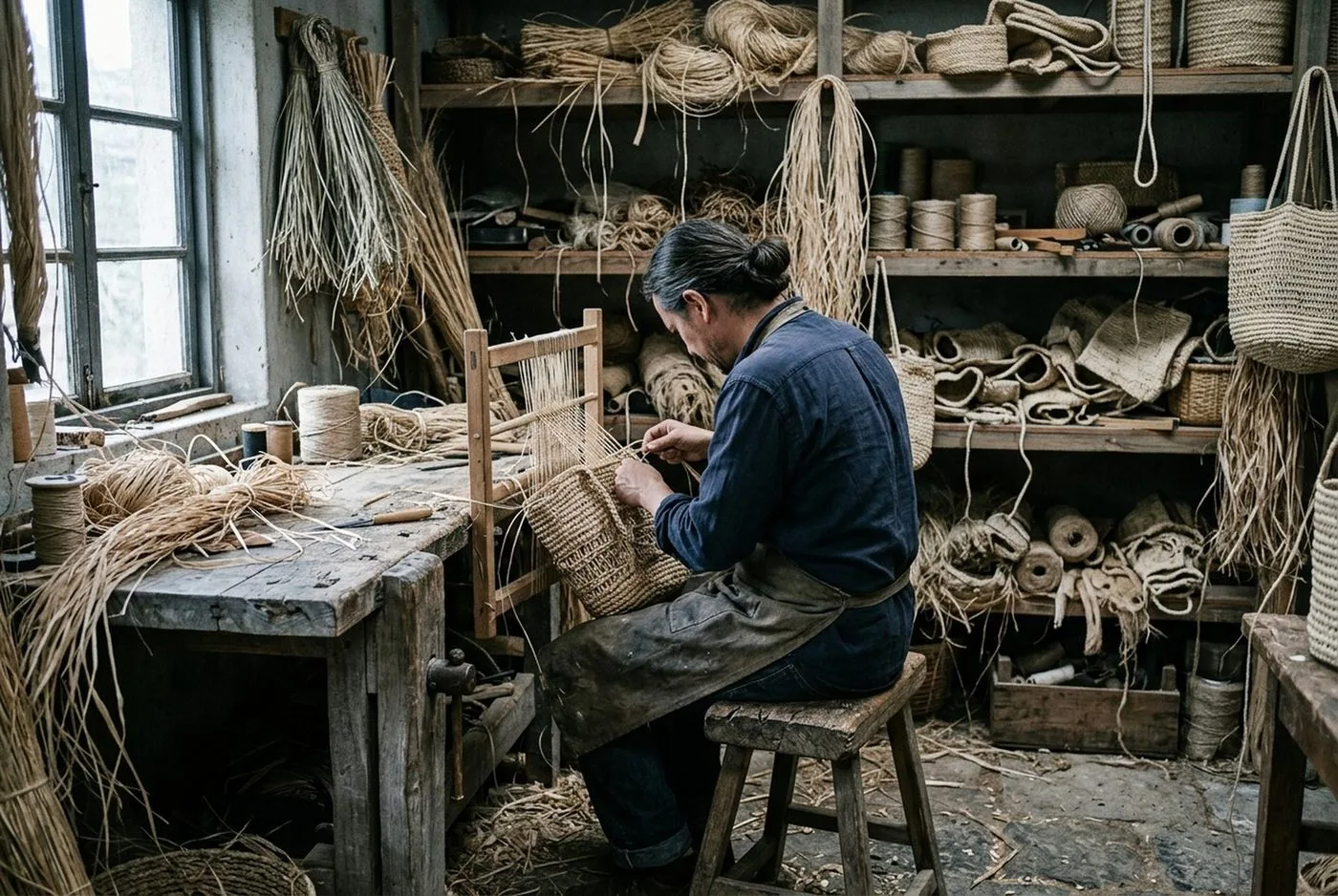 Four styles at MOQ is 400 pieces on the bench, not four. The size of the first order is set by the MOQ, not by the number of ideas.
What the first sample is for
A sample is not a preview of the product. It is the specification being tested, and the only chance to change the construction before it is repeated a hundred times.
Ours take 10–15 days. The fee is quoted per style and offset against the bulk invoice when the order reaches MOQ, so the sample is a development cost that becomes part of the order rather than a separate purchase. Get that term in writing before the sample starts, with us or with any workshop, because the answer tells you whether it expects to make the bag or expects to sell you a sample.
Bring a tape measure and a colour card to the review, not just an opinion. Measure the width and depth, the handle height, the drop and the base. Hold it loaded. Turn the lining out. The eye test approves a bag; the tape measure approves a specification, and the specification is what gets repeated.
Four: what carries your brand
Decide this before the sample, because branding applied to a finished bag is a rework and branding built into the sample is a decision.
The options are wider than most founders expect: woven labels, leather patches, screen printing, foil stamping, embroidery, custom hardware, bespoke lining, dust bags, hangtags, carton labelling, retail packaging. All of these are ordinary for us. The question is which ones the bag actually needs.
A rule that holds up: put the brand where the customer's hand goes, and let everything else wait for the second order. A woven label inside the mouth and a hangtag is enough for a first range. Embroidery on the face is a different decision, because it changes the weave, the sampling time and the reject criteria. Placement is usually accepted within 5 mm; a logo that needs tighter than that is a conversation about a different construction, not a tighter instruction.
Do not design the logo before the bag. Branding is applied to an object, and the object comes first. A heavy metal plate on a soft raffia face will pull the weave, and handling the sample will show it. That is a useful thing to learn from a sample rather than from a season of returns.
Five: where it sells
Destination decides packing, labelling and freight, and it is the decision most often made last.
Three destinations, three sets of constraints. A boutique wants a hangtag and a dust bag, and often supplies its own barcode. A resort shop wants packing that survives being stacked in a humid store room and labelled to its own system. An online seller needs the parcel to survive a courier and the unboxing to be worth photographing. The bag can be identical in all three cases. The carton, the label and the packing are not.
The freight line is where this becomes money. Volumetric weight can add 20–30% to landed cost, and that is part of your cost per unit, not a shipping detail. It is decided by how the bag folds, how many fit in a carton, and whether the carton is single or double wall.
If your market has warehouse labelling rules, find out before the cartons are printed. Reprinting labels is cheap. Reprinting cartons is not, and a mislabelled carton is discovered at your warehouse, which is the most expensive place to discover anything.
What not to do first
Do not ask for a price list. A workshop that produces one is describing someone else's bags, and the number will not survive contact with your specification.
Do not order four colours to see which sells. Order one, sell it, then reorder in the colour that worked. Natural fibre is matched against a colour card, so a second order can genuinely match the first, but only if the first lot was recorded. Four colours in one order tests nothing and ties up cash in three colours you did not need.
Do not choose a fibre from a photograph. A photo flattens the difference between a bag that stands and a bag that slumps, which is the difference you are actually buying.
When this advice does not apply
If you are an established brand adding a category, you already know your price band and your customer. Skip decisions one and five and spend the time on materials and branding. The five-decision order is for founders who have not yet made those calls.
If you are buying white label, you are choosing from an existing product rather than developing one. The decisions become selection and inspection. That is a different job, and the questions are about the lot in front of you, not the brief behind it.
If you have a fixed date, a hotel opening or a resort season, start from the delivery date and work backwards. The calendar will remove options for you, and it is better to remove them yourself than to discover late that the packing spec was never agreed.
If you are testing one shape, a single style at MOQ is 100 pieces, and that is a legitimate first order. The four-style structure is for a range. It is not a rule about ambition.
The first email that gets a useful reply
Five lines are enough:
- What the bag is, as a structure or a reference.
- What it is made of, or that you do not know yet.
- Roughly how many, and roughly when.
- Where it is going.
- What your brand needs to appear on it.
That is a brief. It can be answered, and the answer will be a specification with a price attached, rather than a number pulled out of the air.
Before you place the order, ten things should be settled. The right-hand column is what "settled" actually looks like.
| Item | Settled looks like |
|---|---|
| Structure | a named shape, or a sample you have held |
| Fibre | a fibre and a grade, or a written reason for the choice |
| Colour reference | a physical card number, not a screenshot |
| Size and tolerance | a measured sample with the spec written down |
| Handle construction | anchor method and drop agreed |
| Lining | material, colour, and how it is attached |
| Branding | label, hangtag and placement |
| Packing | carton, inner packing and labels |
| Quantity per style | MOQ per style, with colourways counted |
| Delivery window | a ship date, not a season |
| If two of those are still open, the sample will close them in the most expensive way. |
Common questions
- What is the minimum order to start a bag brand?
- Our baseline is 100 pcs per style, and synthetic or textile cord constructions run 100–300 pcs depending on the cord. Collections can be negotiated as a group.
- What should I decide before contacting a factory?
- Purpose, price band, number of styles, what carries the brand and where it sells. Those five decisions set the brief and the cash requirement.
- How much does it cost to start?
- We quote per style after the brief; sampling takes 10–15 days and the sample fee is credited toward the bulk invoice at MOQ. We do not publish prices.
custom development covers building a bag to your own design. private label covers applying your brand to an existing one. wholesale sets out how an order runs from brief to shipment.
See the straw bags we currently produce in this range.