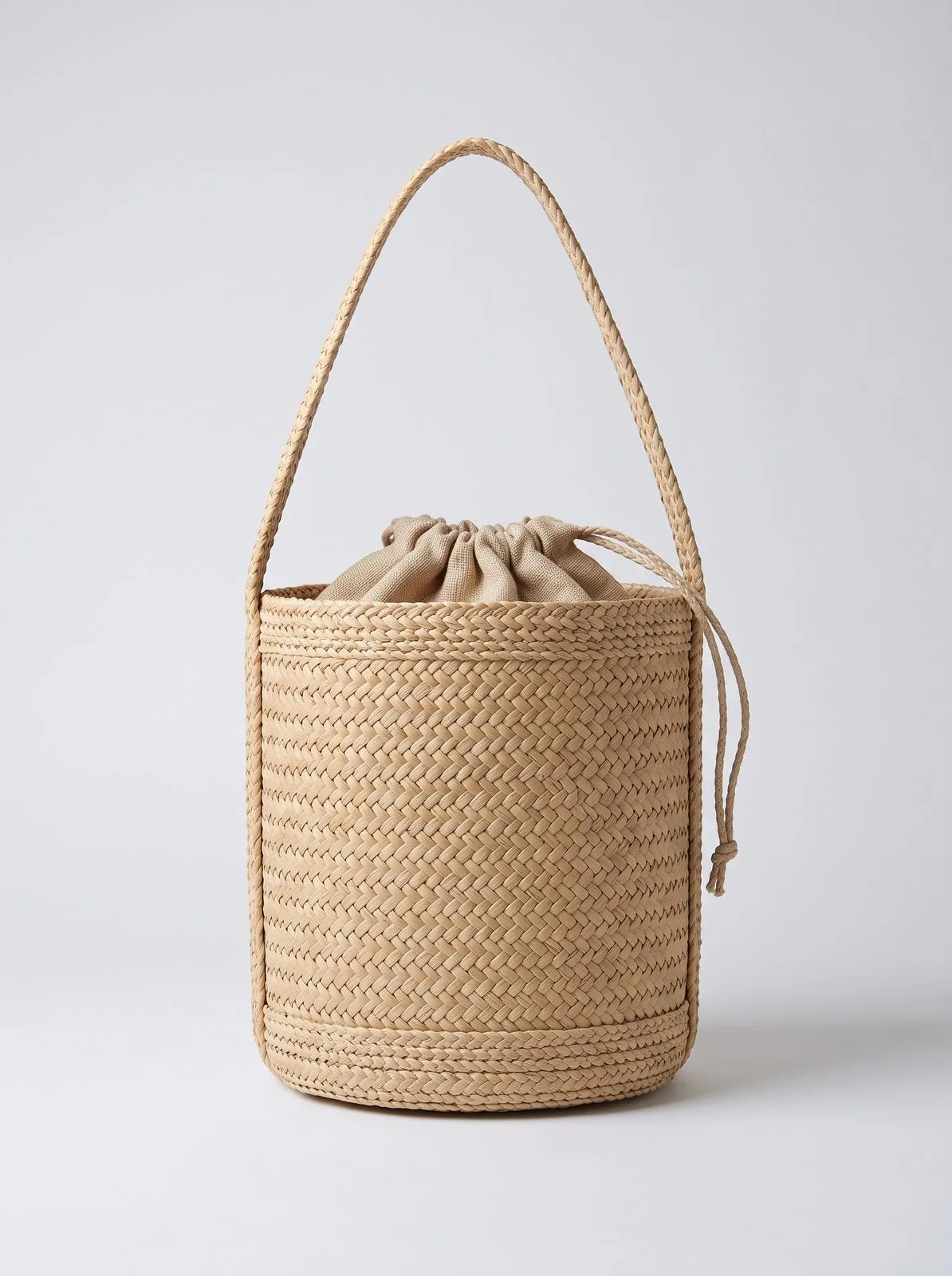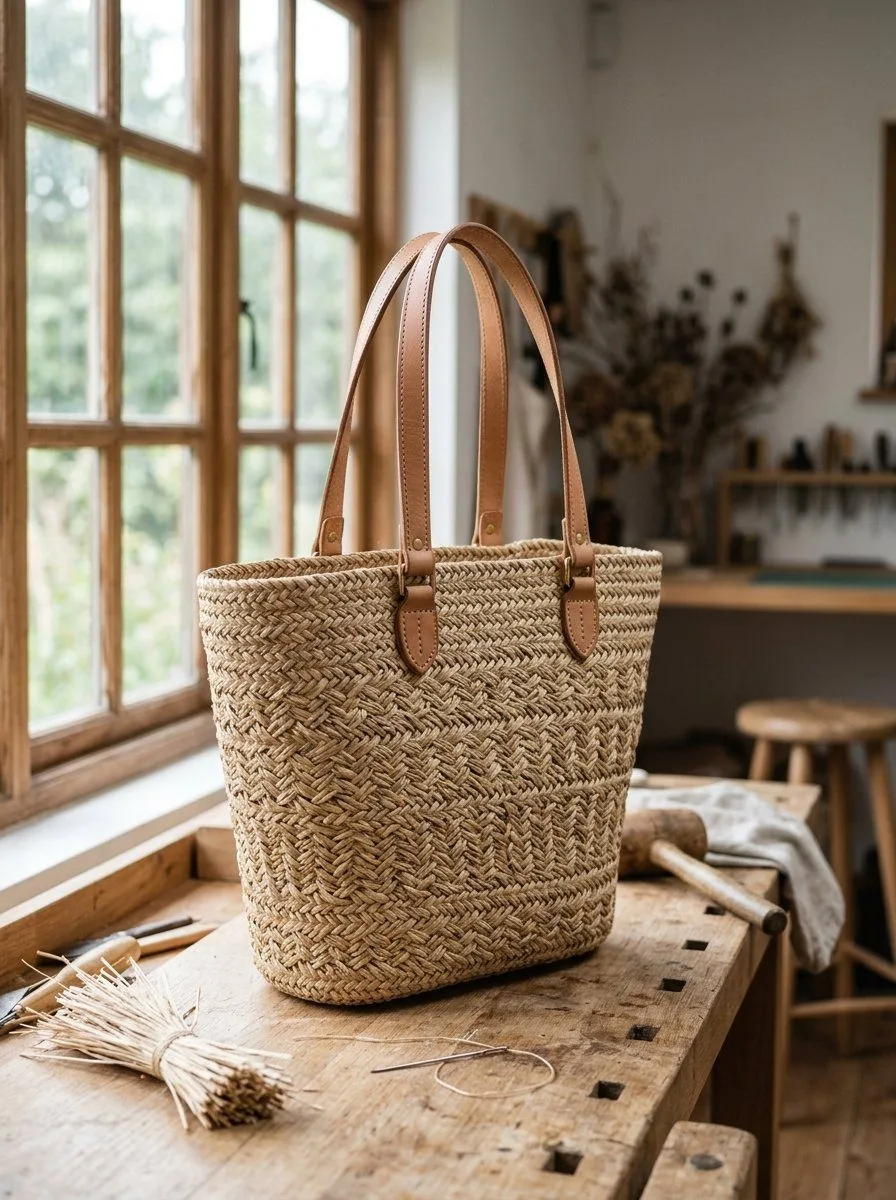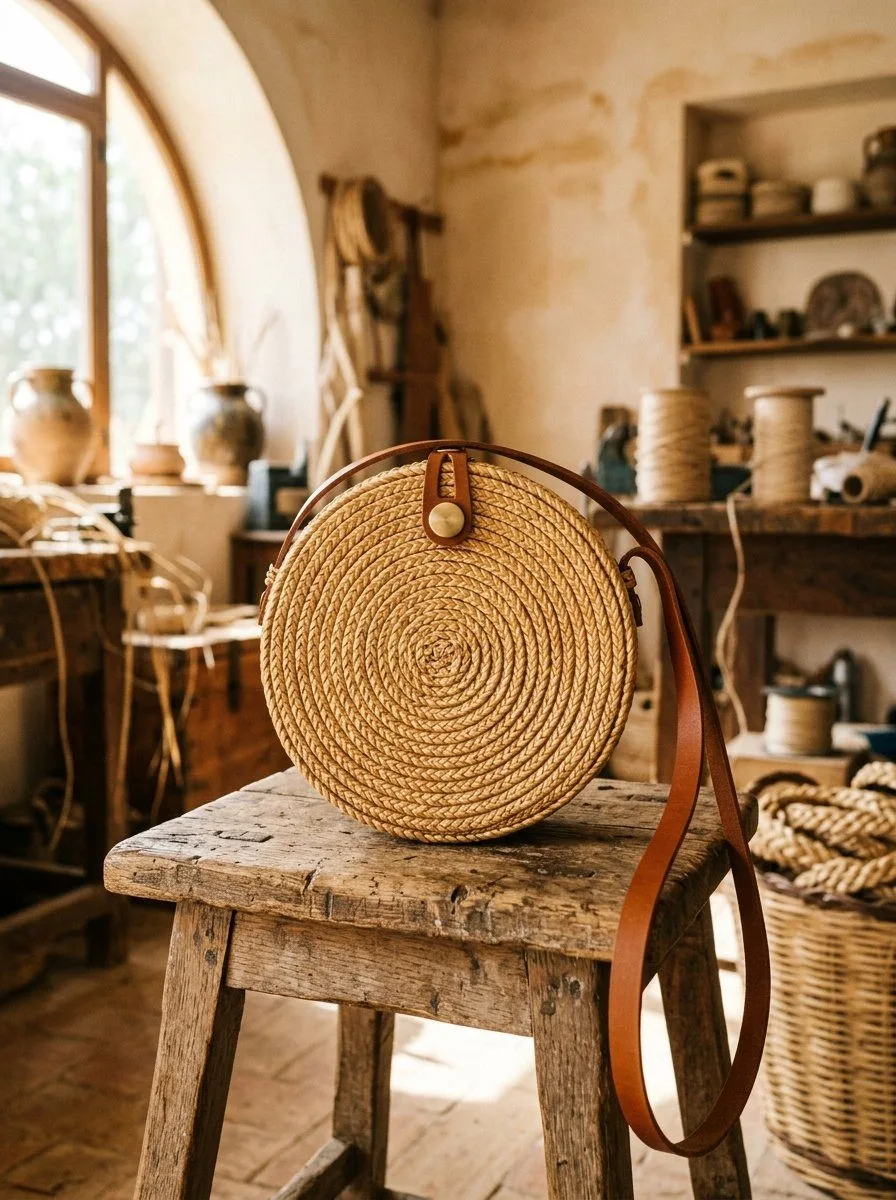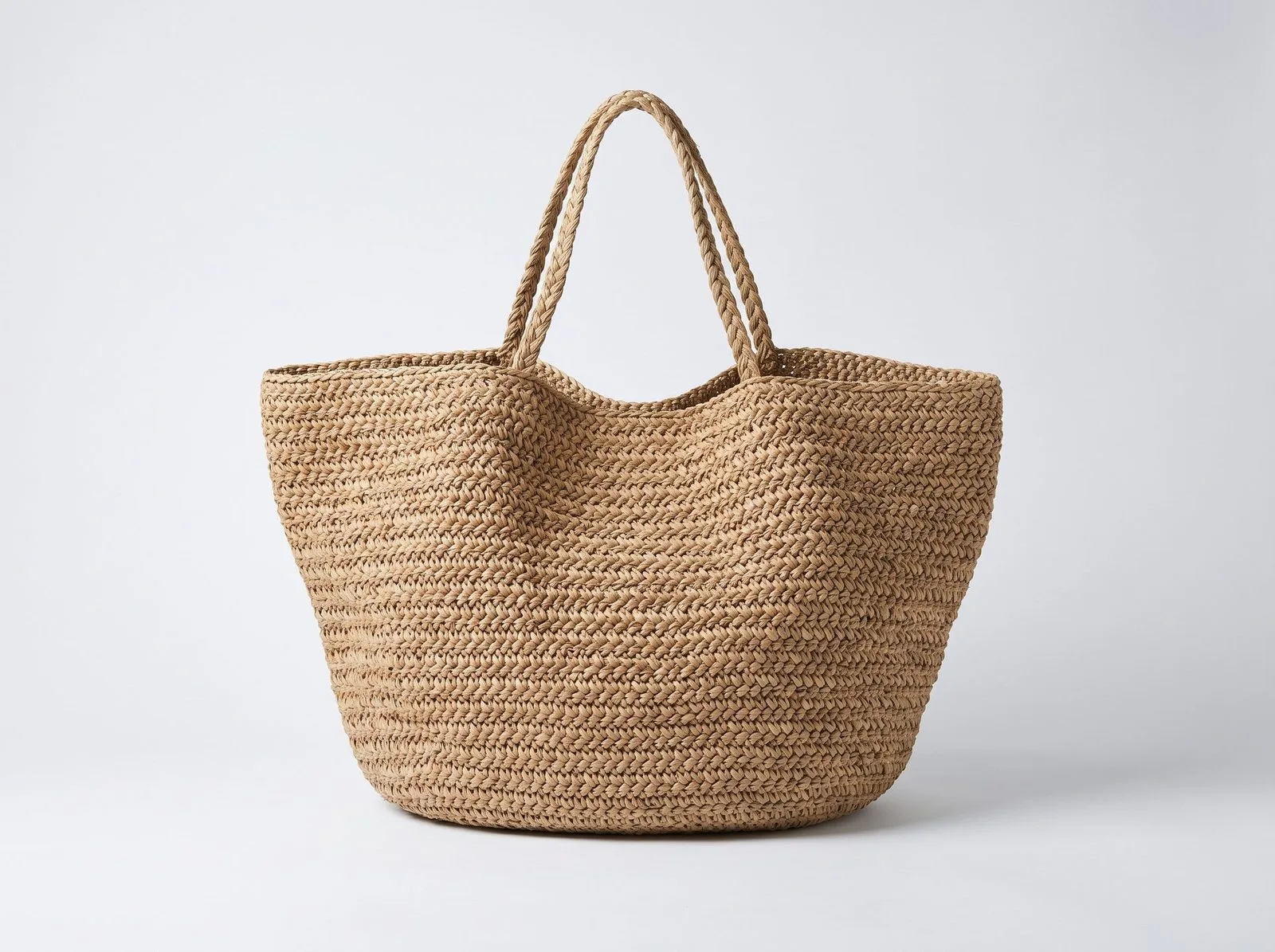
Styling guides are written for the person carrying the bag. This one is written for the person ordering it. How a straw bag is styled in photographs decides which specifications are worth carrying — and which ones add cost without selling.
Styling is a specification signal
Consumer advice keeps asking for the same four things. "It goes with everything" is a request for undyed natural as the base of the range, not the plain option. "Works past summer" means a structured shape and a darker handle. "Everyday, not just beach" means a defined opening and a moderate scale. "Easy to photograph" means one clear detail.
In this season's inquiries, the pieces that get reordered are rarely the most decorated. They are the ones a stylist can put with three outfits. Coastal grandmother is still the largest group we see at about 32% of inquiries, quiet luxury about 26%, coquette 18%, boho 12% and resort 8%. The detail level follows those buyers: fewer, better-resolved pieces in the first two groups; more colour and whimsy in the third.
The scene matrix
| Scene | What is actually carried | Shape that works | Detail that sells it | Spec note |
|---|---|---|---|---|
| Resort and pool | Towel, sunscreen, book, bottle | Open top, gusseted, 35cm class | Contrast handle or lining | Handle join must take a wet towel's weight |
| City and everyday | Phone, wallet, keys, small tablet | Structured, closure, moderate scale | Clean handle, minimal hardware | Lining and closure; bag must stand |
| Evening and dinner | Phone, cards, lipstick | Compact, lined, holds its shape | Bead, knot or embroidered mark | Small panels show gaps; body gaps over 2mm are a reject |
| Market and travel | Water, produce, a folded layer | Soft body, longer handle | The weave itself | Base reinforcement; it has to fold |
| The matrix is not a style opinion. It is a list of loads. A bag specified for the resort row and used in the city row will fail on closure, not on looks. A resort bag that has to take two towels needs its handle join reinforced at sample stage, not at bulk. That is a 10–15 day sampling decision, not a production fix. |
The trap in styling-led buying
A wide, open, soft bag photographs beautifully and carries badly. It looks generous in a lifestyle image and collapses when a towel goes in. The return comes back through the retailer, not through the photographer.
Check three things before volume: does it stand when empty, if the styling implies it; does the base hold a wet towel; does the handle join move when the bag is lifted by one side. Our reject criteria are blunt: any movement at the fixing, more than 2cm difference in handle height, or a body gap over 2mm.
Not every straw bag needs to stand. A beach bag is allowed to collapse. The error is writing "structured" into the brief because the photograph looked crisp.
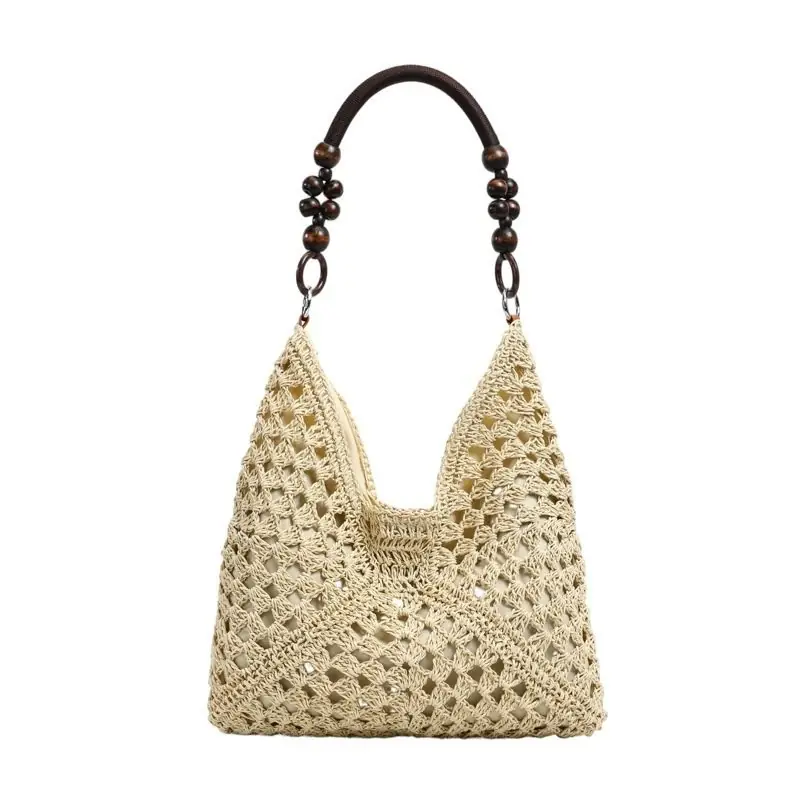 A single clear detail — here, the bead-and-ring handle — is what styling content can write around. It is also a cost line.
What this means for a small range
Four styles, not twelve. One undyed structured tote at the 35cm reference size, one darker-handled shoulder bag, one compact lined evening piece, one soft market bag. MOQ is 100 per style, so a four-style first order is 400 pieces before colour splits — enough to test the range without betting the season on one shape.
Two of the four belong in a lower price band, two higher. Keep one detail per bag: a woven handle, a contrast stitch, a leather patch. Two details compete in a photograph and add two cost lines in production. Sampling runs 10–15 days, so a four-style range is one round, not four.
The evening piece is where ranges overreach. Mini bags under 18cm have been slowing in our inquiry mix. The evening bag that still gets reordered takes a phone and a card case and has a lining.
When styling advice does not transfer
Winter styling is mostly a colour change — a darker handle, a deeper dye — not a construction change. Do not rebuild the bag for it.
Beads, shells and fringe read well in coquette styling and poorly in transit; if the detail is not the reason people buy, leave it out. And a bag styled for a shoot may never be carried. Ask what the buyer will actually put in it before you approve the sample.
Where to go next
Common questions
- Are straw bags in style in 2026?
- Yes, but demand has moved toward defined shapes and undyed or natural tones rather than novelty. Buyers are asking for bags that read as year-round, not only resort.
- What do you wear with a straw bag?
- The bag reads as a texture, so it sits best against plain linen, denim and neutral tailoring. Busy prints compete with the weave.
- How do buyers use styling in range planning?
- Styling is a specification signal: the scene sets size, handle drop and colour. A bag planned for one scene is easier to buy than a bag planned for every scene.
Straw bags in bulk covers fibre and construction, and the straw collection shows how the shapes sit together. If a styling direction needs a structure that does not exist yet, that is custom development.
If you are unsure which row your buyer is in, send the three objects they will carry. That settles the structure faster than a mood board.
See the straw beach bags we currently produce in this range.