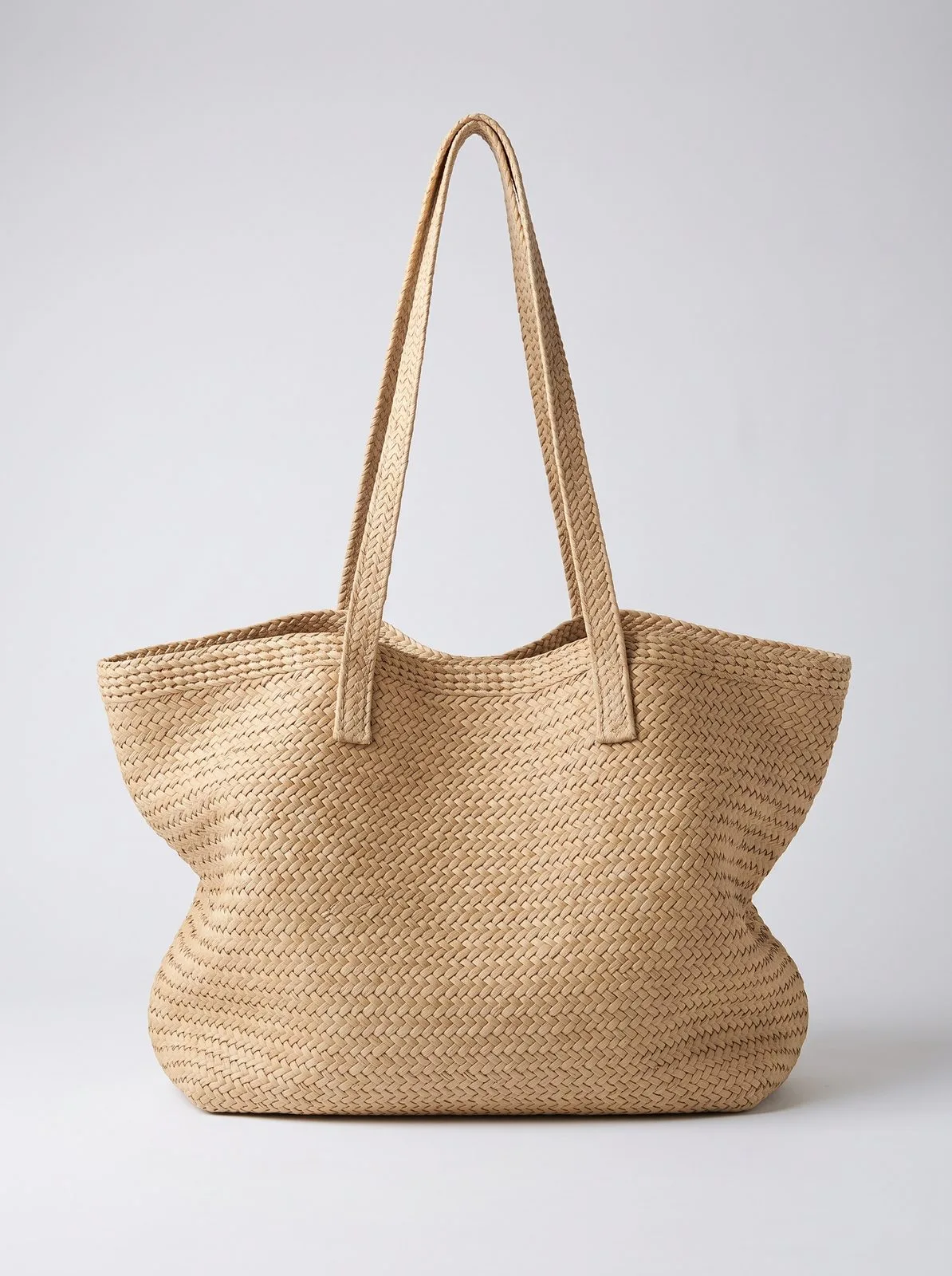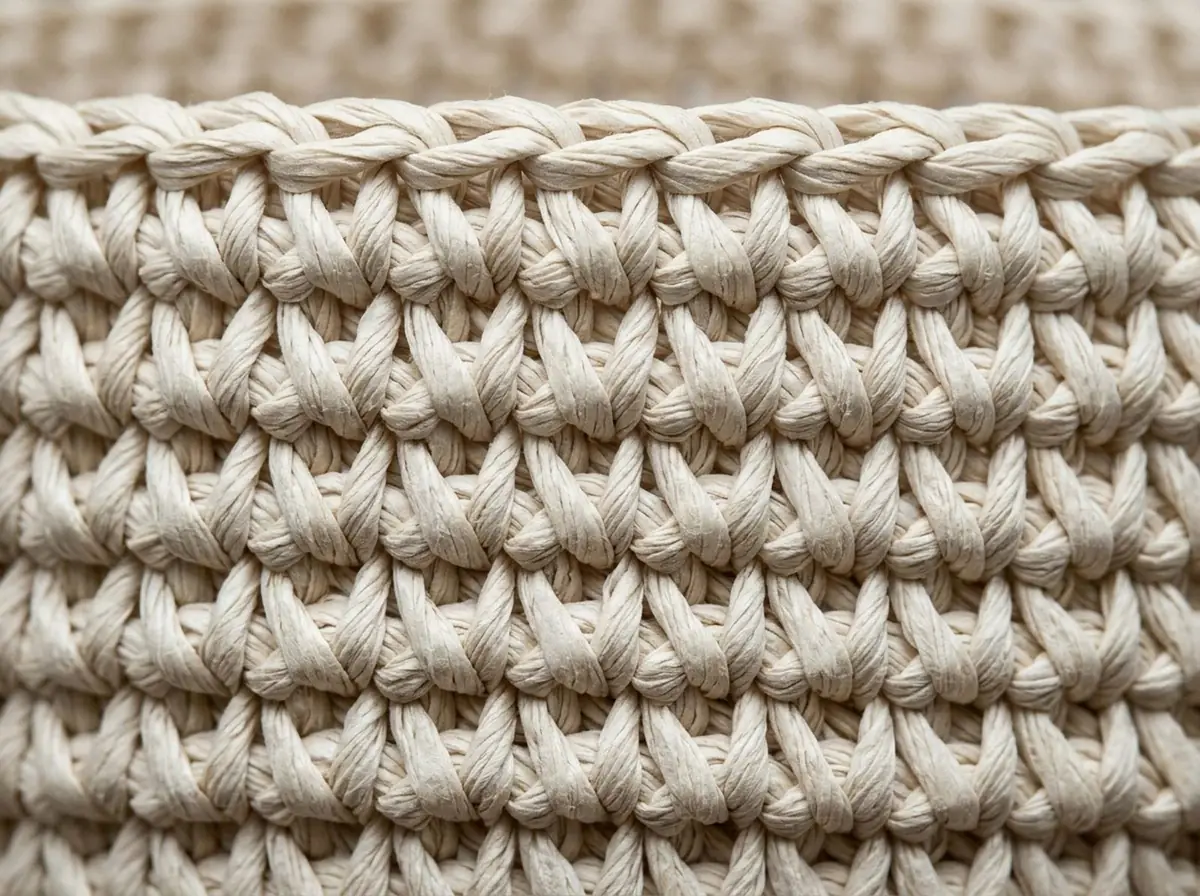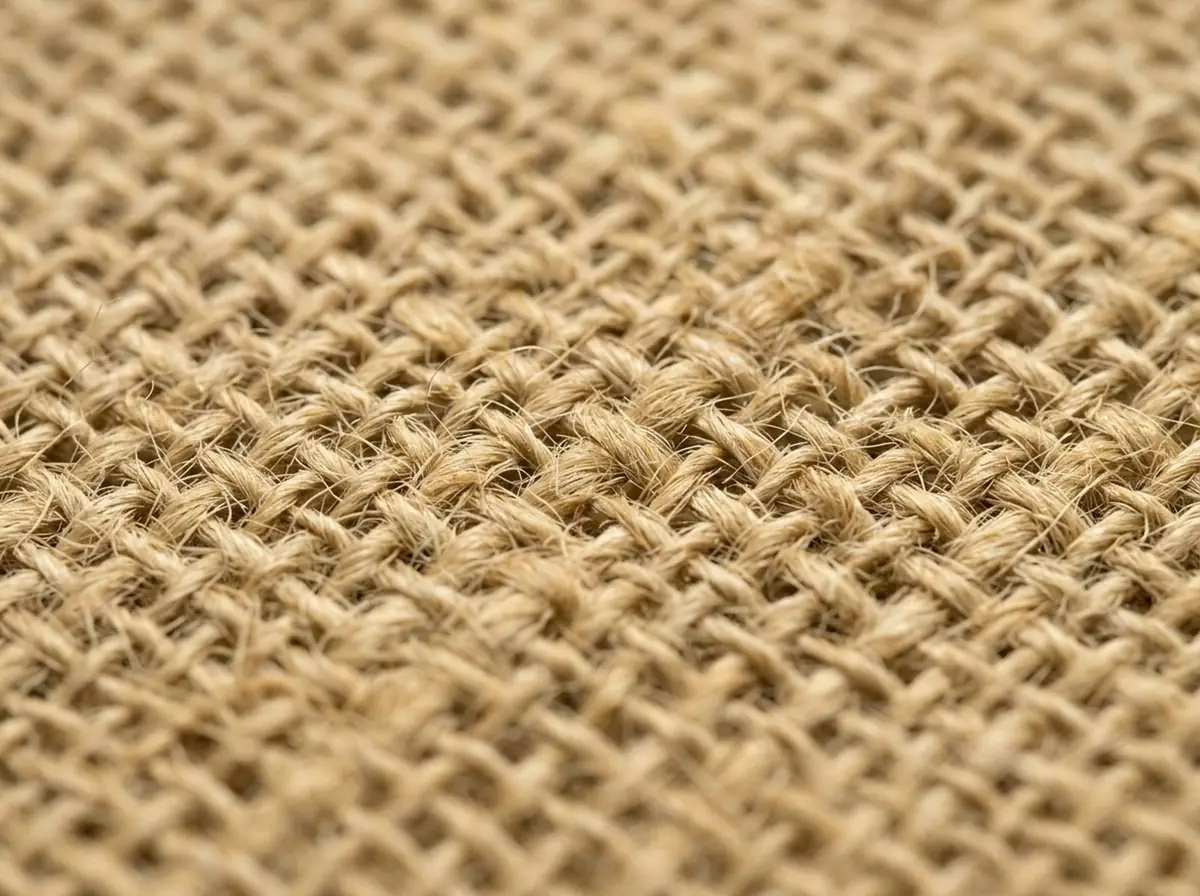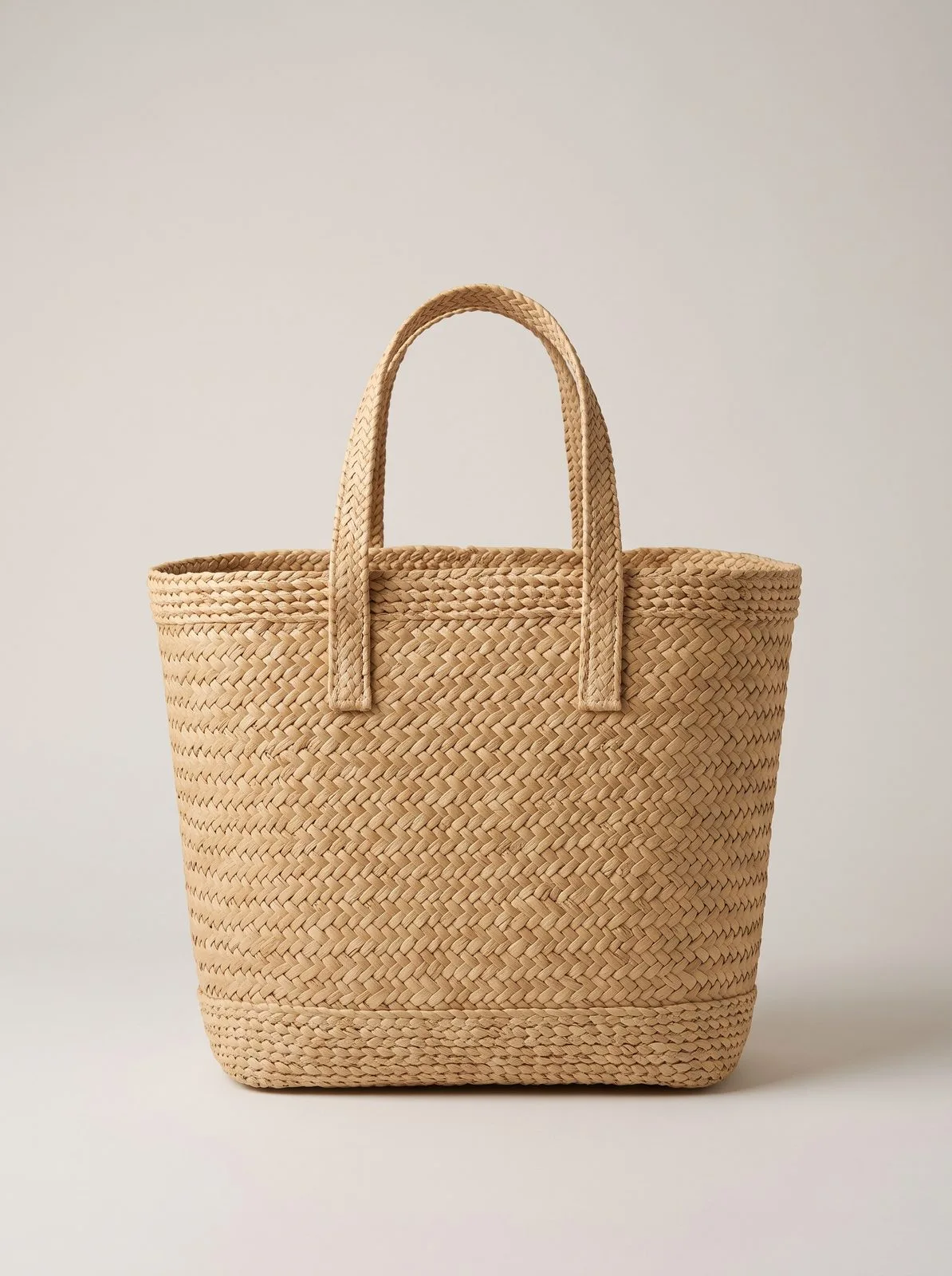
A buyer once sent us a sample with a note: "Is this raffia?" It was paper straw, dyed to match. The bag was three months old, and the handles had gone soft.
Nothing in the photograph would have told her. The colour was right. The weave was neat. The word on the supplier's line sheet was "raffia."
The word does not mean one material
In the trade, "raffia" is used for anything with a flat, ribbon-like surface. Paper straw, extruded synthetic ribbon and split low-grade palm all travel under it.
Sometimes that is honest shorthand. Sometimes it is a substitution you discover in the carton.
The risk is not usually the fibre itself. It is that the fibre decides what you can promise: colour consistency, how the bag ages, what the label can honestly say, and how it behaves in humidity.
Five checks that work without a lab
Run these in the order below. Each takes less than a minute, and none of them damages a sample beyond a single strand.
| Check | Real raffia | Paper straw | Synthetic ribbon |
|---|---|---|---|
| Look along the strand | Visible grain; width tapers | Uniform width; sharp cut edge | Perfectly even; slight gloss |
| Break one strand | Splits lengthwise into finer fibres | Tears cleanly across | Stretches before it fails |
| Wet a strand | Darkens, softens, dries with body | Goes limp; edge may separate | Sheds water; no change |
| Rub the cut edge | Fibres lift like grass | Fuzzes like paper | Edge is sealed and smooth |
| Compress it | Springs back | Holds the crease | Feels dense and smooth |
| The break test is the one we rely on most. Raffia has a grain, and a grain splits along its length. Paper cannot do that, and an extruded ribbon has no grain to split. |
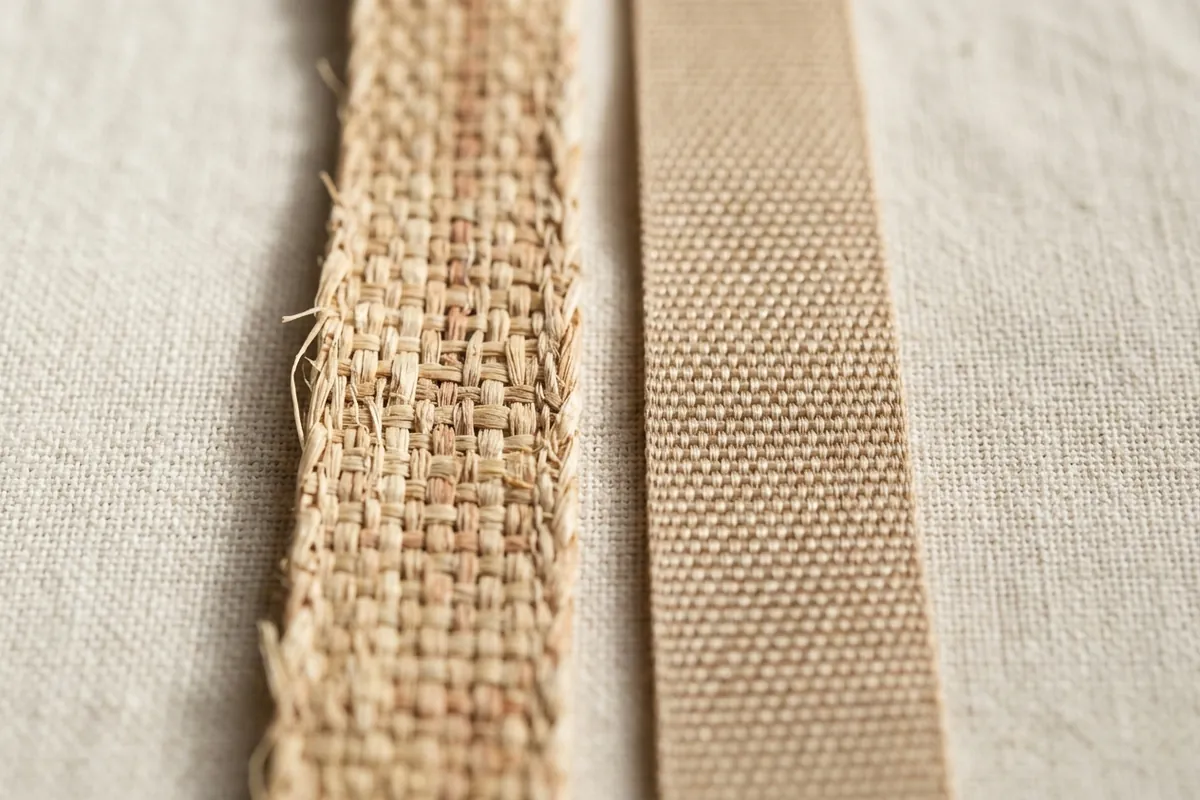
The difference is in the edge and the grain, not in the colour.
The field kit is small enough to carry in a bag: a tape measure, a small bottle of water, a phone with a macro lens, a swatch of known raffia, and a pen to label what you tested.
Boundaries: a heavily dyed or coated raffia can hide its grain, and a blended yarn can pass three of the five checks. If the surface is coated, ask what is underneath rather than testing the coating.
What you are probably being sold
Most "raffia" that is not raffia is one of three things. Each has a fair use, which is why the substitution often survives a price negotiation.
| What it is | Actually | How it fails | Fair use |
|---|---|---|---|
| Paper straw | Paper strips, flat or twisted | Weakens in moisture; edge separation | Colour-critical ranges, dry climates, lower price points |
| Synthetic ribbon | Extruded polymer | Does not age; reads plastic up close | Poolside, high-humidity, wipe-clean products |
| Low-grade raffia | Short or uneven palm strands | Splits early; patchy dye | Hidden structure, lining, trim |
| None of the three is automatically a cheat. The problem is the unannounced swap, where you pay raffia money for a paper bag, or tell a natural-fibre story over a polymer ribbon. |
How a substitution gets into an order
It rarely arrives as a decision. In our experience it enters through one of four doors.
The sample and the bulk come from different lots. The sample was made from a good bundle someone had set aside. Bulk is bought later, from whatever is available. Nobody lied; nobody checked.
The trade name covers two materials. A broker quotes "raffia" and delivers paper straw at a price that looks like a good deal. The paperwork never names a species.
A mid-order "improvement" is offered. Halfway through, the supplier proposes a cheaper ribbon that "looks the same." It does, for six weeks.
The specification never mentions the fibre at all. It lists dimensions, colour and packing, and leaves the material to the photograph. That is the most common version, and the easiest to prevent.
Why the timing makes it worse
The selling season runs from March to July. Retail orders are placed in January and February. A first sample runs 10–15 days, bulk production 30–45, and a custom dye can push bulk to 45–60.
That arithmetic leaves little room for a second production run. If a fibre substitution only becomes visible when the carton opens in late April, you have a range that is wrong at the start of its season and no time to remake it. The cheap ribbon that saved a few percent on unit cost is now the reason the season is lost.
A fibre check is not a detail. It is the decision that has the longest shadow.
Weight and price are weak tests
Two bundles that look identical can differ in weight by half.
Fresh raffia holds about 40% moisture. After drying and sorting, a kilo yields 200–600 grams of usable fibre. A heavier sample is not a better sample; it may simply be wetter, or less sorted.
Price is equally unreliable at the sample stage. Paper straw and synthetic ribbon can cost more per metre than a low grade of raffia. A high sample price proves nothing except that the supplier expects to be paid.
When this check does not matter
Three cases where we tell buyers to stop worrying about the fibre name:
- The material is disclosed and priced as synthetic. Your customer is buying the look, and consistency between lots is the only open question.
- The surface is fully coated, laminated or embroidered edge to edge. The substrate matters for strength, not appearance.
- The fibre is never seen — an internal stiffener, a base layer, a lining.
One case where the test itself is wrong: do not run a burn test on a shop floor. It is a laboratory method, it destroys the sample, and the result is less reliable than the break test. If you need a formal identification, send a strand to a lab.
Locking the fibre into the order
Three steps prevent most substitutions:
- Keep a signed swatch. Not a photograph. A 10 cm piece with the date, the lot number and the fibre name written on the bag.
- Ask for a pre-production sample from the bulk material lot. This adds 7–10 days and is the most useful step in the whole process. A sample made from a different lot proves nothing about bulk.
- Name the fibre in the purchase order, by species. Add one sentence: any change to fibre, width or blend requires written approval before production.
Sampling with us runs 10–15 days, bulk 30–45 days. The pre-production sample sits between the two, at the point where a substitution is still cheap to fix.
For the bulk order itself, inspection is where the swap gets caught. We check 5% of cartons, with a minimum of 10 pieces, piece by piece against the signed sample. A fibre that does not match is not a defect percentage; it is a rejected lot.
The line that belongs in every purchase order
Fibre: raffia (palm leaf), not paper straw or synthetic ribbon. Width 8–10 mm. Substitution requires written approval before production. Reference swatch dated and signed at sample approval.
That is a sentence a supplier can sign. It is also the sentence that turns a dispute about a carton into a conversation about a document instead of a conversation about memory.
Common questions
- How can I tell real raffia?
- Check the strip: raffia is a flat, slightly irregular ribbon with visible fibre grain. Paper substitutes are more uniform and crease sharply; plastic versions feel slick and spring back.
- Is raffia the same as paper straw?
- No. Raffia comes from the raffia palm; paper straw is twisted paper. They behave differently in dye, moisture and abrasion.
- Why do cheap raffia bags fail?
- Usually because the fibre was dry or split too thin. The bag looks right at first and then cracks at the folds within a season.
If you want to see how the fibres behave next to each other, the material guide sets them side by side. For bulk raffia supply, start at wholesale raffia bags; for a bag built to your own specification, custom development covers the process from brief to sample.
See the raffia bags we currently produce in this range.