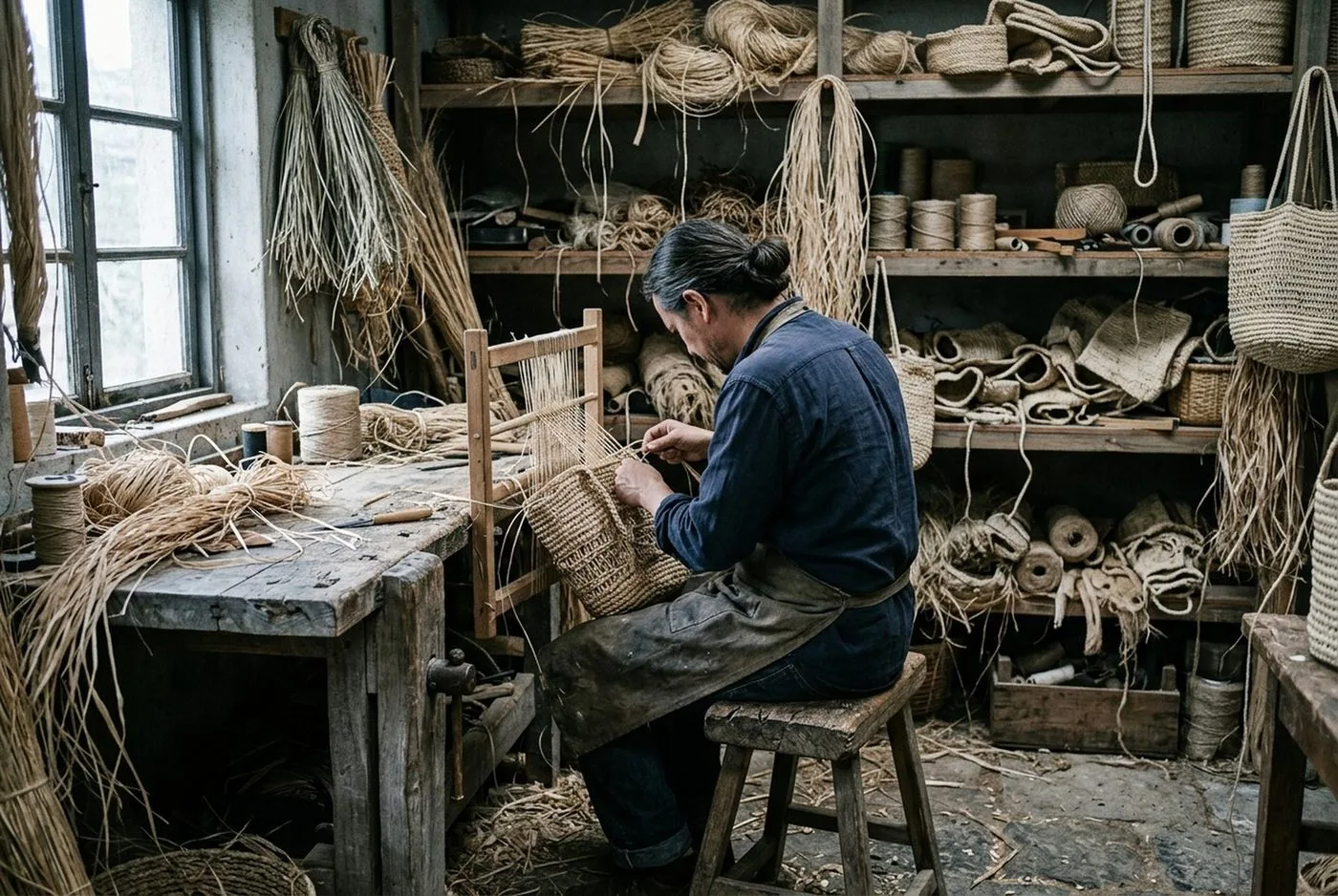
We do not publish profiles of our weavers. A photograph of hands tells a buyer almost nothing about the order they are placing. What matters is what the work asks of whoever is doing it, because that is what decides what a workshop can promise and what it cannot.
So this is about the skill, and where it shows up in the bag you receive.
Tension is the skill you cannot see
Weaving is the act of holding one consistent pull across hundreds of passes. Too tight and the surface buckles. Too loose and it sags, and the rows drift out of line.
A structured handbag takes around 20 hours of handwork. A simple small bag takes about 2. A fine crochet body can pass 100 hours before it is lined. Most of those hours are not decoration — they are the cost of holding that pull steady while the fibre underneath keeps changing. A strand is thicker here, drier there, and the hand adjusts before the eye has noticed anything.
The result is visible on a finished bag. Take a 35 cm body: a drift of two or three millimetres per row disappears in the first ten rows and is obvious by row forty. The side leans. Pressing will not correct it.
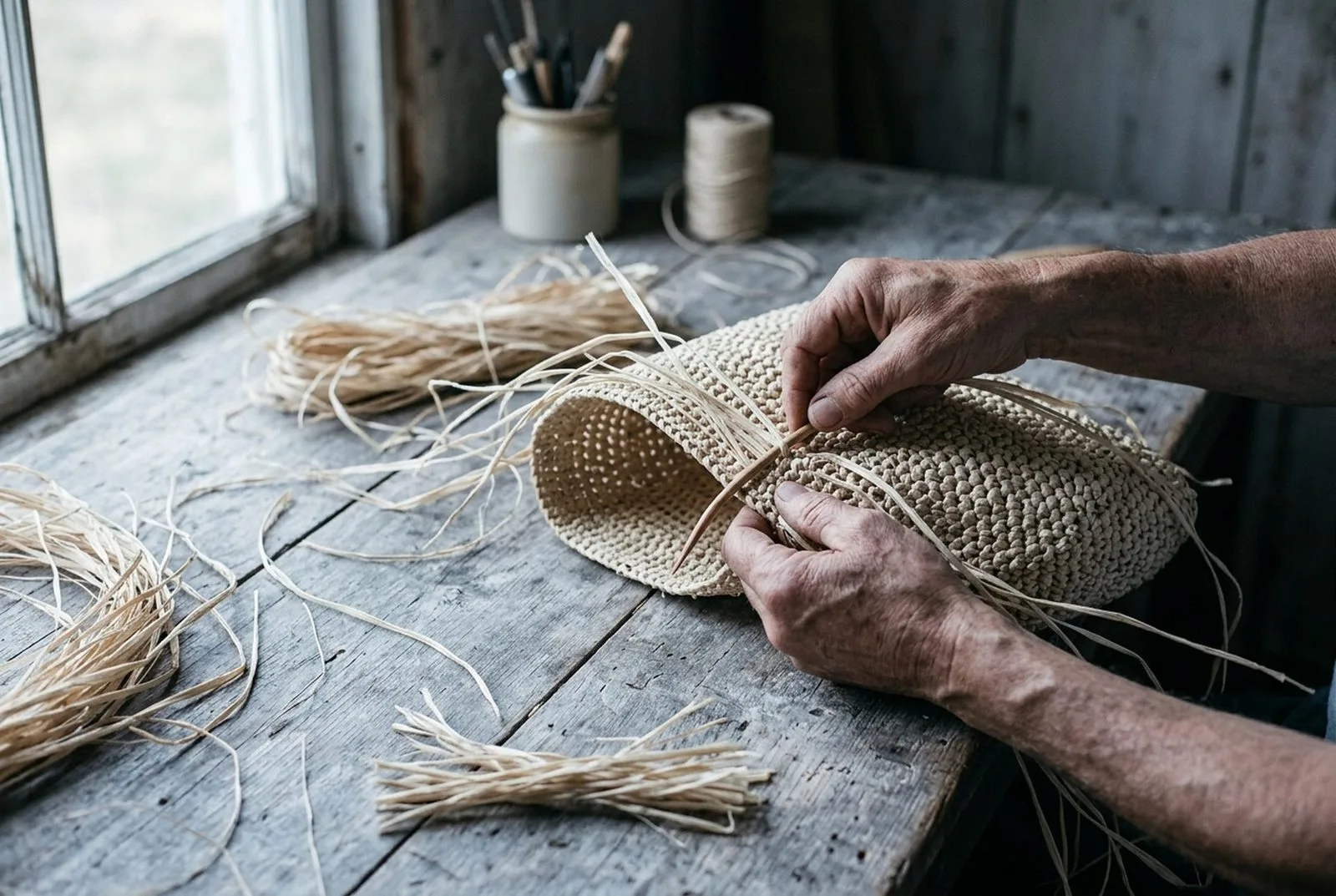
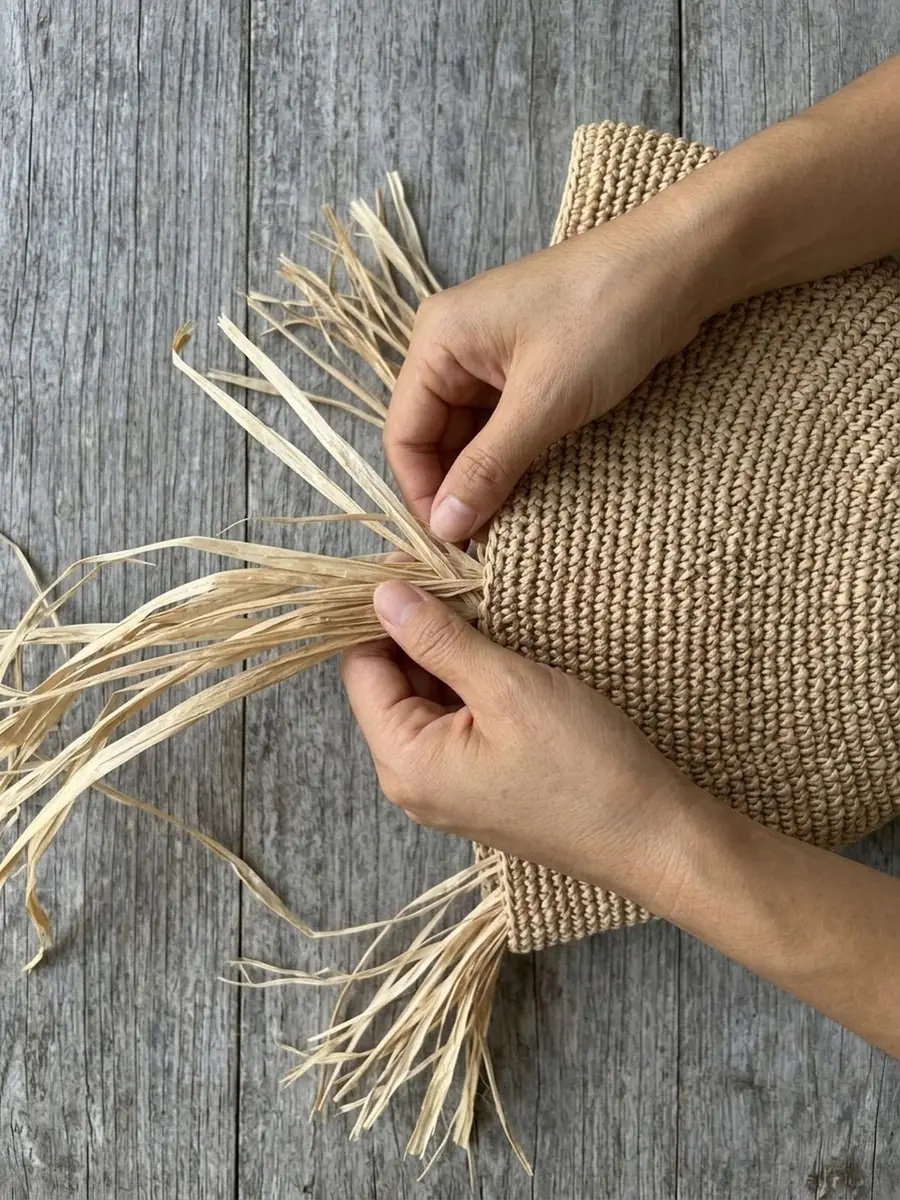 Crocheting a raffia body. The pattern sets the sequence; the hand sets the tension, and the tension is what you see at the end.
Reading the fibre before it fails
Raffia arrives wet. Fresh fibre holds about 40% moisture, and a kilo of it yields 200–600 g of workable strand once dried; roughly 25–30% is lost in sorting and waste. That is why two bundles never behave quite the same, and why the person at the bench is judging material at the same time as making something from it.
The judgement is specific. This strand will split at the edge. This bundle is drier and needs a looser pull. This colour will read greener in daylight than it did in the shade. None of it is written in the pattern.
We see the cost of missed judgement most often in samples rather than in bulk: a sample woven from a hand-picked bundle that the workshop cannot reproduce at volume. The sample is excellent. The reorder is not the same bag.
Where judgement becomes something you can check
Three things the hand controls, and how to test them on a sample without any technical vocabulary.
| What the hand controls | What right looks like | What wrong looks like | What to do on a sample |
|---|---|---|---|
| Tension across the body | Rows parallel, side seam straight | Side leans, base twists | Stand a straight edge against the side seam; count rows in 10 cm at the top and again at the bottom |
| Edge alignment | Top rim level, thickness even | Wavy rim, thin patch at the fold | Run a finger around the rim, then look along it in raking light |
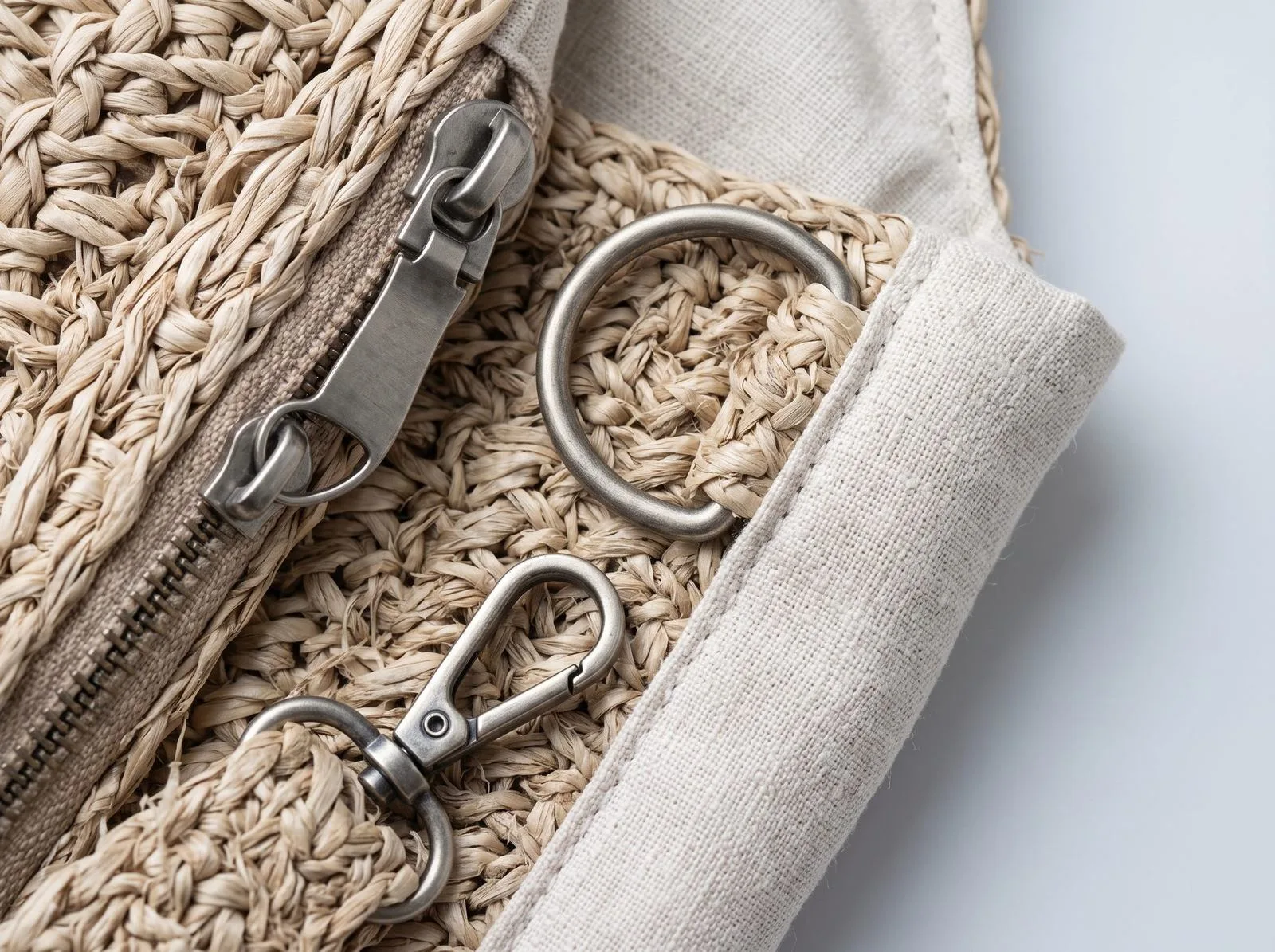
| Handle anchoring | Handle sits flat, no lift at the join | Handle pulls away, thread visible | Lift the handle with two fingers — any movement, loose thread or stitch that misses the weave layer is a reject |
| These are our acceptance standards, not preferences. On a 35 cm bag we work to ±2 cm on width and depth and ±1 cm on handle height, and more than 2 cm difference between the two sides is a reject. A bag can be beautiful and still fail this. |
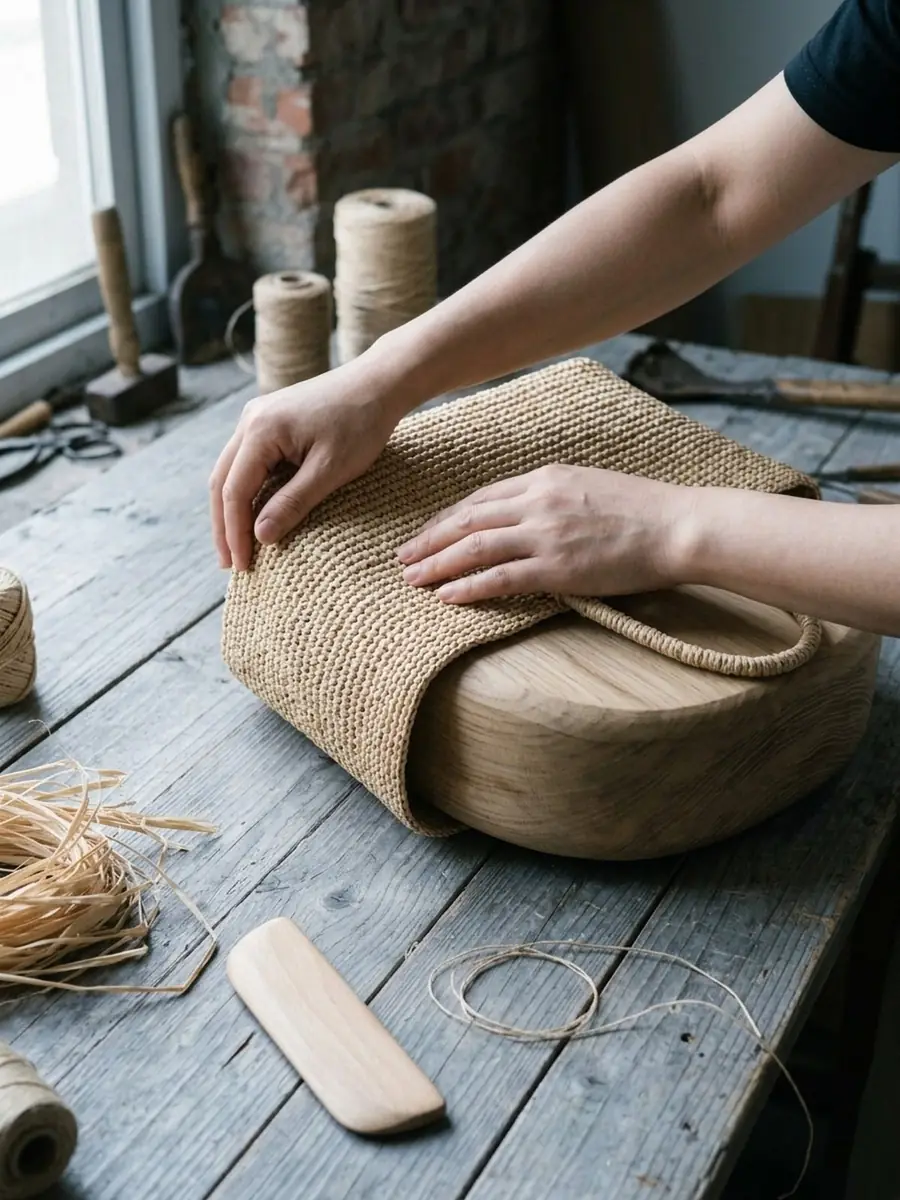 Trimming the silhouette by hand. The rim is where uneven tension shows first.
The constraint is people, not material
A workshop can buy fibre in a week. It cannot train hands in a week, and it cannot borrow them for a season.
This is the part buyers misread most often. WEFTAVA is a company of 2,000+ people, but that figure covers leadership, management and production company-wide. It is not 2,000 weavers. The number that matters for a handwoven order is the bench capacity behind that specific construction, and it does not move because an order is large.
That is why our bulk schedule is 30–45 days rather than a number measured against a machine's output, and why it stretches to 45–60 days when a new colour or new tooling is involved. The extra time is not administrative.
When hand work is the wrong answer
Three cases where we say so.
If your standard is that every unit must match the next to the millimetre, hand weaving will fail you at some point, and a machine-woven body is the honest choice. If the surface will never be seen — a lined interior panel, a hidden base board — there is no reason to spend hand hours there. And if you need large volume inside four weeks, the answer is a longer schedule or a different construction, not pressure on the same bench.
A workshop that agrees to all three is telling you something about how it plans.
What we will put in writing
Not perfection. We will confirm that the specification was met, that the fibre and colour are documented against a physical card, and that any deviation is named before you find it, not after the cartons are opened. The numbers behind that: bag-mouth gaps of 1 mm pass, body gaps over 2 mm are rejected, and bags more than 10% apart on the colour card do not ship.
Common questions
- Who makes handwoven bags?
- The work is done in-house by weavers and assemblers in our Dongguan workshop, with patternmakers and inspectors alongside them. The company has 2,000+ team members across all functions.
- What skill matters most?
- Tension. Even rows and consistent handle anchors cannot be inspected into a bag afterwards; they are set while weaving.
- When is handwork the wrong answer?
- When the order needs identical units at high volume or a shape that only a machine can hold. We say so before sampling.
If you want to see the bench before you commit, arrange a visit. How an order runs from brief to shipment is on the wholesale page, and the fibre side is covered in the material guide.
See the straw bucket bags we currently produce in this range.