Straw holds a shape that raffia cannot. That single property drives most of what buyers are specifying in straw for 2026, and most of the mistakes we see in samples.
What follows is our own reading: the season mechanics we plan against, and the direction of the straw briefs that reached the workshop. The style shares are our inquiry sample, not a market statistic.
The property everything follows from
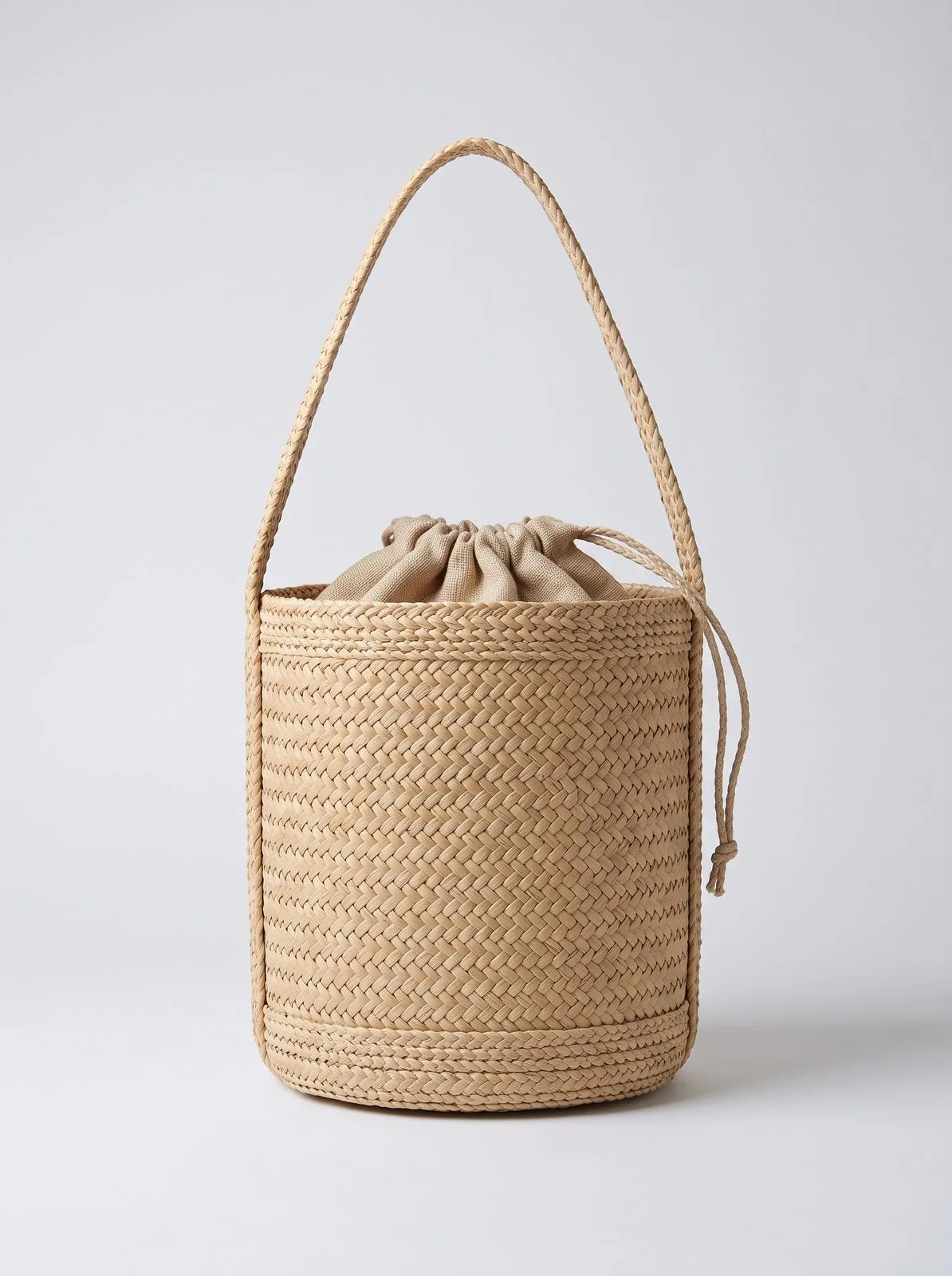
Set an empty straw bag on a table and it holds its own mouth open. Raffia collapses; paper straw is uniform but soft. Straw is the one that stands without a frame or a lining.
A quick showroom test: put the bag down empty, press the rim down with two fingers, release. If it springs back to the same line, the base and the rim are doing their jobs. If it folds, it will fold in a customer's hands too.
Paper straw can pass the same test when it is tightly rolled, which is why the test tells you about construction rather than fibre. What it cannot tell you is how long the shape will last.
Everything else in a straw range is a consequence of that behaviour, including the failures.
Stand or carry: the first decision
The briefs we see divide into two intentions, and they are built differently.
| Intention | Base | Rim | Typical size | Main risk |
|---|---|---|---|---|
| Stands as an object: beach, basket | Reinforced, flat, wide | Firm, bound or double row | 40–55 cm | Sags under its own width; shipping volume |
| Carries as an object: city, structured | Smaller, lined | Structured, often closed | 25–35 cm | Handle join takes the load |
| Display anchor: one hero piece | Flat and stable | Crisp | 55 cm and up | Freight; sell-through on a single style |
| The most common mistake is ordering the first type and expecting the behaviour of the second. The same openness that lets a beach bag stand makes it move when it is loaded and carried for an hour. |
One way to tell them apart in a sample: load the bag with a towel and a bottle, pick it up by one handle, and watch the mouth. If the rim twists, it was built to stand, not to carry.
Decide which one you are buying before you look at fibre or colour. It changes the base, the rim, and the price.
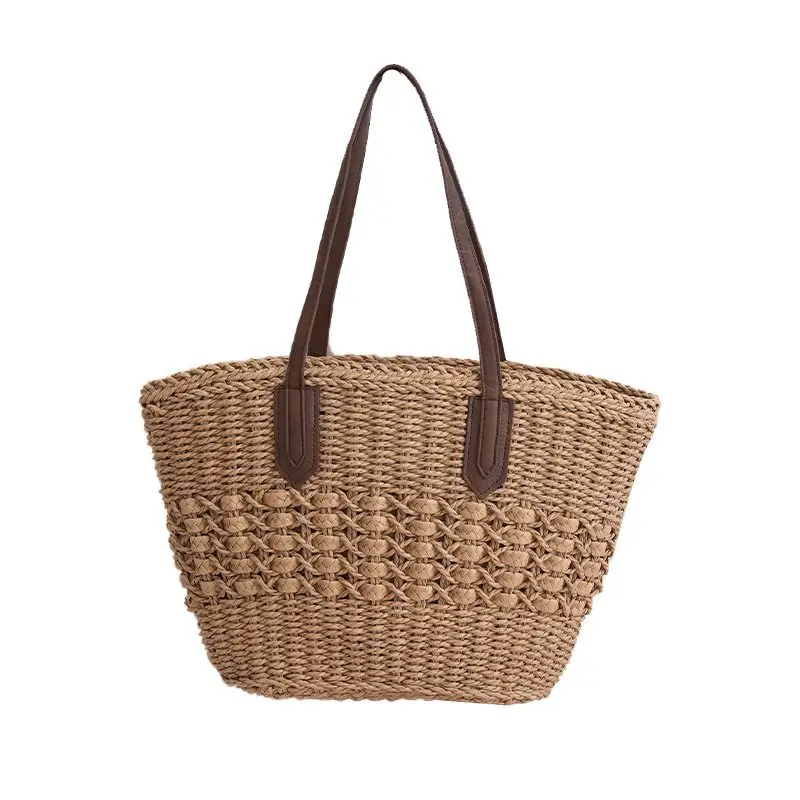
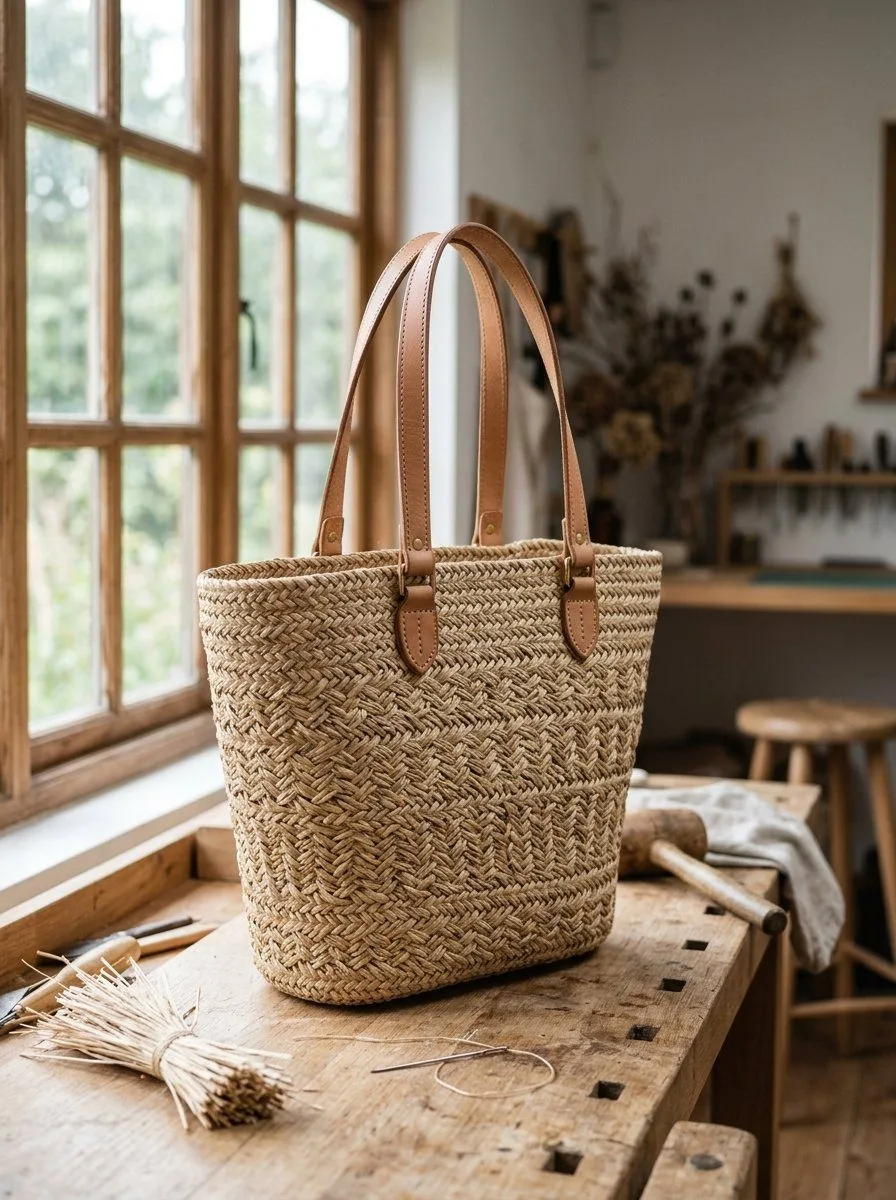
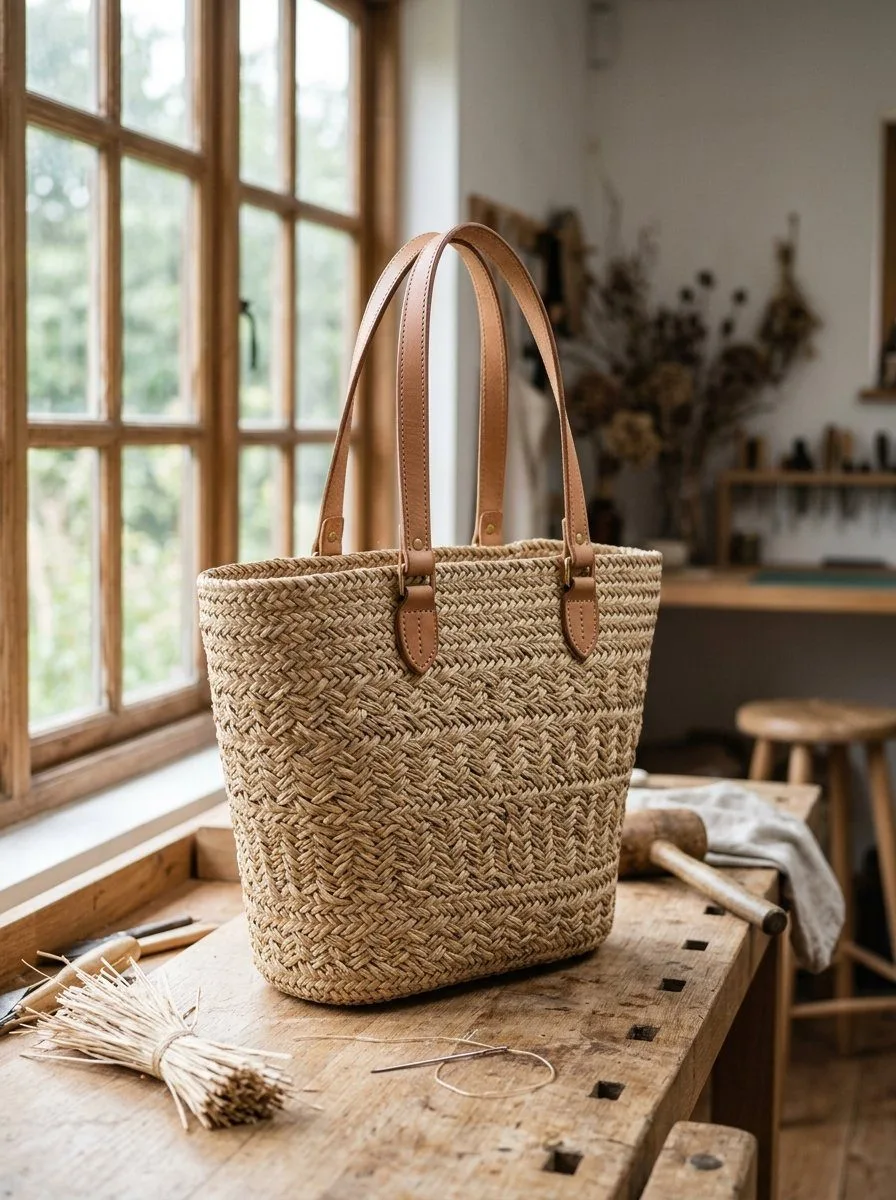
A flat base and a firm rim let this straw tote hold its line. The honeycomb band is where the weave opens up, and where inspection starts.
What we are seeing in inquiries
Since January we have tracked the direction of every straw brief that reached us. The shares are our own inquiry mix, not a market figure.
| Direction | Share of inquiries | What buyers are asking for |
|---|---|---|
| Coastal grandmother | 32% | Natural straw, wide open top, leather handle |
| Quiet luxury | 26% | Tight weave, undyed, minimal hardware |
| Coquette | 18% | Small structured bag, cream or blush dye |
| Boho / festival | 12% | Mixed fibre, fringing, slouch |
| Literal resort / nautical | 8% | Navy or rope trim, wide open top |
| Straw fits the first two directions better than the third. A small coquette bag in straw needs a lining, a frame, or both to keep its shape at that scale, and the cost per unit climbs faster than the retail price usually allows. |
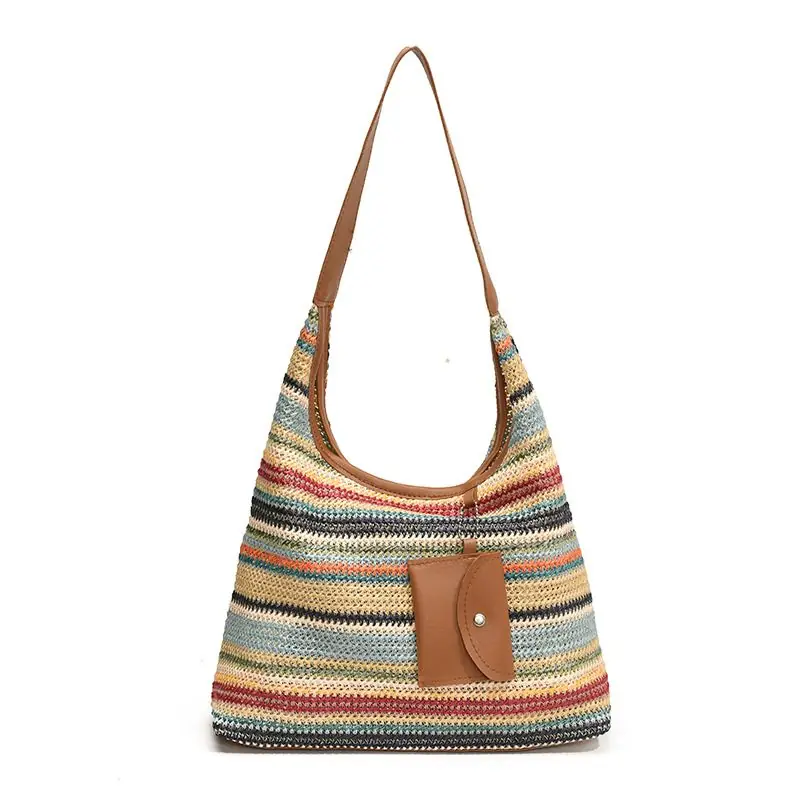
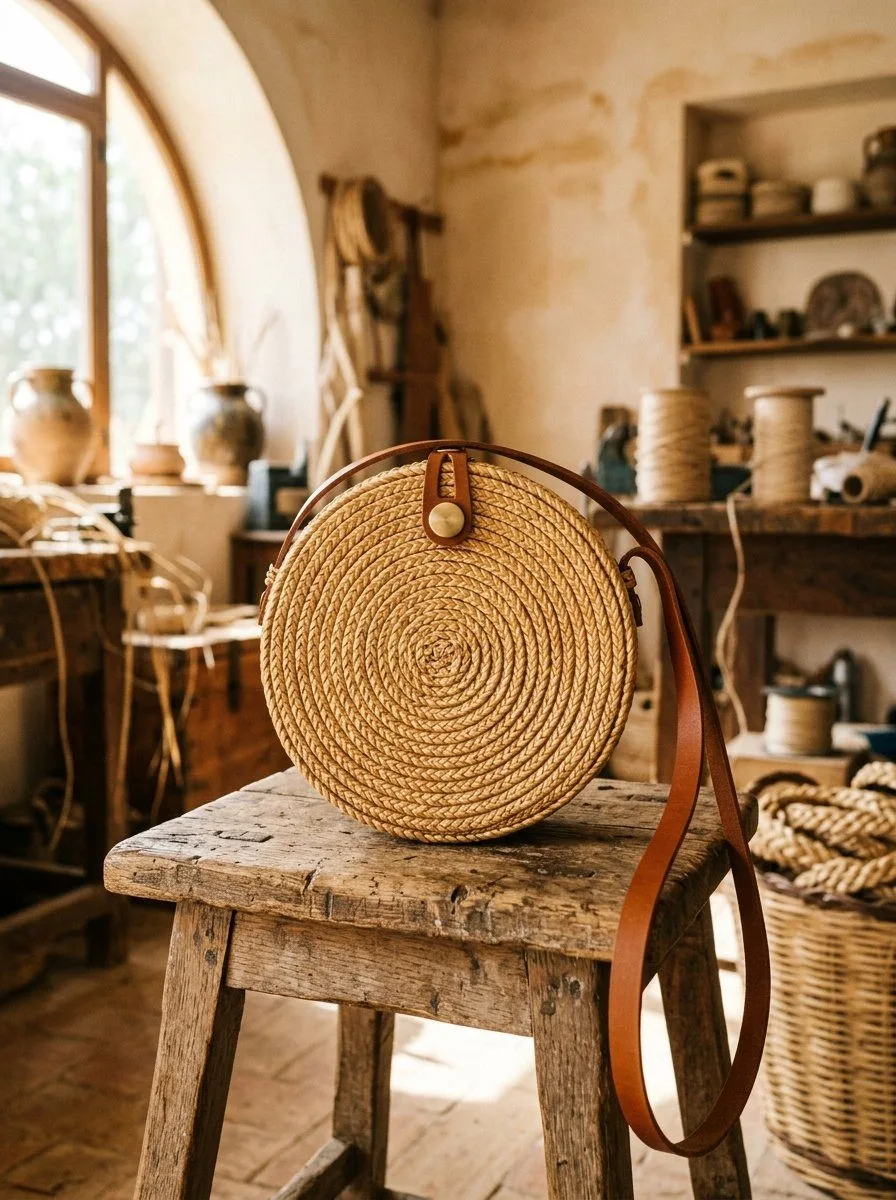
The boho end of the mix: a striped slouch body with a leather strap and a front pouch. It is the 12% of briefs that ask for a different weave rhythm.
Size: one hero, not a range of heroes
Oversized straw is a steady request. The mistake is building the whole range oversized.
Large open shapes are bulky, and volumetric weight can add 20–30% to landed cost. One 55–60 cm anchor piece plus three smaller structured pieces carries the look without carrying the freight.
Season makes this tighter. The selling peak runs from March to July, so orders are placed in January and February. Sampling takes 10–15 days, bulk 30–45 days, and a custom dye pushes bulk to 45–60. A February decision with a custom colour is already late.
Colour: undyed is the point
Undyed straw is the base of most ranges, and its own gold tone is why the fibre is chosen at all. Dye appears as a smaller companion piece or a trim, not across the collection.
Where a dyed piece is asked for, it is almost always one of two: a black straw bag or a brown straw bag. Rarely a whole range in colour.
The exception is the boho end of the mix, where stripe and multiple colours are the point rather than an accent. It is 12% of the briefs we see, and it asks for a longer colour set-up and a different weave rhythm from the natural range.
Straw takes dye reasonably but shifts under daylight. If the range is colour-critical, sample the dyed piece in the light it will be sold in, and compare two bags side by side. More than about 10% apart, we reject the pair ourselves.
The base is where quality shows
If you look at one part of a straw sample, look at the base. It does structural work a raffia base never does, and an uneven one shows immediately: the bag rocks on the table.
Ask two questions. Is the base reinforced, and how? How many rows, what sits inside it, is the rim doubled? A supplier who answers in rows and reinforcement has made these before. One who answers "it is strong" has not.
Our acceptance line on the woven surface is simple: gaps up to 1 mm at the mouth are acceptable, and any gap over 2 mm in the body is a reject. On a 35 cm body, dimensions within ±2 cm are normal. A handle fitted more than 2 cm higher on one side than the other is not.
Handles and hardware
Straw handles are usually woven from the same fibre, which keeps the bag visually coherent. Where buyers differentiate, it is with leather rather than cord, because straw's stiffness pairs better with a firm handle than with a soft one.
Check the anchor before anything else. The handle drop should sit within ±1 cm of what you specified, and the two handles should be level within 2 cm of each other. Any movement at the fixing point, loose thread, or stitching that does not pass through the woven layer is a reject at our bench. On lower-cost straw bags, this is the first thing to fail, and the failure usually happens under a full load rather than on a shelf.
When straw is the wrong fibre
Four cases where we steer a brief toward another material:
- The bag must fold flat for travel. Straw creases and does not recover. Raffia or a textile cord is the better answer.
- The surface needs fine embroidery. The nodes interrupt the stitch line. Embroidery reads better on raffia.
- The product will be stored damp or used poolside daily. Natural and paper straw both weaken. An engineered cord is the right choice.
- The price point is below the cost of hand-weaving. A machine-woven or synthetic bag serves that customer better, and pretending otherwise costs you the reorder.
What to settle before you order
Six answers make a straw brief quotable:
- Stand or carry, and the size that follows from it.
- The largest dimension, and the shipping volume it implies.
- Undyed, or a carded colour sampled in daylight.
- Base construction, described in rows and reinforcement.
- Handle material and anchor method.
- Quantity per style at MOQ 100 pcs.
With those settled, sampling runs 10–15 days and bulk 30–45 days, or 45–60 with a custom dye.
Straw's behaviour against the other three fibres is set out in the material guide. For the fibre in bulk, see straw bags in bulk, or browse the straw collection to see how the shapes sit together.
Common questions
- What are the straw bag trends for 2026?
- Undyed straw, larger defined shapes and visible structure at the base. Buyers want bags that hold their form rather than collapse.
- Is undyed straw still in demand?
- Yes. Undyed is the base of most ranges because it carries the fibre's texture and is easier to repeat across seasons.
- Which straw bag size is selling?
- One hero size per range, usually a mid-size tote or shoulder bag. Oversized beach shapes are seasonal; small bags need a defined structure.