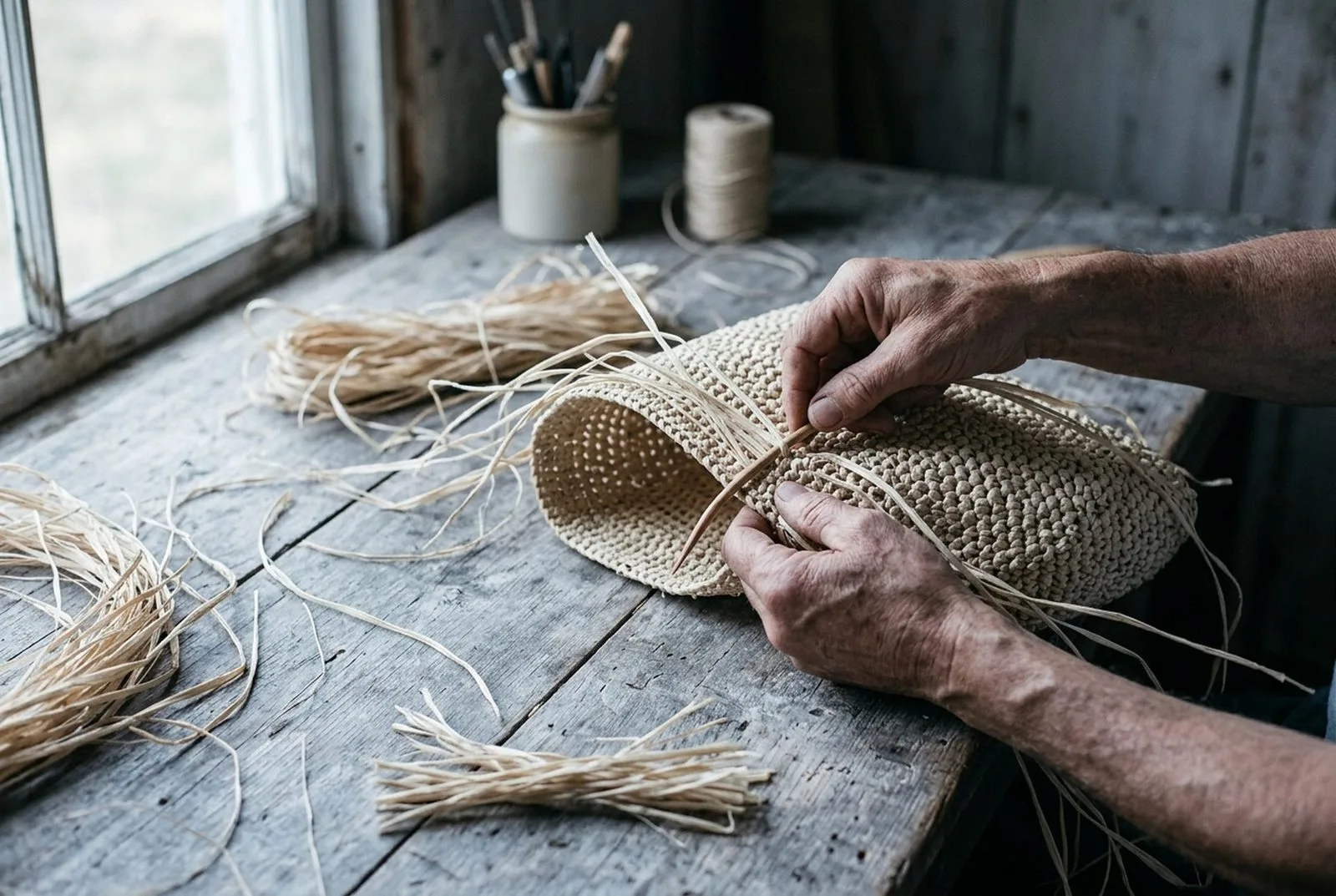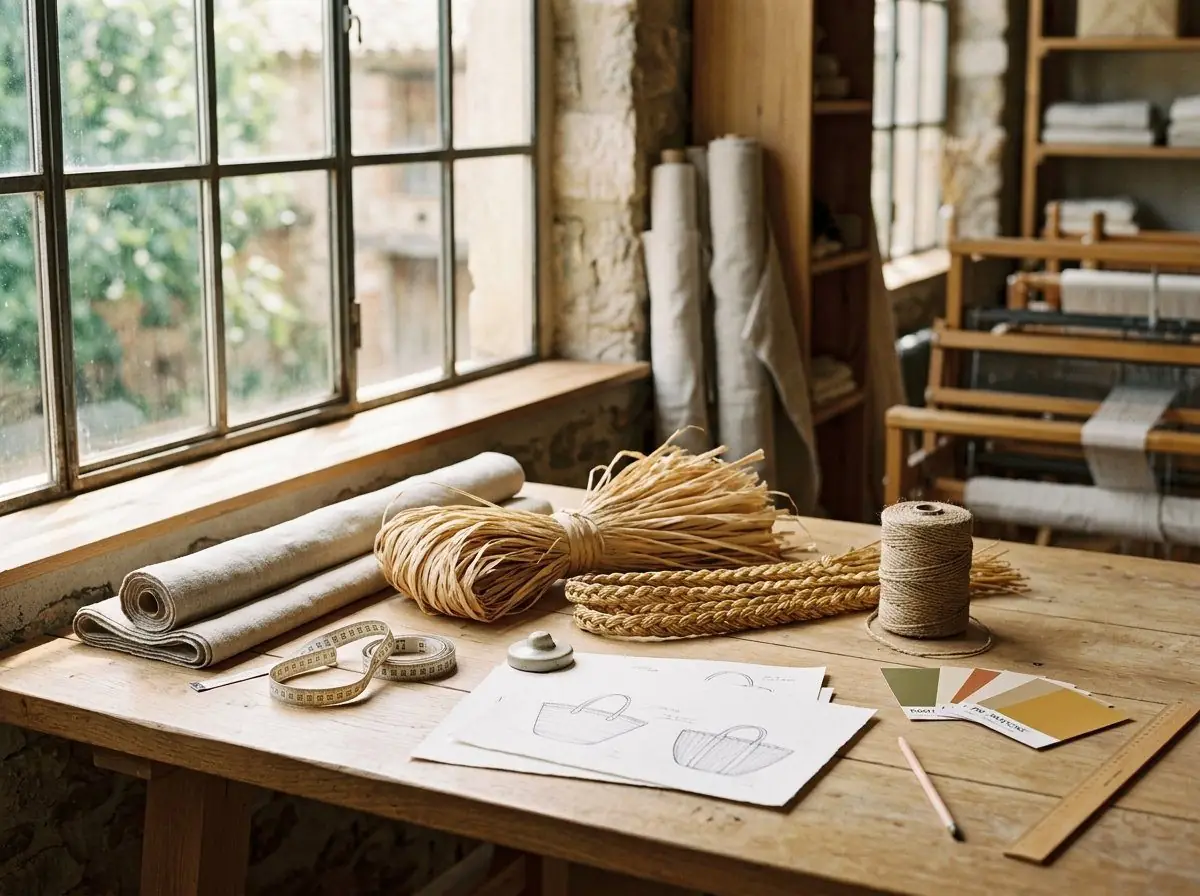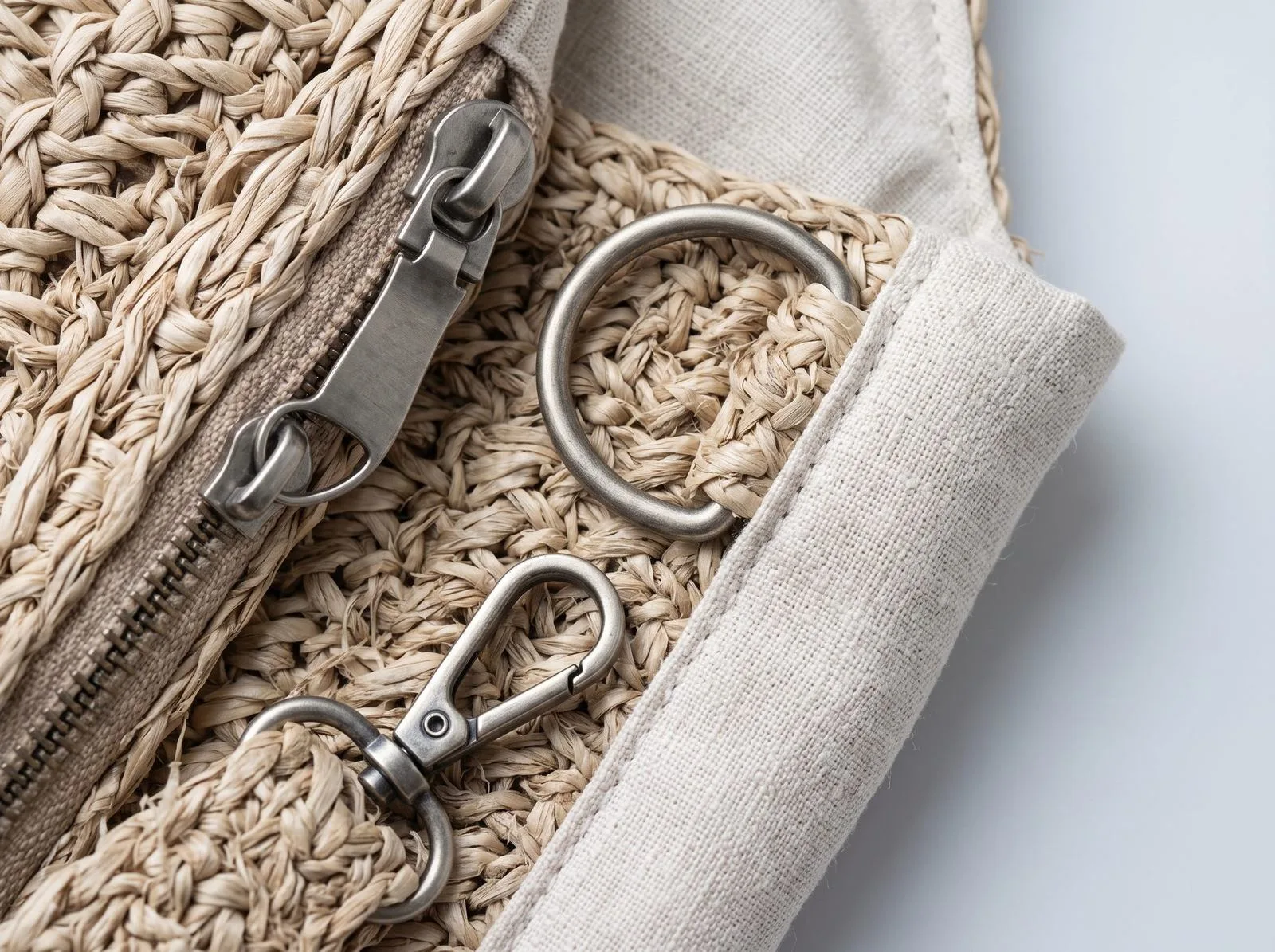
Almost every first-time buyer is surprised by our calendar. The number is not unreasonable. The expectation was built in a factory, where a schedule is machine hours and a bigger order is more of the same.
Handwork does not scale that way. Three things account for most of the gap, and a fourth is usually the buyer's own decisions.
The hours are in the structure, not the size
A simple small bag can be about 2 hours of handwork. A structured handbag is closer to 20. A fine crochet body can pass 100 hours before it is lined.
That spread has little to do with dimensions: a 20 cm structured bag with a shaped base and set-in lining can take ten times the hand time of a 40 cm flat tote. What drives it is how many decisions the body makes: a shaped base has to be built, a denser weave needs more passes, a lined interior means a second construction inside the first.
When you compare quotes, compare structure to structure. A quote at half the time for the same silhouette is a different construction or a different standard.
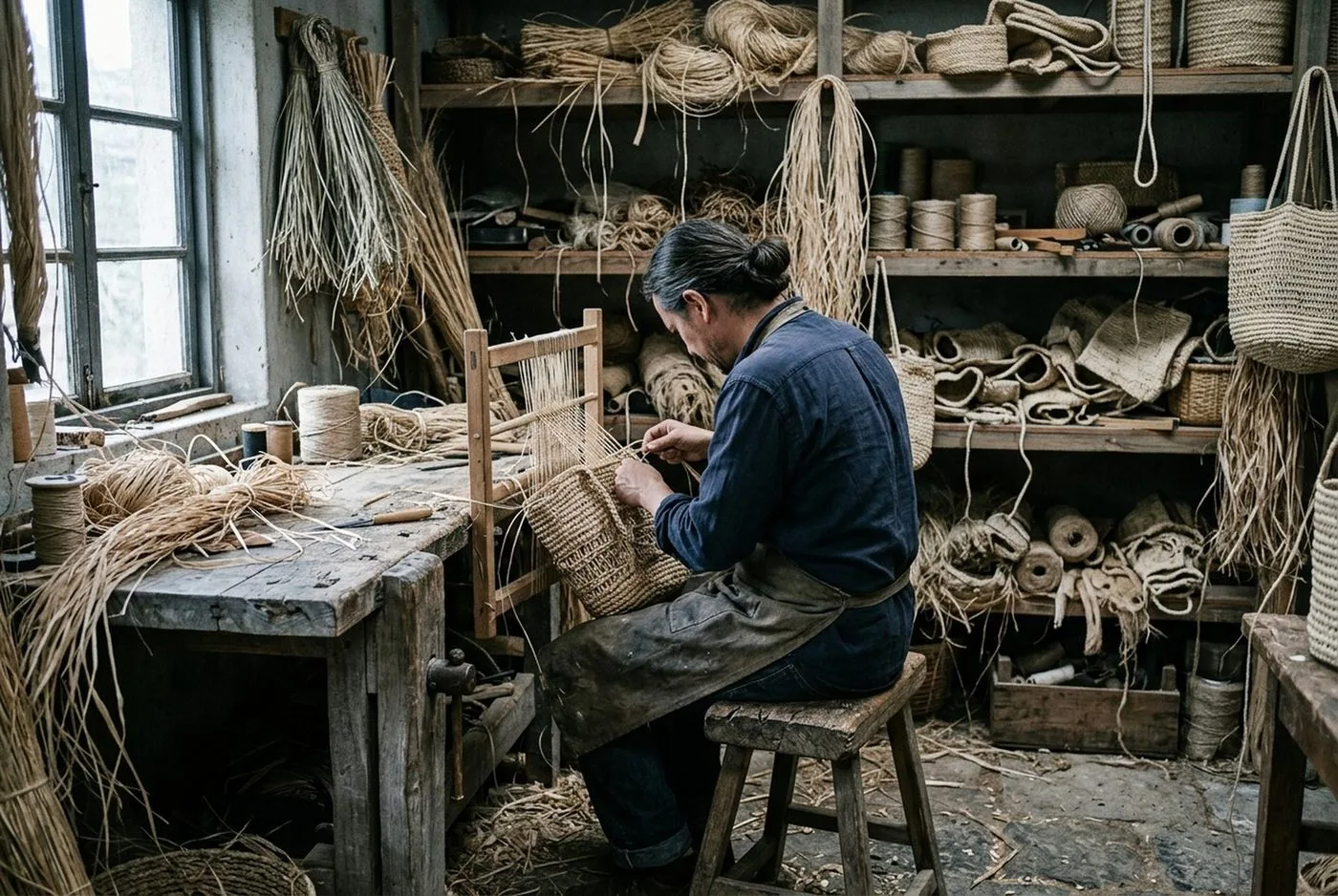
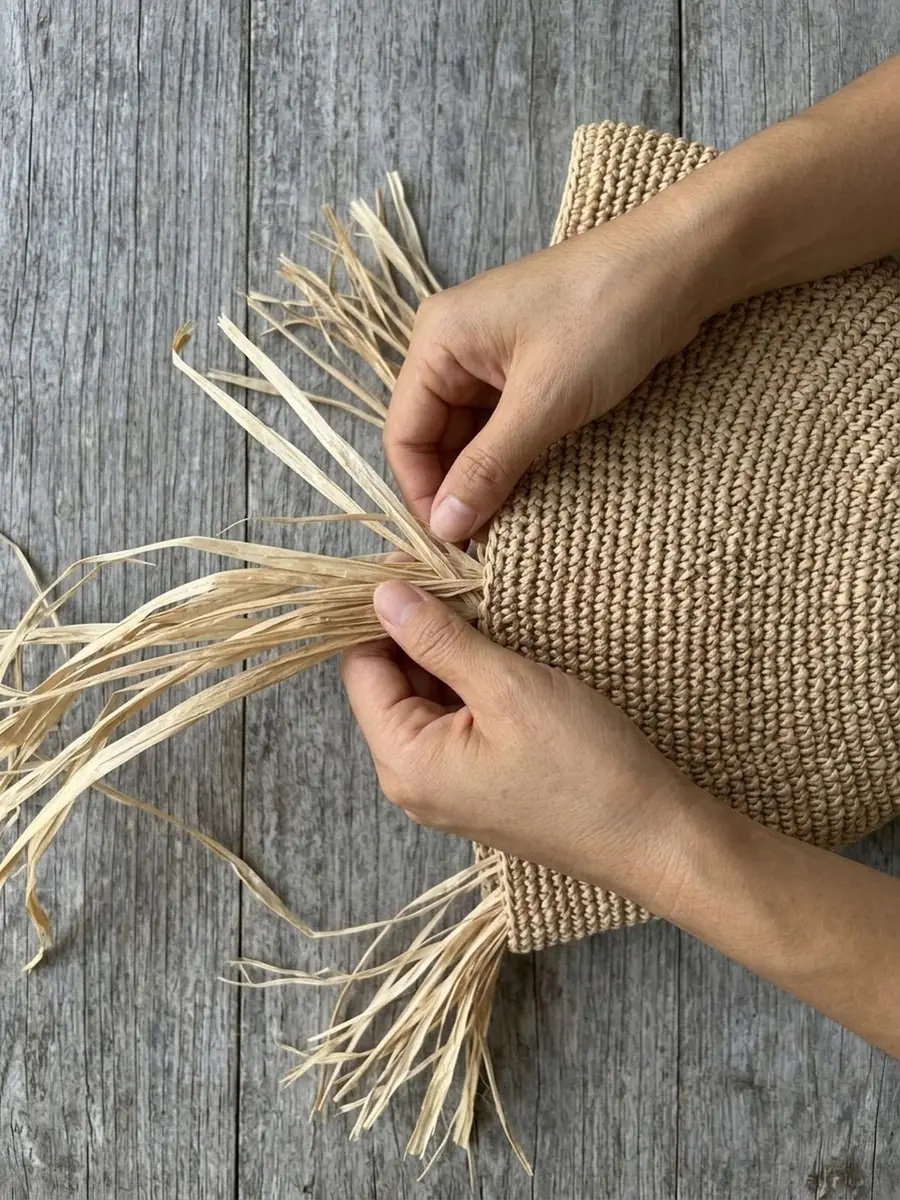 Crocheting a raffia body. By this point the fibre has already been graded, dyed and dried — the hours behind the bench do not appear in this picture.
Preparation is a stage, not a step
Before anything is woven, the fibre has to be sorted, split, dyed and dried. Raffia arrives with around 40% moisture; dried, a kilo of fresh material gives 200–600 g of usable strand, with 25–30% lost in grading and waste.
Dyeing runs in small batches, checked against a physical colour card. Weaving cannot start until the fibre is dry and the colour is signed off; dyeing cannot start until the colour is agreed. The stages are in series, not in parallel.
The delay we see most often is not in the workshop: a colour card sitting unsigned on a desk for two weeks moves the order by two weeks.
Bench capacity does not expand with the order
A workshop can buy fibre on short notice. It cannot hire experienced hands on short notice, and it cannot put a second person on the same body without changing how the tension is held.
So capacity is the number of people who can hold a consistent tension on that construction, not machines or headcount. WEFTAVA is 2,000+ people company-wide, covering leadership, management and production; that is not 2,000 weavers.
This is why a schedule lengthens when volume jumps. A 100 pcs/style order and a 1,000 pcs order use the same bench; the second simply occupies it longer. That is arithmetic, not negotiation.
 The assembly bench in Dongguan. Bigger orders occupy the same benches longer, not more benches.
Which of your decisions cost days
| Decision | What it adds | Why | How to shorten it |
|---|---|---|---|
| New structure | Development before the first sample | It has to be worked out, not just woven | Use an existing structure for the first order |
| Custom colour | Sample dye plus confirmation | The colour has to be read against a physical card | Choose an existing colour for the first run |
| New hardware or tooling | Its own lead time, in parallel with nothing | New metalwork has to be drawn and made | Specify stock hardware |
| Revision after the sample | 5–7 days per round, typically 1–2 rounds | The bench reworks and re-checks | Send all comments in one round |
| PPS (pre-production sample) | 7–10 days | It must be made from the bulk material batch | Do not skip it when the colour is custom |
| Bulk production | 30–45 days; 45–60 with custom dye or new tooling | It is bench time, style by style | Book the window early |
| Late colour confirmation | Moves every stage behind it | Dyeing is upstream of everything | Decide colour at the brief |
| A clean run looks like this: 10–15 days for the first sample, one revision round at 5–7 days, 7–10 days for the PPS, then 30–45 days of bulk. Call it seven to eleven weeks from brief to shipment. Add a late colour decision and a second revision and the same order is ten to fourteen weeks. Nothing in the workshop changed. Only the decisions did. |
When a short lead time is the right answer
If your window is four to six weeks, a custom handwoven order is not it. Pick an existing structure in an existing colour, a machine-woven body, or a white label item. Better in the first call than in week six.
The season matters too: demand for woven bags runs March to July, so production orders are best placed in January and February. Late orders cost more in freight and sell through worse: the volume weight of woven bags can add 20–30% to landed cost, and a late arrival leaves no time to reorder.
The version that works
Ask any supplier what the schedule is measured from, and which of your decisions would move it most. Then ask two more:
- How many revision rounds are included after the first sample?
- Which stage is the critical path for my order — fibre, dyeing, sampling, or the bench?
A specific answer with sampling, PPS and bulk separated is a plan. A single number with nothing behind it is a hope.
Common questions
- How long does a handwoven bag take to make?
- Bench time runs from about two hours for a simple bag to twenty for a structured one, and over a hundred for fine crochet. Lead time after approval is 30–45 days.
- Why is handweaving slow?
- Preparation, tension control and assembly cannot be parallelised the way a machine line can. The hours sit in the structure, not the size.
- Can lead times be shortened?
- Sometimes, by fixing the fibre and colour early and keeping the shape simple. Custom dyeing or new hardware adds 45–60 days.
The wholesale page sets out what an order includes. If the design is new rather than adapted, custom development explains what changes. If you have a target ship date, send it with the brief; we will tell you which stage carries the risk.
See the basket bags we currently produce in this range.