Raffia is usually the most expensive plant fibre in a handwoven range. Buyers see the gap on the quote and assume it is a fashion premium: a name, a colour card, a story. Most of it is not.
The premium is structural. It comes from what happens to the fibre before it is woven, how long it takes to weave, and what it costs to make a colour repeat. Understanding those three things tells you where the extra money reaches your customer, and where you are paying for a difference nobody will see.
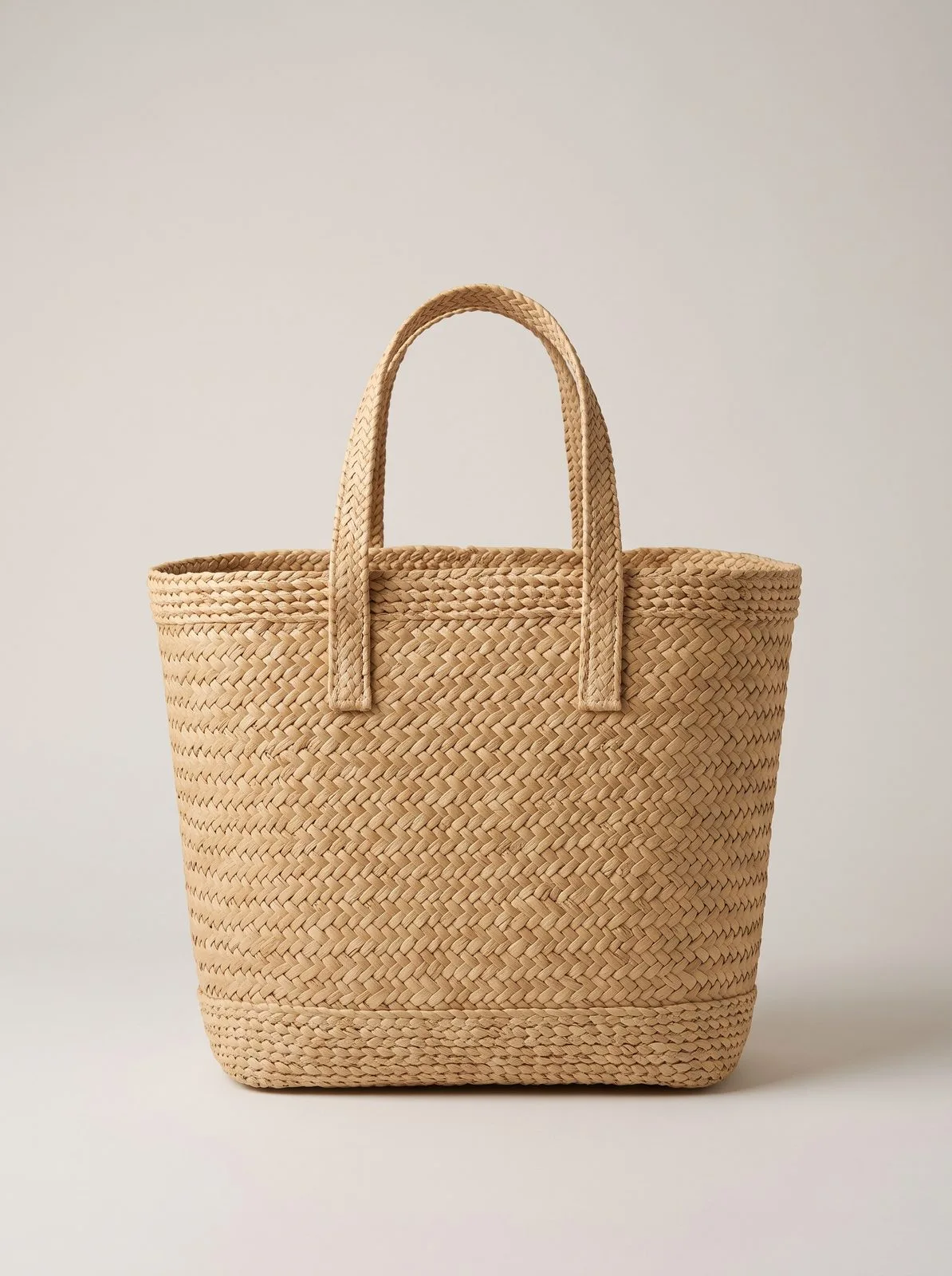
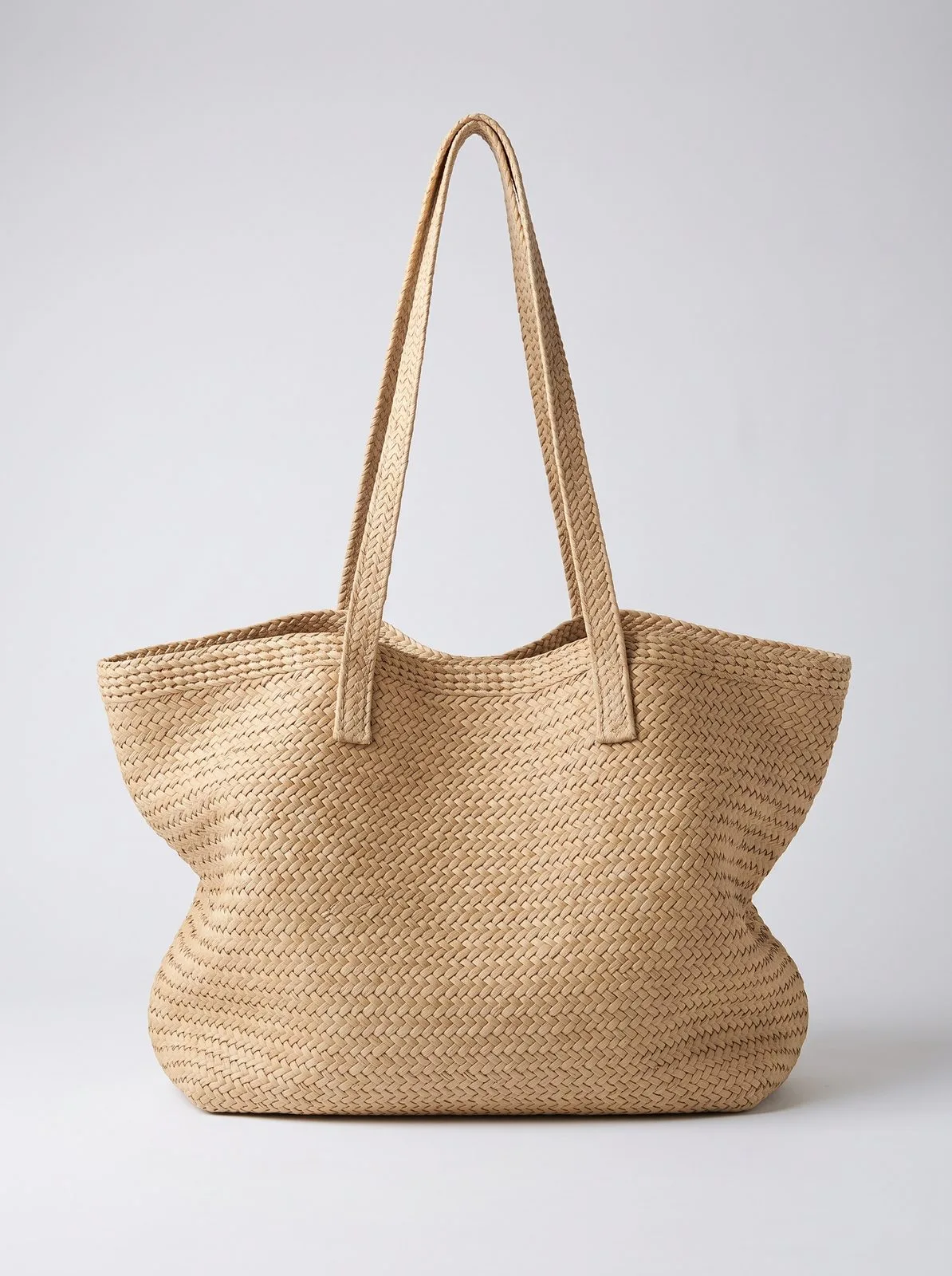
The most common version of this conversation starts with a photo of a raffia bag and a target price built on straw. Both are real. They just belong to different fibres.
The premium starts before the first row is woven
Raffia arrives as long ribbons, and a large part of what you paid for is water. Fresh fibre comes in at about 40% moisture. Dry it, and one kilogram of fresh material yields somewhere between 200 and 600 grams of usable dry fibre, depending on the delivery, the season and how it was handled.
Then grading begins. Short strands, discoloured strands, and strips that are too thick or too thin are pulled out. Across sorting, split-offs and rejects, 25–30% of the raw material does not reach a bag.
| Stage | What happens | What it costs you |
|---|---|---|
| Fresh fibre | Arrives at about 40% moisture | You are paying to move and store water |
| Drying | Weight falls; 1 kg fresh yields 200–600 g dry | The yield varies by delivery, so cost per usable gram varies |
| Grading and splitting | Short, discoloured and off-width strands removed | Another 25–30% does not reach the bench |
| Usable strip | What is actually woven | This is the number a quote should be built on |
| This is why two quotes for "raffia" can sit far apart without either being dishonest. One is priced on the usable strip that reaches the bench. The other is priced on delivered weight and quietly assumes a better yield than the lot will give. |
Straw has a shorter path. It arrives as flat strips closer to finished form, with less splitting and less waste, which is one structural reason it sits below raffia on a quote. It is not a worse fibre. It is a fibre with less preparation between the field and the loom.
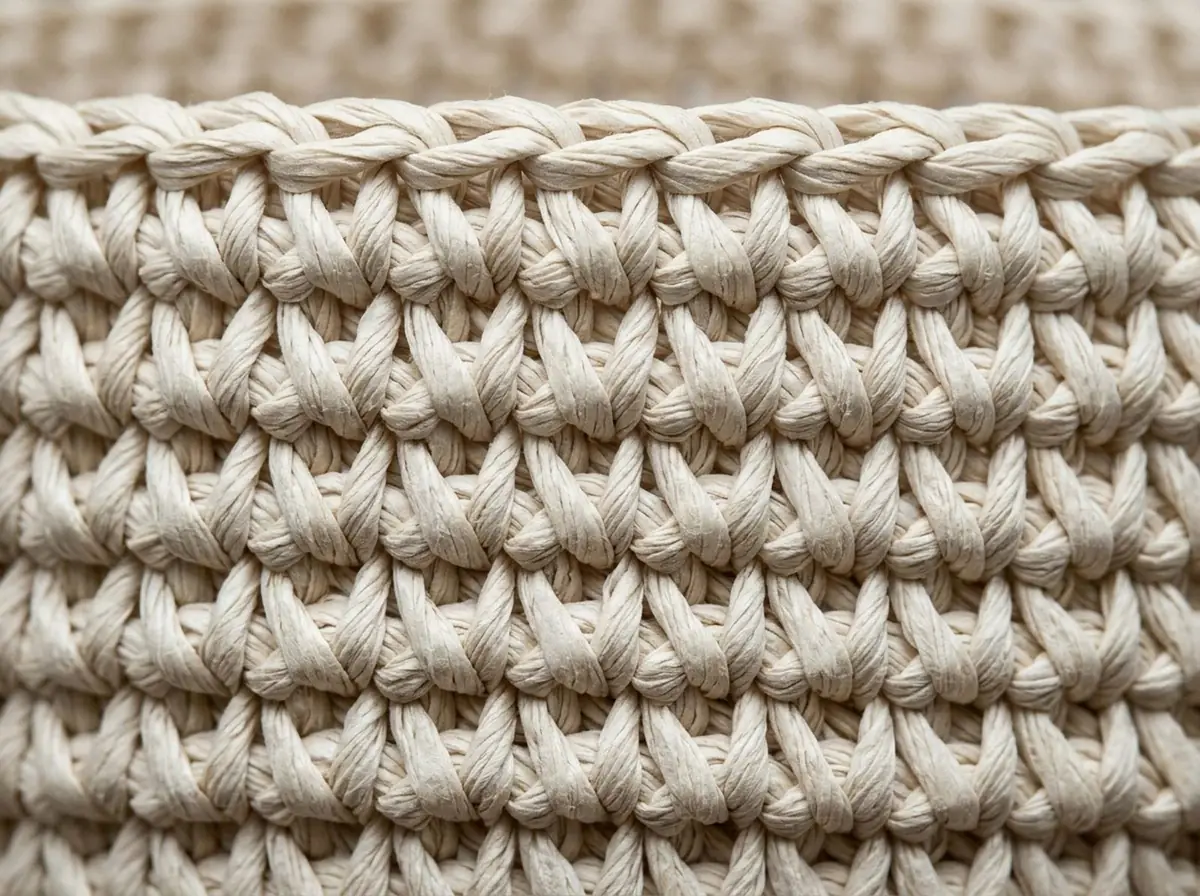
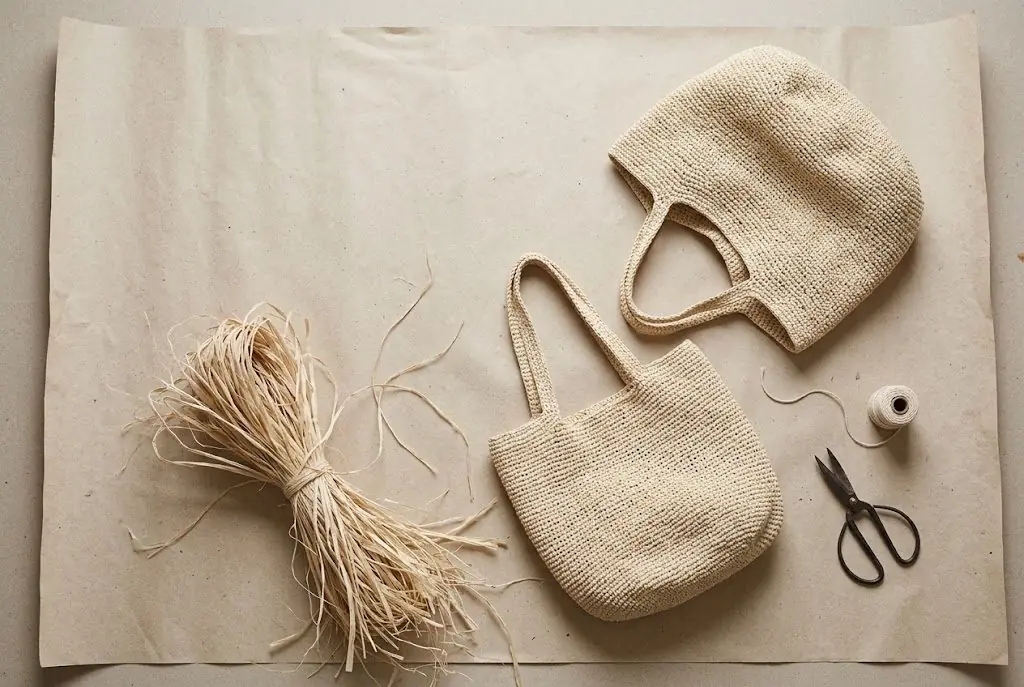 Loose raffia strand and the finished surface it becomes. The distance between the two is where the first part of the premium sits.
One boundary: the 200–600 g range is wide on purpose. A wet-season delivery and a dry-season delivery do not yield the same, and a supplier quoting one fixed yield is either working from an old lot or has not checked the current one.
It is slower to weave, and the slowness is the product
Raffia is a fine strip, and fine strips mean more passes to close the same area. That is the second part of the premium, and it is the part buyers most often try to negotiate away.
The labour difference is not small. A simple small bag runs to roughly two hours of handwork; a structured handbag sits nearer twenty; a fine crochet piece can pass a hundred before it is finished. Structure and finish set that number, not size.
Raffia is also the fibre that makes certain details possible. A fine rolled handle, a close top edge, a small closure tab: these need a strip thin enough to turn and even enough to sit flat. Straw can be asked to do it. The result is coarser, and on a small bag there is nowhere for coarse to hide.
The commercial consequence is straightforward. If your design depends on a clean, even panel, the raffia premium is buying the design. If your design is a big open beach bag where the weave pattern is the point, you are paying for fine work the pattern will not show.
There is an exception. On a very large panel, a tight raffia weave can look mechanical, and the small irregularities that make handwork recognisable disappear. The premium is highest where the surface is both large and visible, but the design has to want that surface.
Colour is the third cost
Raffia takes dye evenly, and that evenness is part of why it is used for premium bodies. Getting it even is the expensive part.
Natural fibre varies from lot to lot. The same dye formula on two deliveries can land at different depths, so colour has to be controlled batch by batch. Dye concentration, time, temperature and the condition of the fibre all move the result, and dark colours are less forgiving than light ones because there is less room to adjust.
The practical method is small dye lots with topping up between batches. That is not inefficiency; it is the only way to keep a colour close. It also means colour has a minimum quantity behind it, which is why a twelve-colour range costs more than a four-colour range even at the same total piece count.
Our acceptance standard is blunt: adjacent bags more than about 10% off the approved card are rejected. On a handwoven bag the customer sees two bags side by side on a shelf, and that comparison is the one that decides whether the colour is acceptable.
The boundary: an undyed range avoids the dye cost but not the variation. Undyed raffia shifts tone between lots as well. It is a different colour problem, not the absence of one.
What you are actually comparing when you compare fibres
Most fibre comparisons are lists of adjectives. The useful comparison is across the properties that change your costs: surface, structure, dye behaviour, hand time, and what the bag needs in order to finish properly.
| Fibre | Surface | Structure | Dye behaviour | Hand time | Best for | Where it fails |
|---|---|---|---|---|---|---|
| Raffia | Fine, even, small grain | Drapes; needs a lining or structured base to stand | Even within a lot; lot-to-lot control needed | Slowest; fine strip, more rows | Premium body panels, fine details | Price; needs structure; softens if soaked |
| Straw | Visible plait, coarser | Holds shape on its own | Takes dye but shifts tone; plait casts shadow | Moderate | Beach and market bags, structured shells | Coarseness on small bags |
| Jute | Heavy, rustic, wide grain | Stiff; holds shape | Dyes darker and duller | Fast; wide strips | Handles, trims, rustic bodies | Weight; too coarse for fine panels |
| Paper straw | Uniform, even, slightly flat | Holds a set; medium body | Predictable; colour repeats closely | Moderate | Volume programmes needing colour repeat | Less natural hand; crease marks |
| Read the table by column, not by row. If your design needs structure, raffia's advantage in surface does not help and its drape becomes a cost. If your design needs a fine, even panel, straw's structure is irrelevant and its coarseness becomes the limit. |
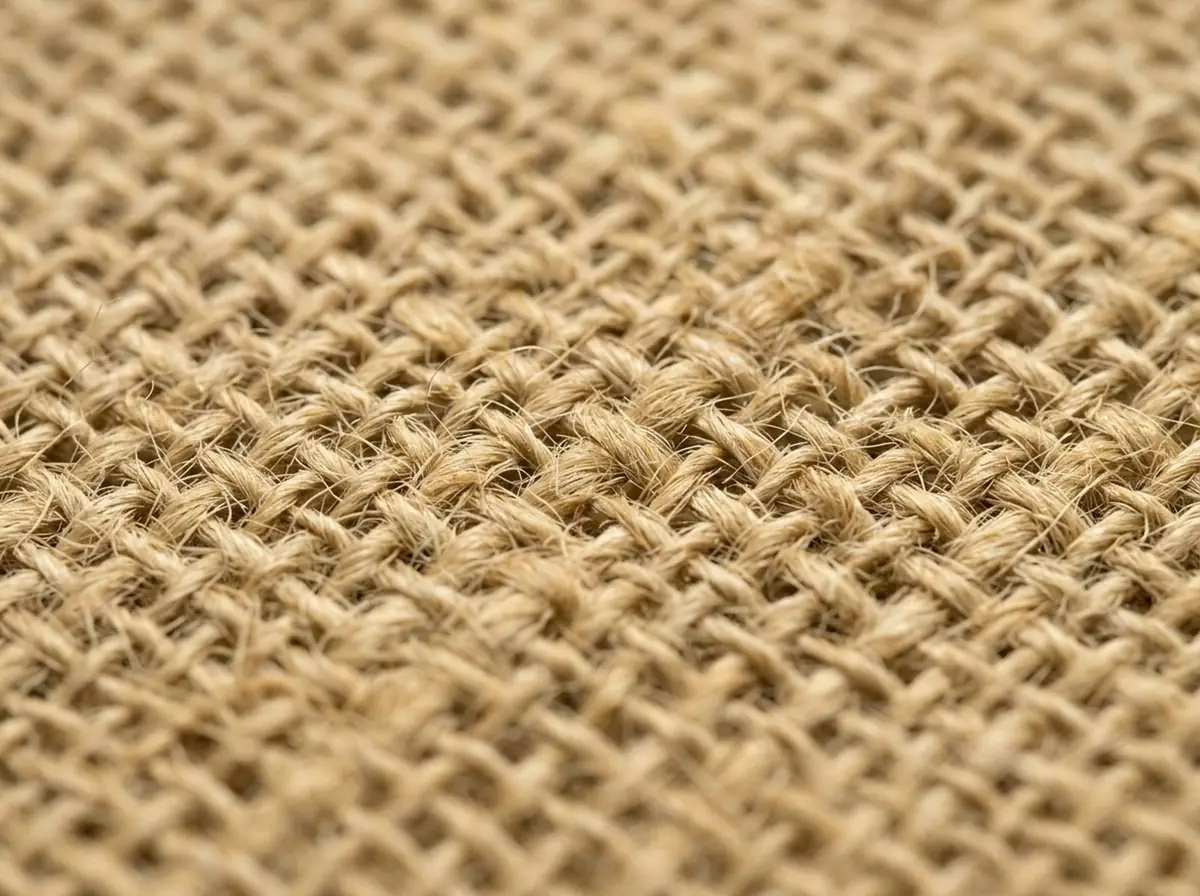
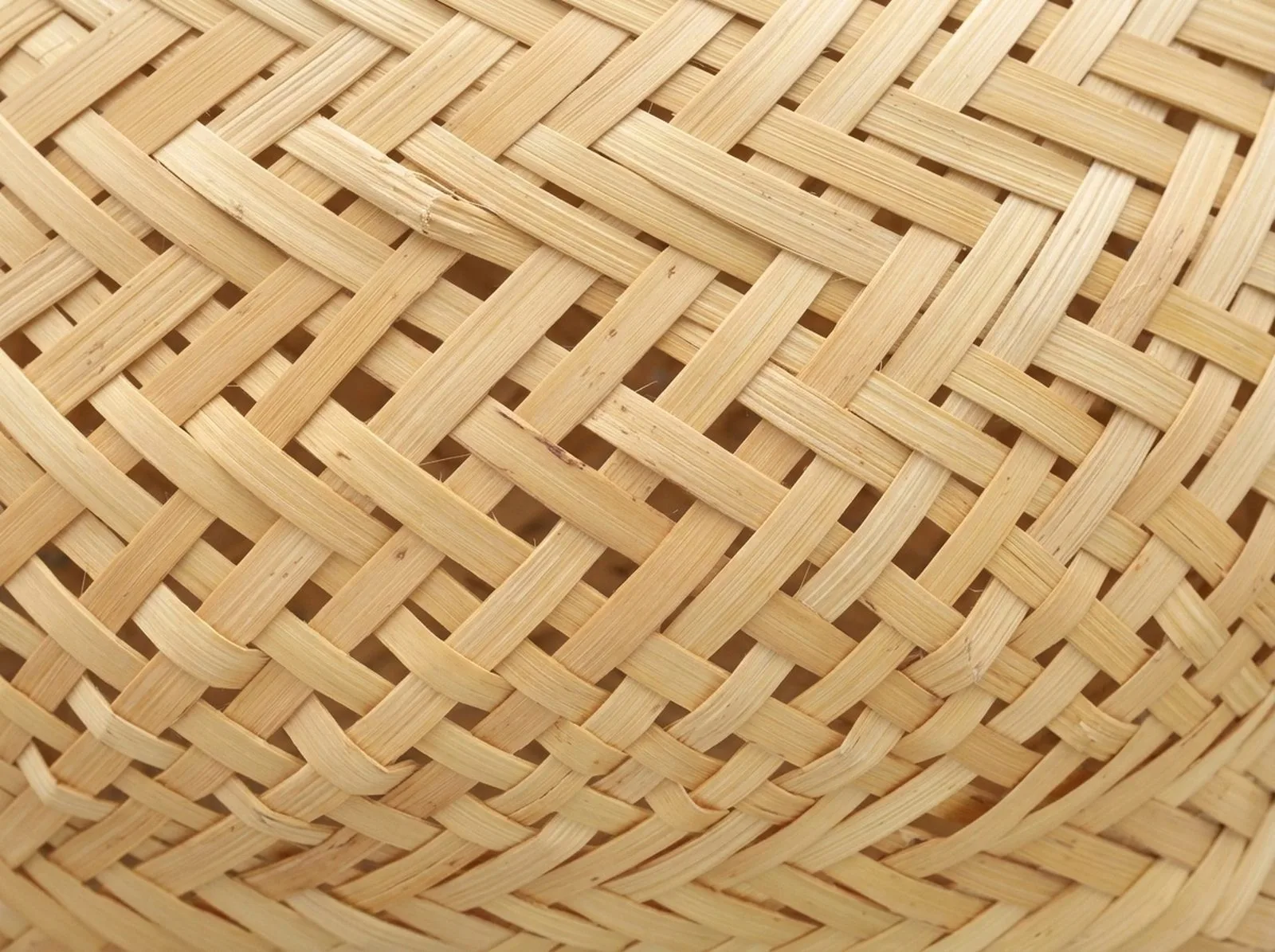 Straw plait, shown for contrast. The wider strip and visible spiral are what give straw its shape, and what makes it read coarser on a small bag.
When raffia is worth it
Five situations where the premium reliably reaches the customer.
The surface is the design. A clutch, a fine tote, a bag photographed flat: a large even panel is the product, and raffia is what makes it even.
The palette is wide. If you are running eight or twelve colours, raffia's ability to take a clean tone is doing commercial work. Straw will shift; jute will read darker.
The bag is small. Fine weave matters more at small scale, where a coarse surface has nowhere to hide. The same money spent on raffia for a mini bag buys more visible quality than on a beach tote.
The price point is premium. The raffia products market runs about $0.37 billion in 2025 and is projected at $0.48 billion by 2032, a 3.8% CAGR. That is not a fast-growing market. It grows by mix rather than volume, and a premium bag takes share by being visibly better. The surface is where the customer checks.
The season is long. A bag that sells from spring into early autumn has more chances to earn back a higher unit cost than a two-week drop.
The order structure matters here. Our MOQ is 100 pcs per style, so you can put raffia on two styles rather than everything. A first order usually works better as four styles at MOQ across two price bands than as one style at four hundred pieces. That structure lets you test the premium where it is visible instead of betting the range on it.
When it is not
Four situations where raffia is the wrong spend.
The bag is meant to look rugged. A beach bag or market basket in raffia loses the quality that makes the category work. Straw and jute are doing the right job there, not a cheaper version of raffia's job.
The bag has to stand. Raffia drapes. If the bag must hold a shape on a shelf, you will pay the raffia premium and then pay again for a lining or a structured base to make it behave like straw. Add that second cost to the comparison before choosing.
Nobody will see it. A hidden panel, a lining, a trim that reads at a metre: the premium buys nothing the customer can perceive. This is the most common waste we see in a sample review.
The price point cannot carry it. If the retail price is built on a straw bag, moving to raffia without moving the price means removing something else: lining, hardware, QC time. That is how a premium fibre ends up in a bag that fails inspection.
There is a timing boundary too. Bulk runs 30–45 days, and custom dyeing or a new mould moves that to 45–60. If the launch date is fixed and the colour is not yet approved, the dye work is what will move, not the weaving.
Where the premium actually reaches the customer
A raffia bag does not have to be raffia everywhere. The better use of the budget is usually mixed, with the premium concentrated where the customer's eye and hand land.
| Part of the bag | Raffia earns its cost when | Raffia is wasted when | Alternative |
|---|---|---|---|
| Body panel | The bag is sold on the surface | Embroidery or print covers most of it | Straw, paper straw |
| Handles | Fine, even handles are part of the look | A wrapped grip hides the weave | Jute, cotton webbing |
| Top edge | The rim is visible and needs a clean line | It is bound in leather anyway | Straw |
| Base | Rarely; it is structural | Almost always | Tighter straw or a reinforced panel |
| Lining | Never visible | Always | Cotton |
| Small details | Fine tabs, closures, tassels | Hardware covers them | Paper straw |
| Two combinations we build regularly: a raffia body with straw or jute handles, and a straw shell with a raffia top edge and closure tab. Both keep the premium visible and keep the bag inside a price the market will take. Both are also easier to repeat, because the parts that vary most between lots are the parts you did not spend the premium on. |
The rule under the table: spend on the surface the customer touches and photographs; save on the parts that carry load or disappear inside.
How to test the premium on your own range
Do not decide from a description. Order two swatches, the raffia surface you are considering and the straw alternative, in the same colour, and look at them on your own counter under your own light.
Sampling takes 10–15 days. Expect one to two revision rounds at five to seven days each if the surface or the handle changes. A pre-production sample adds 7–10 days and must use the same lot as bulk; that is where a colour that looked right in the sample room either holds or does not.
The sample fee is quoted per style and is credited against the bulk invoice when the order reaches MOQ. At 100 pcs per style, a two-fibre test is affordable. At four hundred pieces of one bag, it is a bet.
One caution about approving remotely. Raffia's advantage is a surface difference, and surface differences disappear under a phone photo and a warm lamp. Ask for a daylight photo next to the straw version, and a short video moving the bag. It is not the same as holding it, but it is enough to see whether the premium is visible.
When this advice does not apply
You are buying stock or white label. The fibre decision has already been made. The question is whether the existing fibre suits your price, not whether raffia is worth a premium.
Every drop is a new colour. Batch-to-batch repeatability matters less than the surface, and a consistent paper straw may serve you better than raffia recoloured each season.
Your customer buys on price and replaces yearly. The premium has no time to earn back. Spend it on packing and photography instead, where the customer will actually see it.
You are testing a market with one style. One style cannot tell you whether the premium works. Four styles across two price bands can.
Common questions
- Why is raffia more expensive than straw?
- Raffia is slower to prepare and weave, takes colour in smaller batches, and yields less usable strip per kilogram. The price reflects time and yield, not marketing.
- Is raffia worth the premium?
- When the bag depends on fold, drape and colour depth, yes. When it needs stiffness or a low unit cost, straw or paper straw usually wins.
- How do I test whether raffia suits my range?
- Ask for a sample in your target colour and shape, then compare it with the same shape in straw. The difference shows in the hand, not in a photo.
If you want to see the difference in the hand rather than in a description, ask for a swatch set: the fibres side by side, with the colour card for each. Raffia wholesale covers ordering the raffia line. Wholesale straw bags covers the alternative in detail, and the woven bag materials guide explains how each fibre behaves before you commit to a premium.
See the raffia bags we currently produce in this range.