Approving a sample feels like the end of the difficult part. It is the midpoint. Everything that decides whether 400 bags match the one you held happens in the five to eight weeks after you say yes, and most of it is invisible from the buyer's side.
The gap has a shape. Decisions get written down, a colour gets matched, material gets ordered, a pre-production sample gets made from the bulk lot, and a run starts. Each of those is a place where the order can quietly drift away from the sample. Each is cheaper to hold in place than to correct later.
The approvals that go wrong in our inbox are rarely the careless ones. They are the ones where everyone agreed on the look and nobody wrote down the tolerance. The bag was right. The standard was never stated.
What a signature actually fixes
A sample approval fixes decisions. It does not fix conditions. The distinction sounds academic until the first repeat order, when it becomes the whole argument.
The fibre type, the colour reference, the structure, the dimensions, the strip width, the handle construction, the lining and the branding are fixed. What varies is the tone of the next dye lot, the hand of the next fibre delivery, the shade of the next hardware plating batch, the weave of a different pair of hands, and how the fibre behaves in humid weather.
A useful approval writes both lists down. "This is what we agreed" and "this is what will vary within tolerance" are different documents, and running them together is how disputes start.
A buyer approves a cream. The next bath comes back a shade toward ivory. Both are cream by name, and neither is wrong until someone opens the card. That is not a failure of dyeing. It is a failure to define what "cream" meant at approval.
| What approval fixes | What still varies | What holds it |
|---|---|---|
| Fibre type and grade | the delivery lot | lot reference kept with the sample |
| Colour reference | the dye lot | physical card; adjacent bags more than 10% away from it are rejected |
| Dimensions | hand-built proportions | 35 cm width and depth ±2 cm; handle height ±1 cm |
| Weave density | tension between hands | gaps ≤1 mm at the mouth, over 2 mm on the body rejected |
| Handle construction | the individual anchor | any movement, loose thread or stitch not through the weave rejected |
| Lining and branding | the lining roll, the trim batch | detached, torn or off-colour lining rejected |
| Packing spec | the carton run | spec agreed before printing |
What "approved" should mean: six checks
Before signing, six things should be measured rather than admired.
Dimensions. At 35 cm bag width and depth, the tolerance is ±2 cm. Handle height is ±1 cm, and a difference of more than 2 cm between the two handles is a reject, because the bag will hang crooked. Measure it on a table, not in the hand.
Colour. Compare against a physical card in daylight. Not a photograph, and not under the warm light of a showroom. The colour should be even across one bag, and natural tone variation is acceptable within that. Two bags from the same lot that sit more than 10% apart against the card are a batch problem, not a piece problem.
Hand. The panel should feel firm with a little give. Compare it with the standard swatch, not with your memory of another sample.
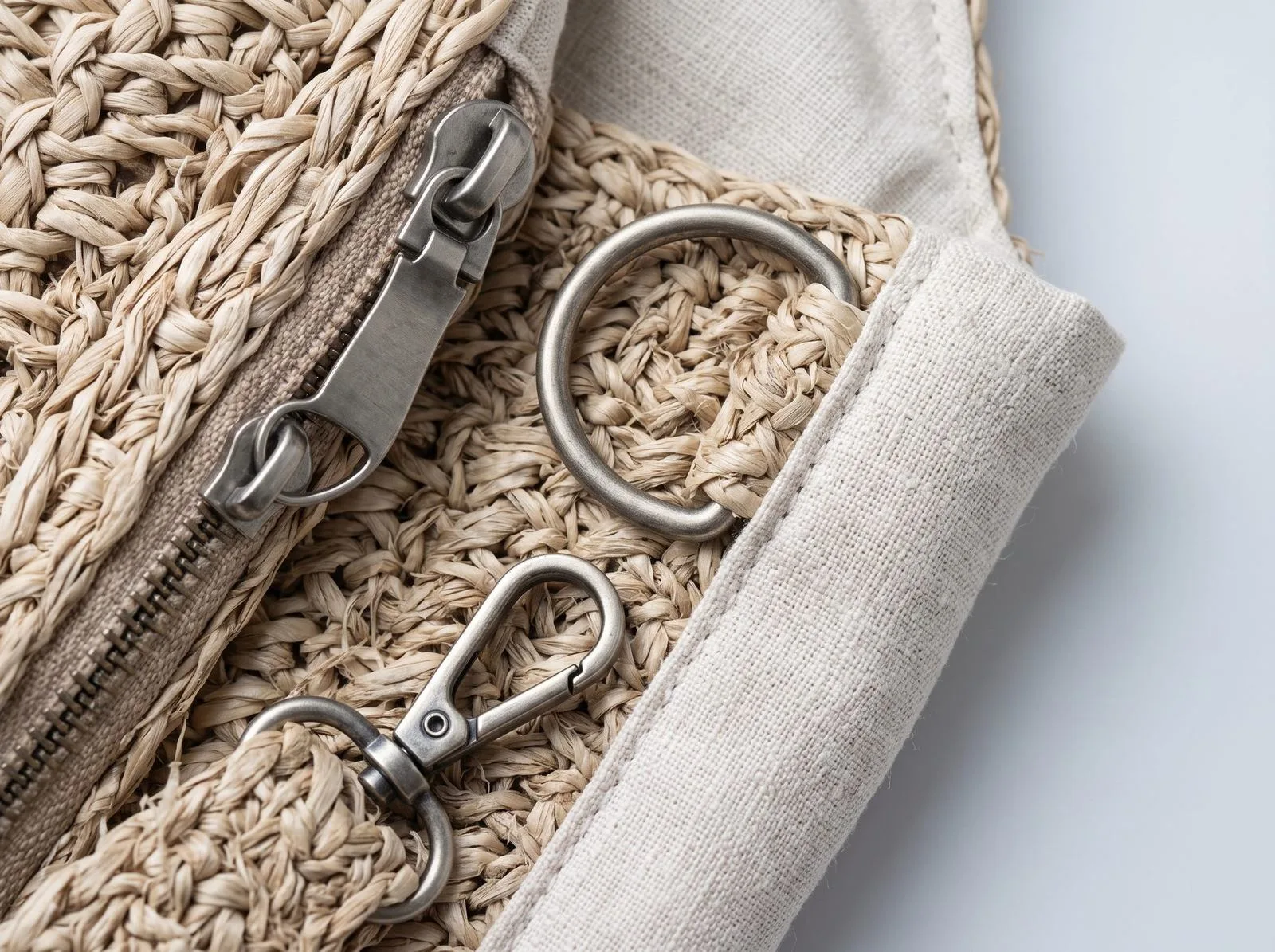
Handle anchor. Load one handle and lift. There should be no movement at the root, no loose thread, and the anchor stitch should pass through the woven layer rather than sitting on its surface.
Lining. Turn the bag out. The lining should be sewn to a seam, not tacked to the inside of the weave, and the colour should match the specification.
Packing. A sample shipped loose tells you nothing about the carton. Agree the packing spec at approval, because it is the next thing that gets committed.
A sample that passes the eye test can still fail the tape measure. The tape measure is the part that repeats.
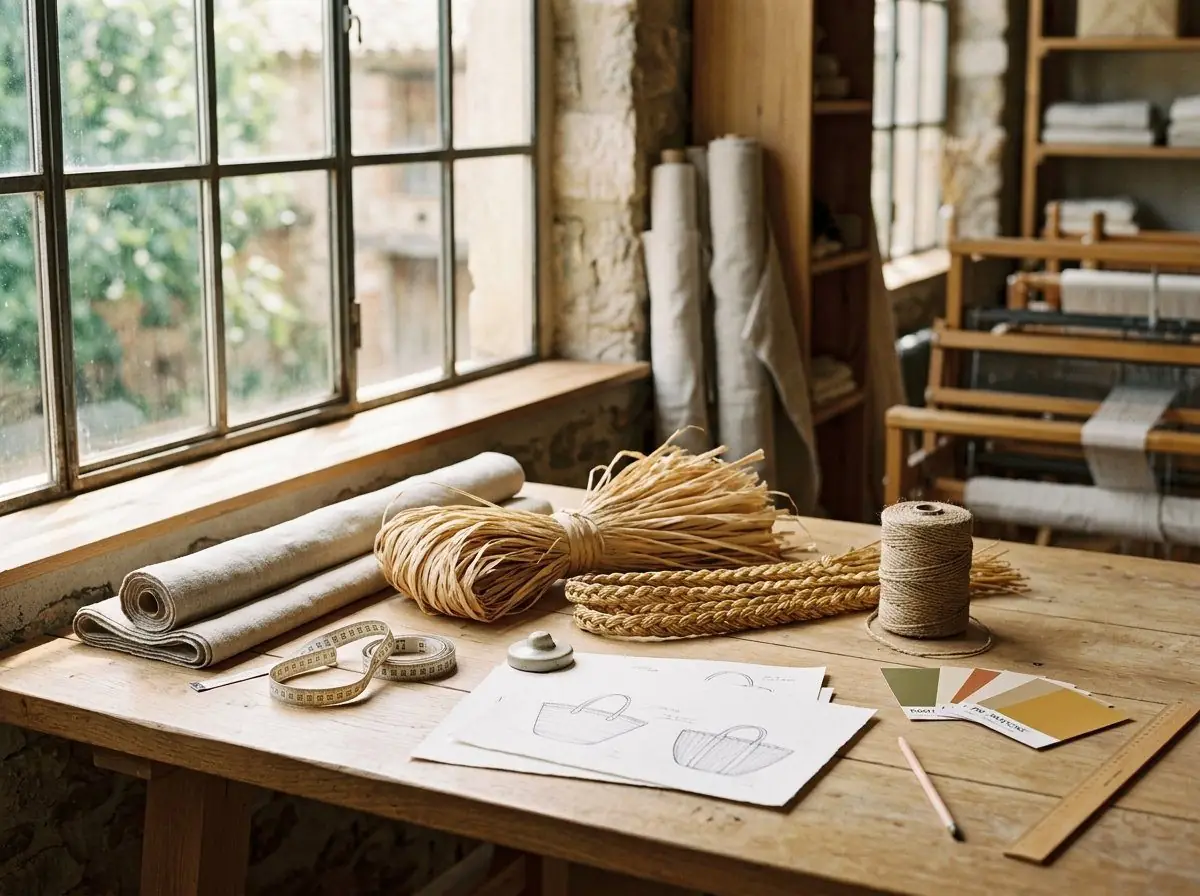
 A sample review is a measurement, not an opinion: calipers, a colour card and the fibre swatches belong on the table before anything is signed.
The signed sample, and how to keep it useful
Sign two copies. Date both, seal both, and keep one at the bench while the other goes to the buyer. Photograph the sample next to a ruler and the colour card rather than on a styled set, and write the fibre lot and dye lot on the tag.
The signed sample is the reference for the batch audit, not for the catalogue. Nobody argues with a photograph in a dispute; they argue with the sealed bag and the card.
One qualification matters. If the sample was made from a different fibre lot than the bulk, record that on the tag. A golden sample that cannot be matched is a decoration, and approving it sets a standard the run cannot meet.
The weeks after approval
Approval starts a sequence that buyers rarely see. The colour is matched from a new bath against the card. Materials are ordered against the confirmed quantity: fibre, hardware, lining, labels, cartons. A pre-production sample is made from the bulk material. Then the run.
| Step | Time | What it decides | What to ask for |
|---|---|---|---|
| Colour match | before bulk dyeing | the lot the run will use | a physical swatch against the card |
| Material order | depends on hardware and lining lead times | whether the run starts on date | confirmation that trims are in hand |
| Pre-production sample | 7–10 days | the standard the run is held to | a PPS cut from bulk material |
| Bulk production | 30–45 days; 45–60 with custom dye or new mould | the order | in-line checkpoints, not only a final one |
| Final inspection | before packing | pass or fail per piece | the inspection record |
| Packing and dispatch | end of the window | what arrives at your warehouse | packing list and carton photographs |
| The pre-production sample is the step buyers skip most often, and the one that pays for itself. A bag cut from the bulk material catches the difference between sample fibre and production fibre before 400 pieces are woven from it. Seven to ten days is a poor reason to skip that. |
The six QC gates
Inspection is not one event at the end. It runs at six points, and each exists because a defect that passes it gets more expensive at the next.
- Incoming fibre — moisture, short fibre, off-tone lots. Rejected before cutting.
- Dye lot against the card — batch-to-batch drift. Re-dyed or reassigned before weaving.
- First-off piece — the first complete bag from the run. Setup corrected before the rest.
- In-line bench check — tension, gaps, row count. Stopped and reset, not patched.
- Final piece-by-piece — handles, lining, dimensions, closures.
- Carton audit — 5% of cartons, minimum 10 pieces, for the record.
A workshop that checks at each gate can name where a fault started. One that only inspects at the end can tell you there is a fault, but not why, and the next order will repeat it.
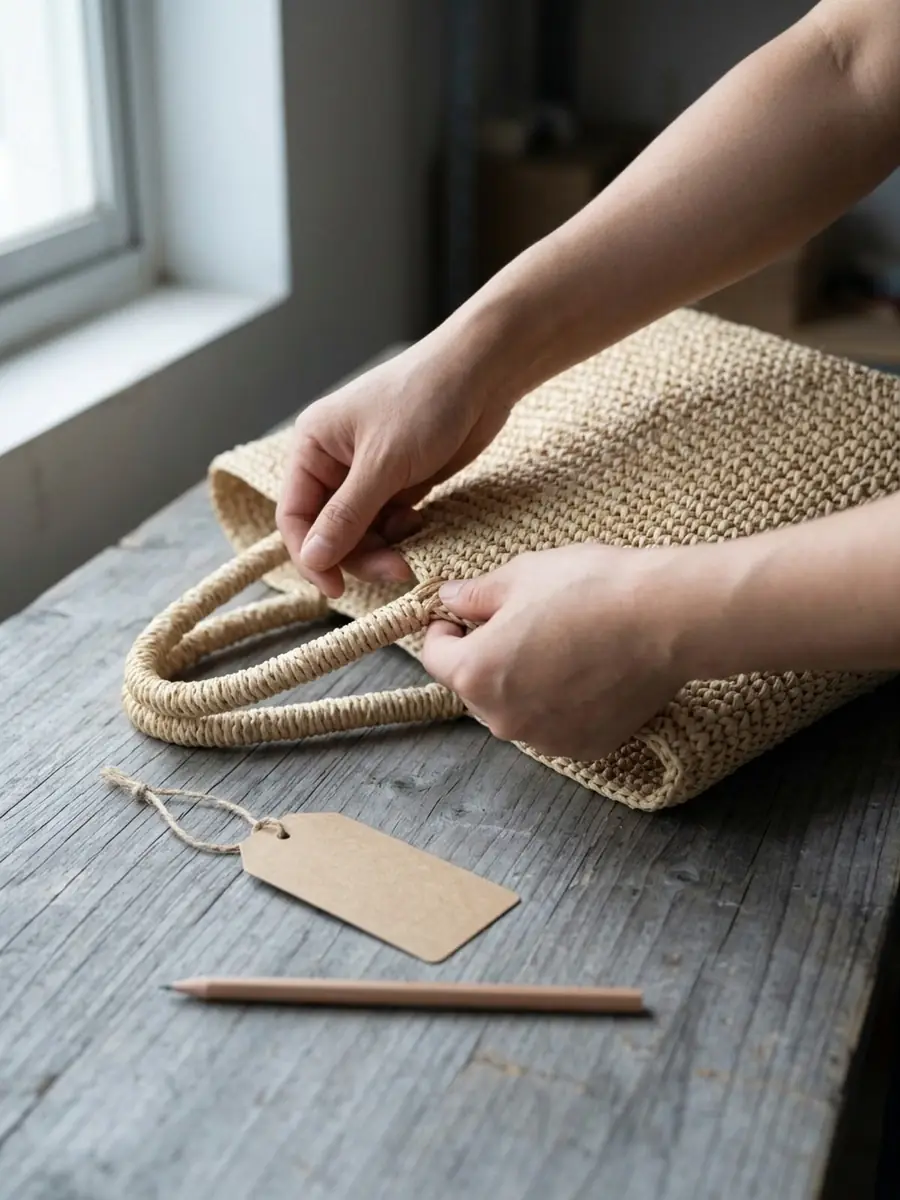 The final check is piece by piece: handle anchor first, then lining, then dimensions, then the record that proves it happened.
What changes between sample and bulk
Five things move between an approved sample and a production run. Each has a control, and none has a guarantee.
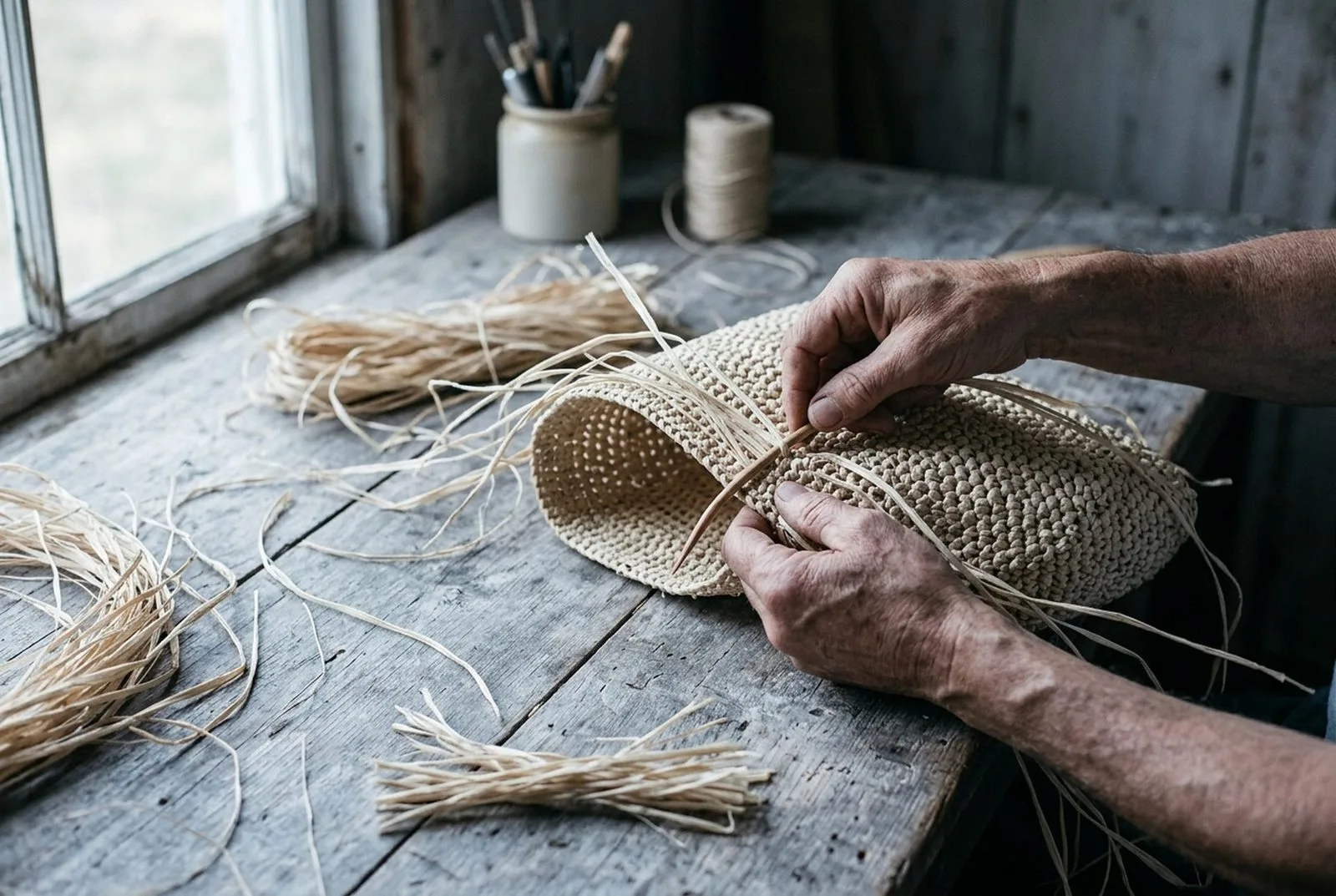
Colour lot. A new bath is matched against the card. The control is the physical swatch and a piece-by-piece colour check. Natural fibre takes dye unevenly, so the target is a match to the card, not an identical tone to the sample.
Fibre lot. A new delivery has its own moisture, thickness and yield. The control is the lot reference and the PPS. This is the change buyers notice most in the hand, and the one least visible in a photograph.
Hardware plating. A second plating batch can sit a shade lighter or darker. The control is to approve the plating on the PPS, not on the sample.
Lining roll. A new roll can differ slightly in tone or weight. The control is to attach a cutting to the PPS and keep it with the signed sample.
Packing. Cartons are printed once. The control is to sign the spec before the printer starts, and to ask for a photograph of the first sealed carton.
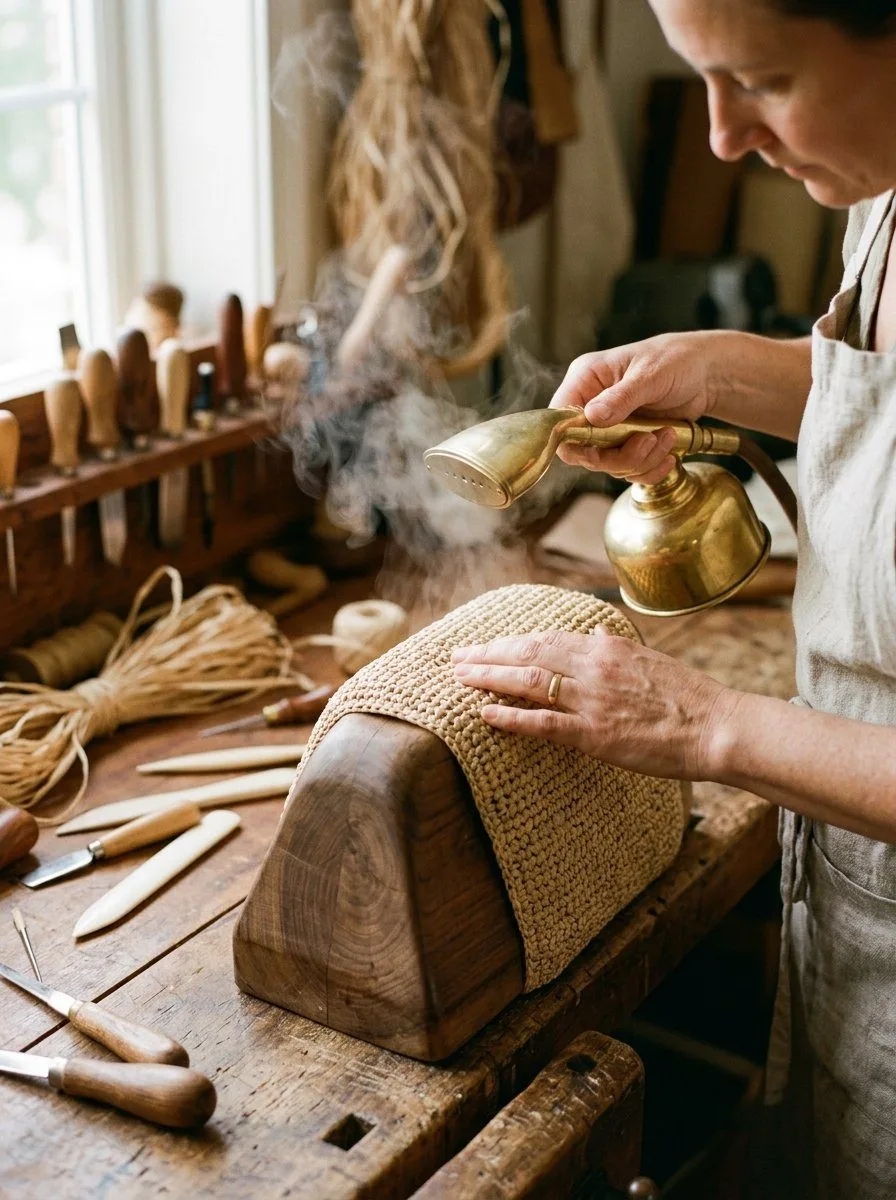
A sample made in June and a run made in February are made in different humidity. Raffia behaves differently in both. That is not a defect in either; it is the reason the PPS exists.
What can still change, and when
The sequence locks in a fixed order: fibre, then colour, then the structure as it is woven, and packing last. Knowing that order is what lets you make a late decision without paying for it twice.
Packing is usually the last thing to lock. Cartons are printed to a spec, and until the printer starts, dimensions, marks and inner packing can still move. If the launch date moves, packing is the last thing that can be adjusted without touching the bags.
Colour locks once the dye bath is set. After that, a change means a new bath and a new approval, and in a bulk run it usually means a new lot for the whole order.
Fibre and structure lock when the run starts. A change after that is not an adjustment. It is a restart, with the material already consumed.
The useful habit is to ask at approval which of the three is still open and what it would cost to change. A workshop that answers precisely is telling you it has run this sequence before.
The twelve-point inspection sheet
Print this and score each line pass or fail. A fail on any line rejects that piece; if the rate crosses the threshold below, it becomes a decision about the lot.
| Check | Accept | Reject |
|---|---|---|
| Weave gaps | hairline ≤1 mm at the mouth | visible gap over 2 mm on the body; loose structure |
| Colour | even within one bag; slight natural variation | adjacent bags over 10% apart against the card |
| Dimensions and symmetry | 35 cm ±2 cm; handle height ±1 cm | one side more than 5 cm off; handle heights differ by over 2 cm |
| Handle fixing | even stitch, tight under load | movement, loose thread, stitch not through the weave |
| Mould or damp | none | any mould |
| Leather and hardware | natural grain, light handling marks | cracked leather, edge paint lifting |
| Closures | magnet slightly off but closes | will not close, missing rivet, zip jams |
| Embroidery or logo | placement within 5 mm | wrong colour, missing character, over 10 mm off, uneven density |
| Packing | minor scuffing on the carton | crushed product, missing inner bag |
| Odour | natural palm smell, gone within 48 hours | chemical or animal smell |
| Raw edges | slight texture variation on the binding | fraying, unbound edge, loose thread |
| Lining | slight wrinkling at the corners | detached, torn, wrong colour |
Defect rate, and what it means
Under 5% is normal for handwork. Between 5% and 10% needs an explanation and a cause, not just a credit note. Over 10% is a rework or a rejection of the lot.
The rate matters less than where the defects came from. A fault found at the final check that started at the fibre has a cause and can be fixed in the next lot. The same fault appearing across three different styles usually means inspection is the only control in the process, and that is a different conversation.
If the bulk does not match
There are three outcomes, and it helps to name them before they are needed.
Rework when the fault is correctable without weakening the bag: a loose thread, a closure, a lining edge. Concession when the deviation is cosmetic and you accept it in writing, usually with a price adjustment. Remake when the fault is structural: a collapsed base, a handle anchor that will not hold, a colour that cannot be explained.
A concession is legitimate once. As a habit, it means the standard was never real.
A launch date can sometimes be saved at the packing line. A fibre change after the run starts cannot be saved. There is no partial version of that.
When this does not apply
If you are buying a stock or white-label bag, there is no sample to approve in this sense. You are inspecting a production lot, and the questions become what is in the carton, not what was signed.
If the order is a small repeat, the reference is the previous lot and the card. A PPS can be waived by the buyer. That is a legitimate choice, and it should be written down as one, because the risk moves to you.
If the calendar cannot fit a PPS, you are accepting a different risk. Say so in writing rather than skipping the step quietly.
If you cannot visit, replace the visit with the documents: a colour swatch from the bulk lot by courier, dated photographs with a scale, and the inspection record. They are not as good as standing at the bench. They are much better than a promise.
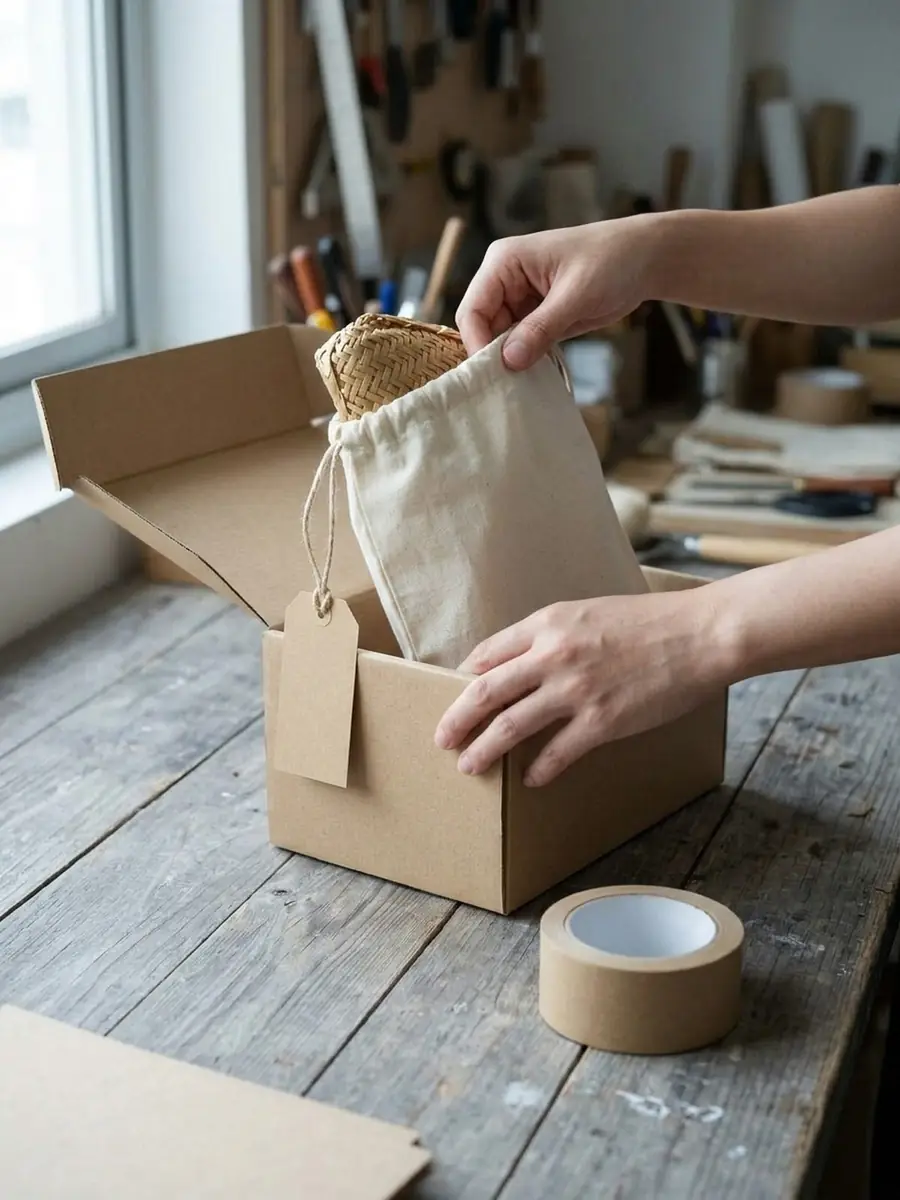 Before dispatch: the packing list and a photograph of the sealed cartons are the last cheap place to catch a mistake.
Three things to ask for between approval and dispatch
The bulk colour against the card. The PPS made from the bulk lot. The inspection record at the end.
Common questions
- What is a pre-production sample?
- The PPS is the final reference made with production materials and methods. Once signed, it fixes colour, dimensions, hardware and branding, and bulk is checked against it.
- How many bags should be inspected?
- We sample 5% of the order with a minimum of 10 pieces, and check every piece at the handle, base and lining. The acceptance thresholds are agreed in the order.
- What defect rate is acceptable?
- Under 5% is normal for handwork; 5–10% triggers a review of the cause; above 10% the batch is reworked or rejected before packing.
A workshop that produces those three without being asked twice is a workshop whose second order will look like the first. If you are about to place a first bulk order, wholesale sets out how the process runs end to end, the material guide answers the fibre question before you commit, and contact is the place to send the brief.
See the straw bags we currently produce in this range.